English | Español
CODEX BOTURINI
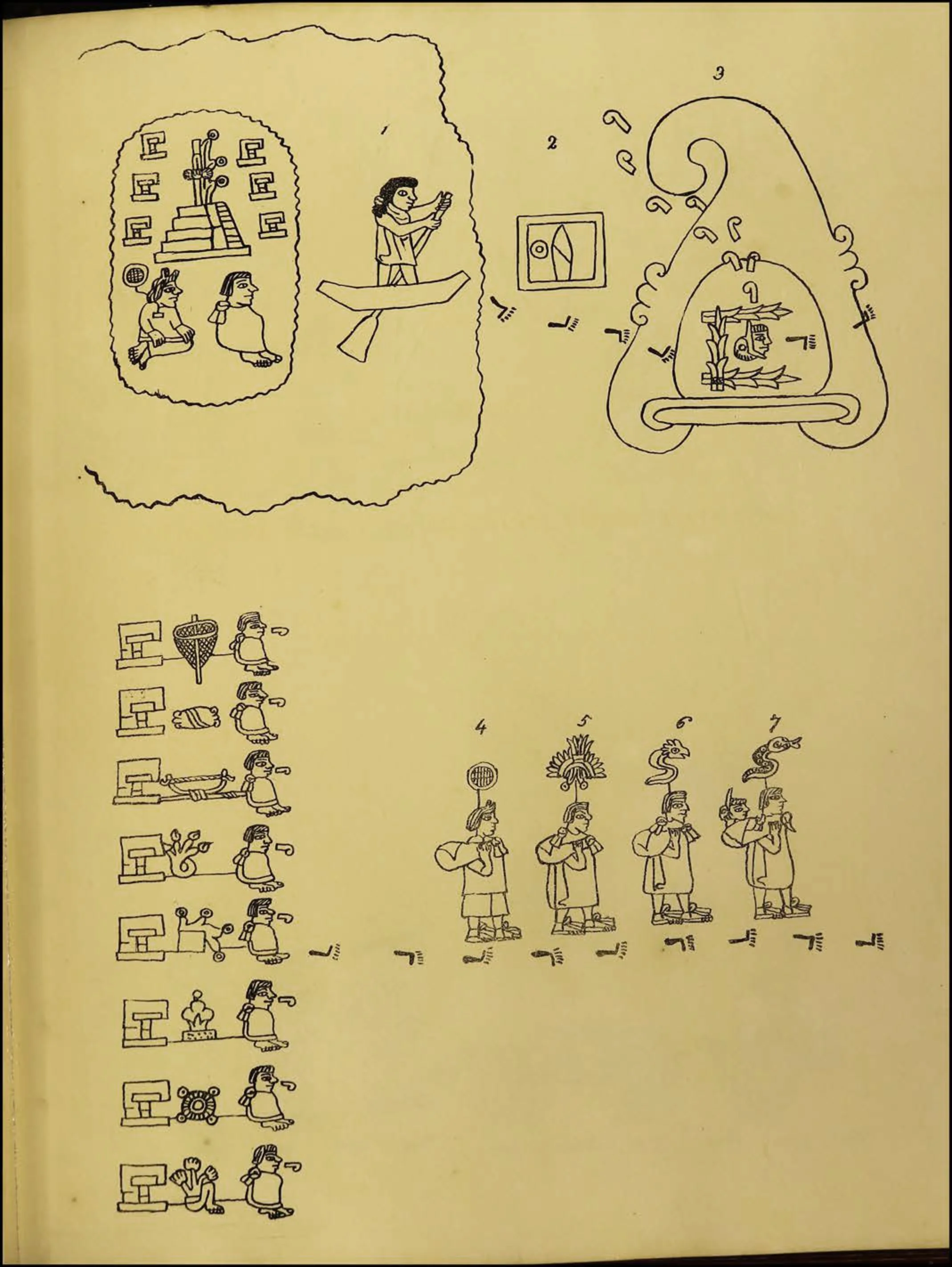
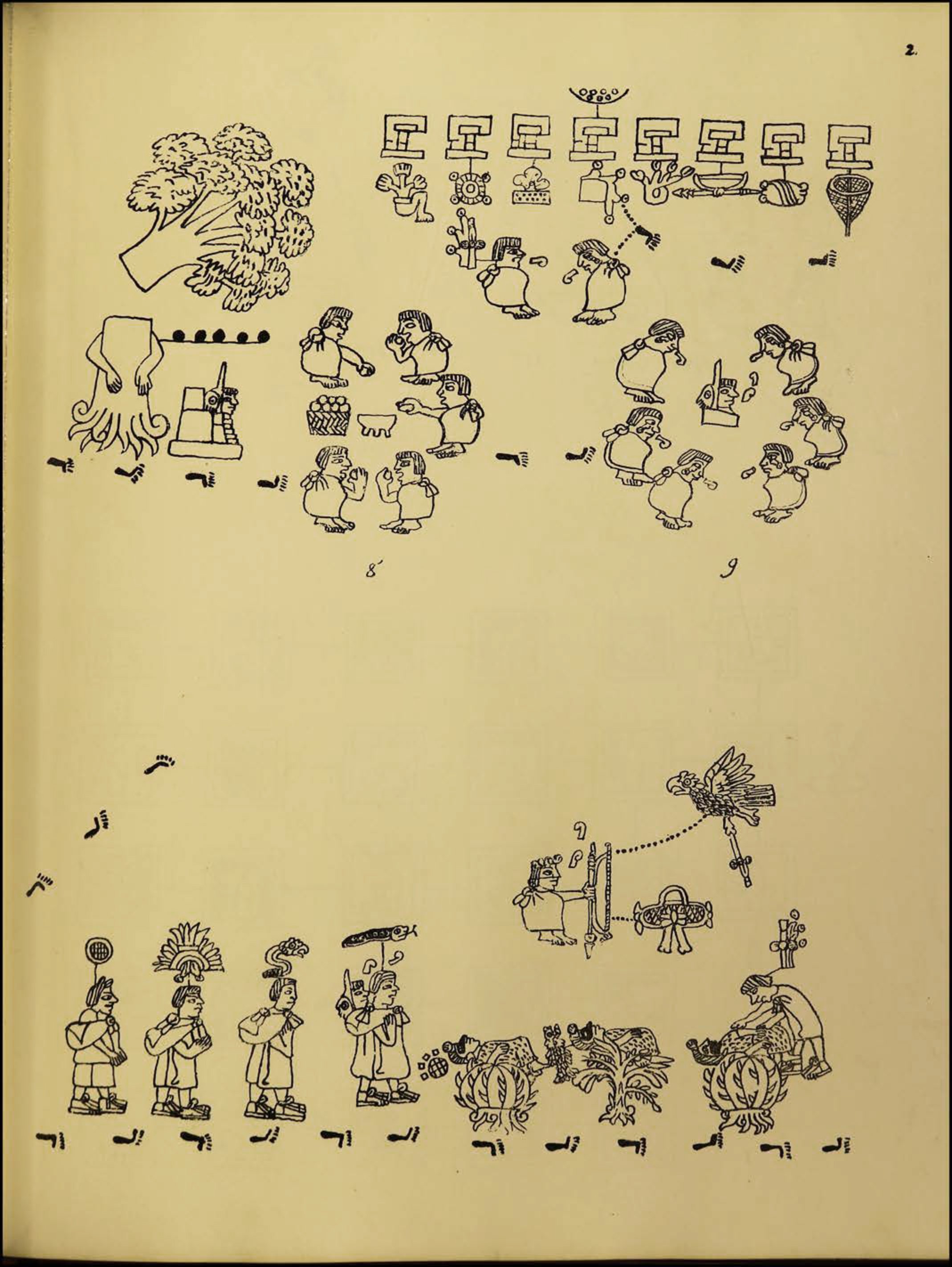
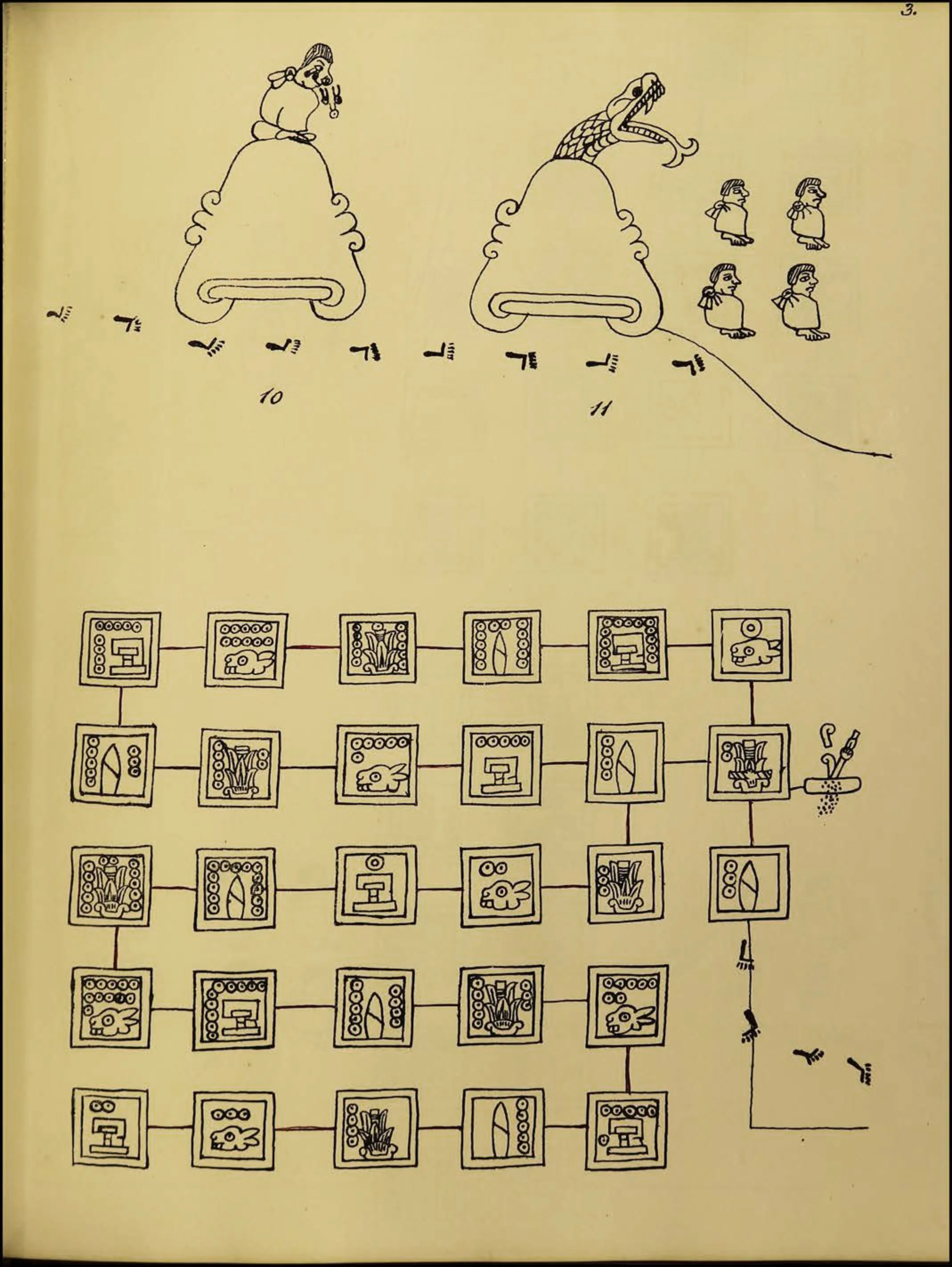
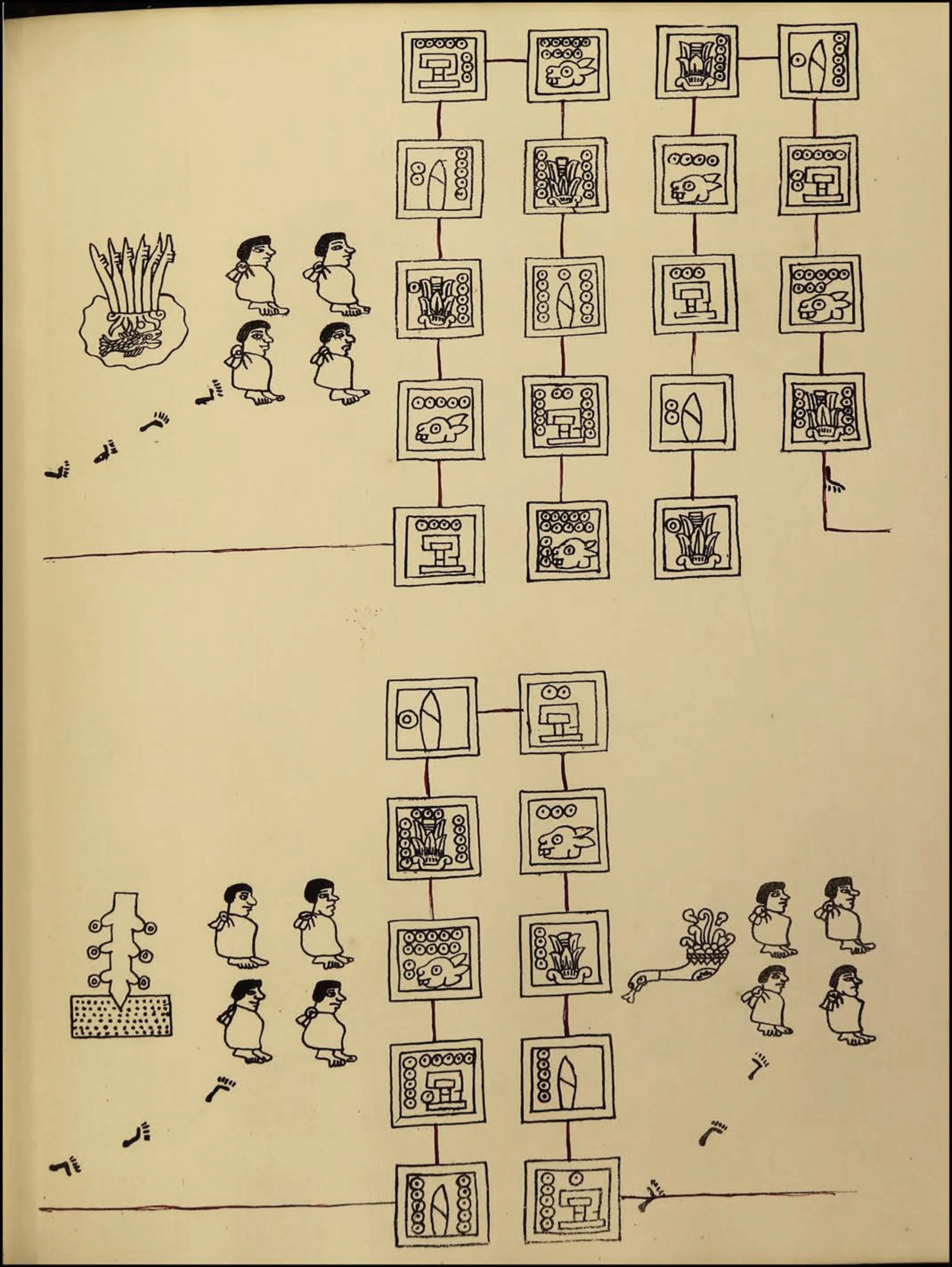
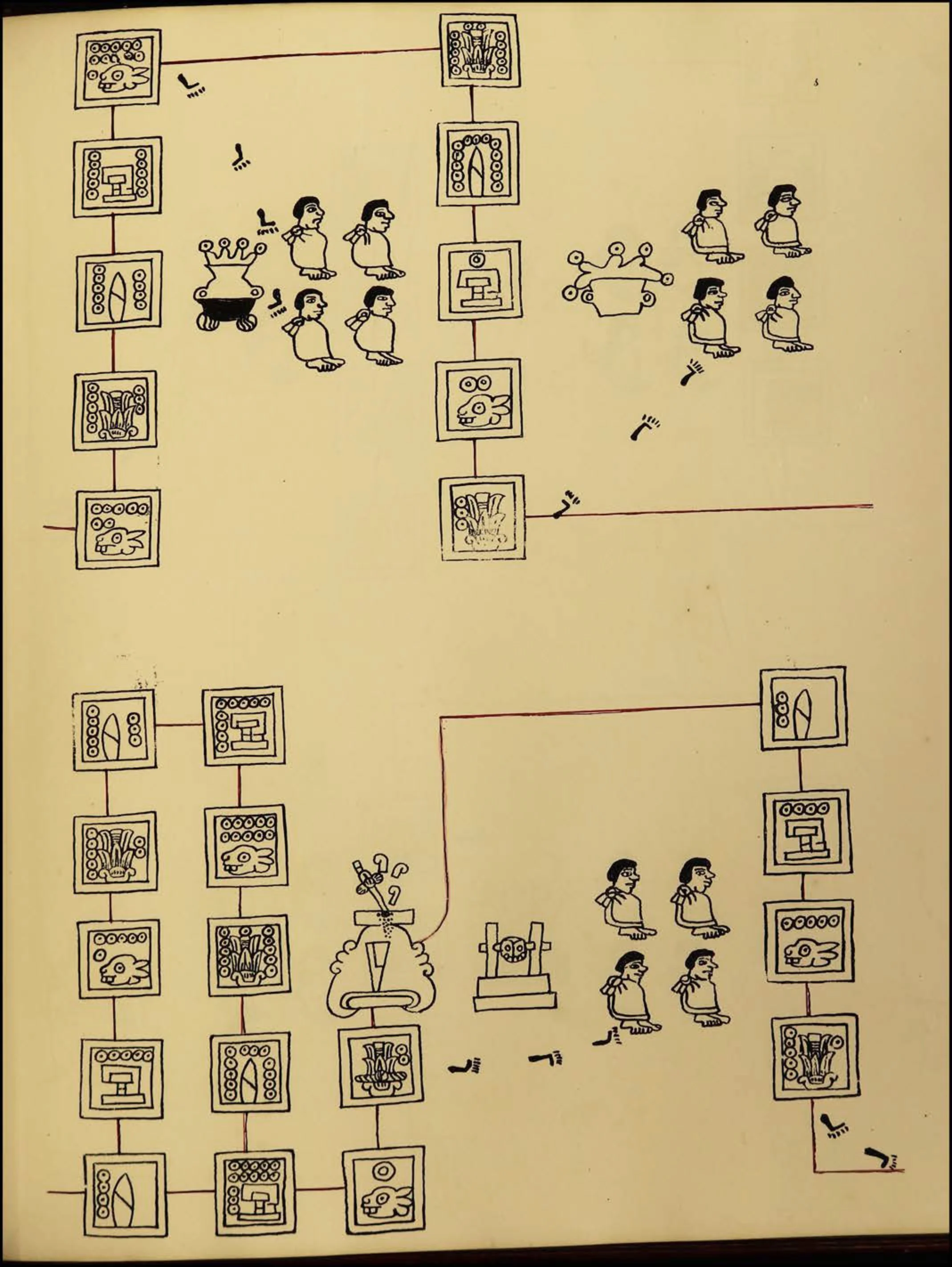
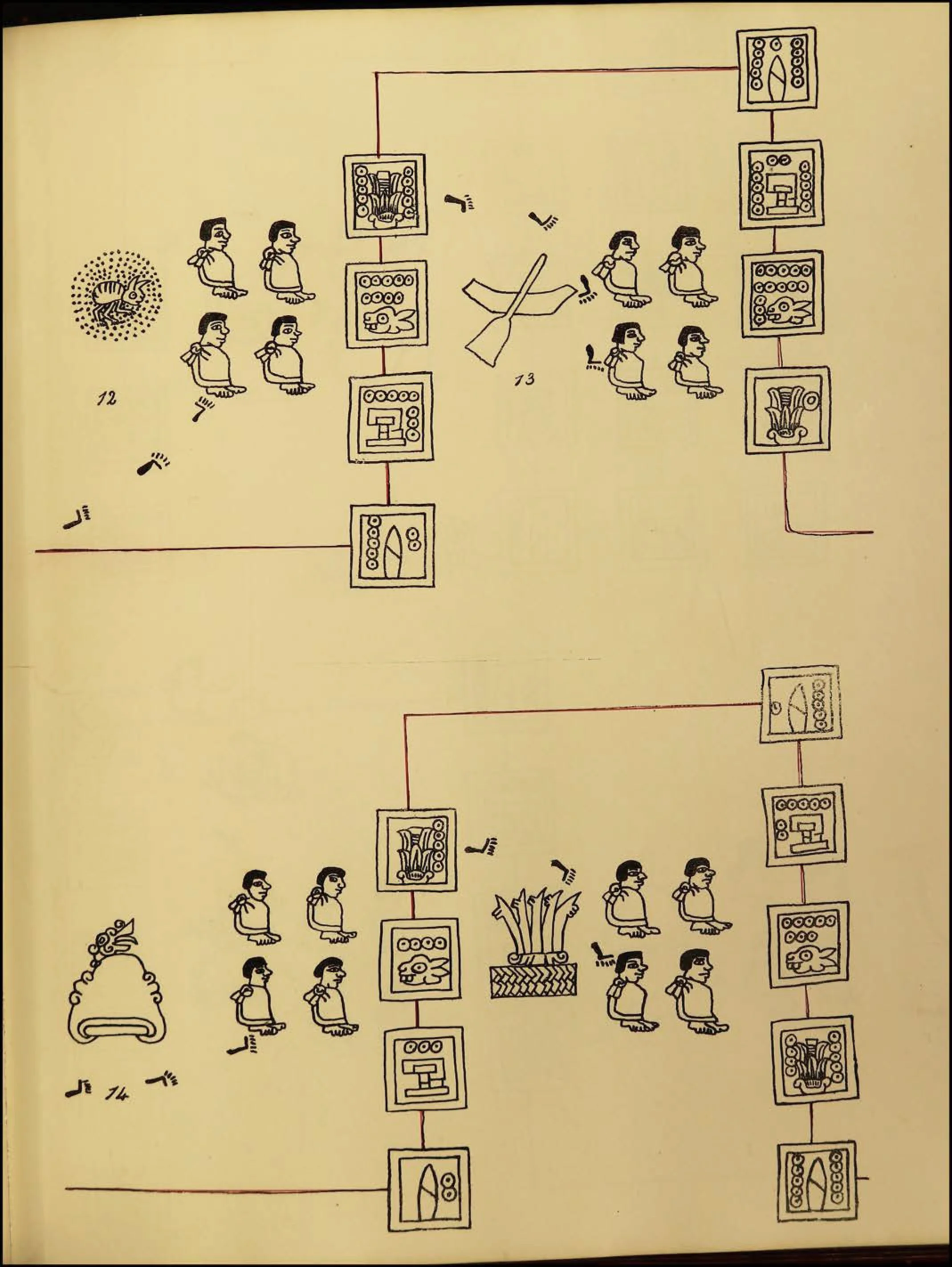
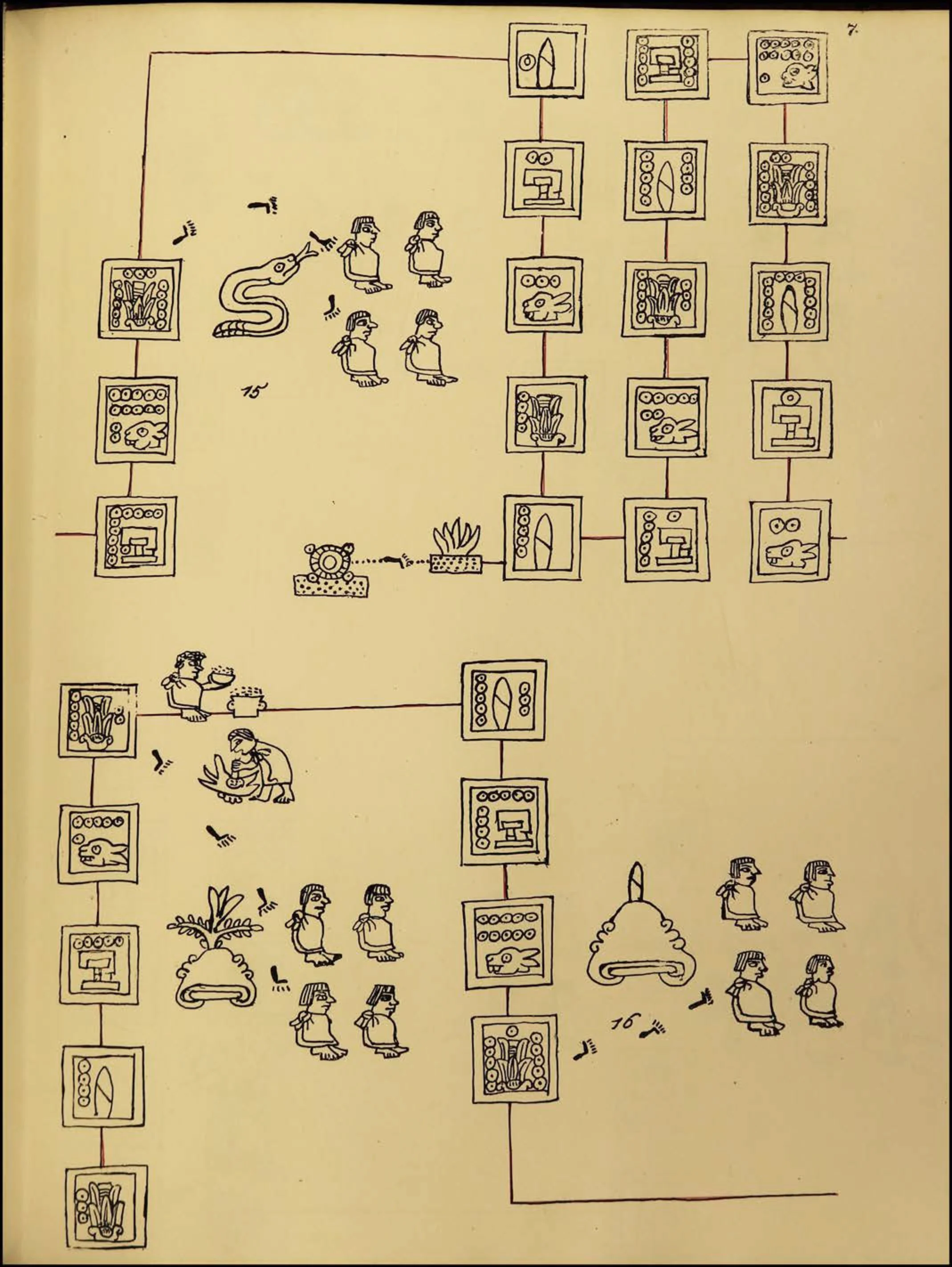
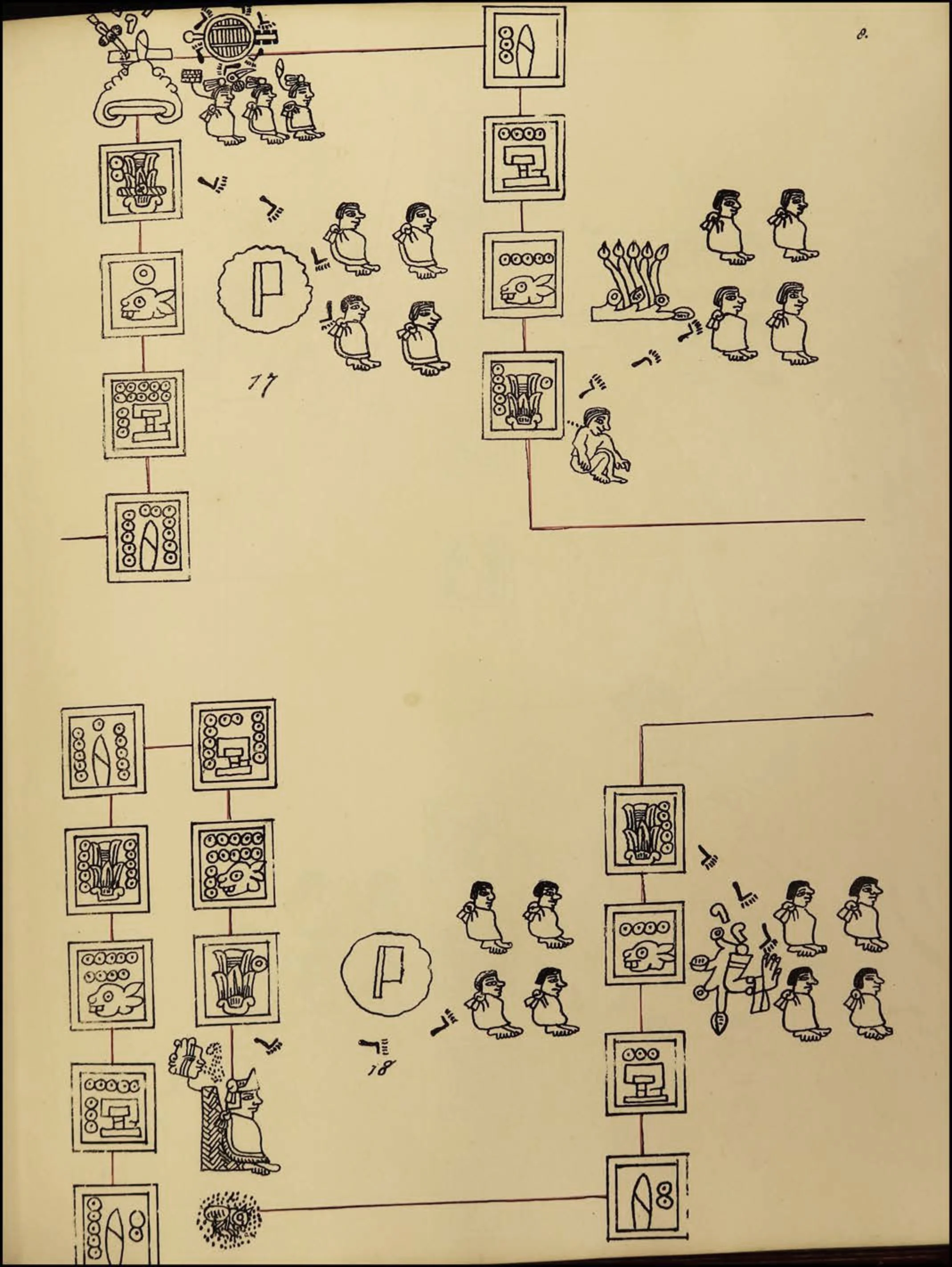
The Codex Boturini, also known as the Tira de la Peregrinación (Strip of the Pilgrimage), is a significant historical document as it provides valuable insights into the culture, history, and migration of the Mexica (Aztec) people. It depicts the legendary journey of the Mexica from their mythical homeland of Aztlan to the Valley of Mexico, where they eventually established their capital city of Tenochtitlan, present-day Mexico City.
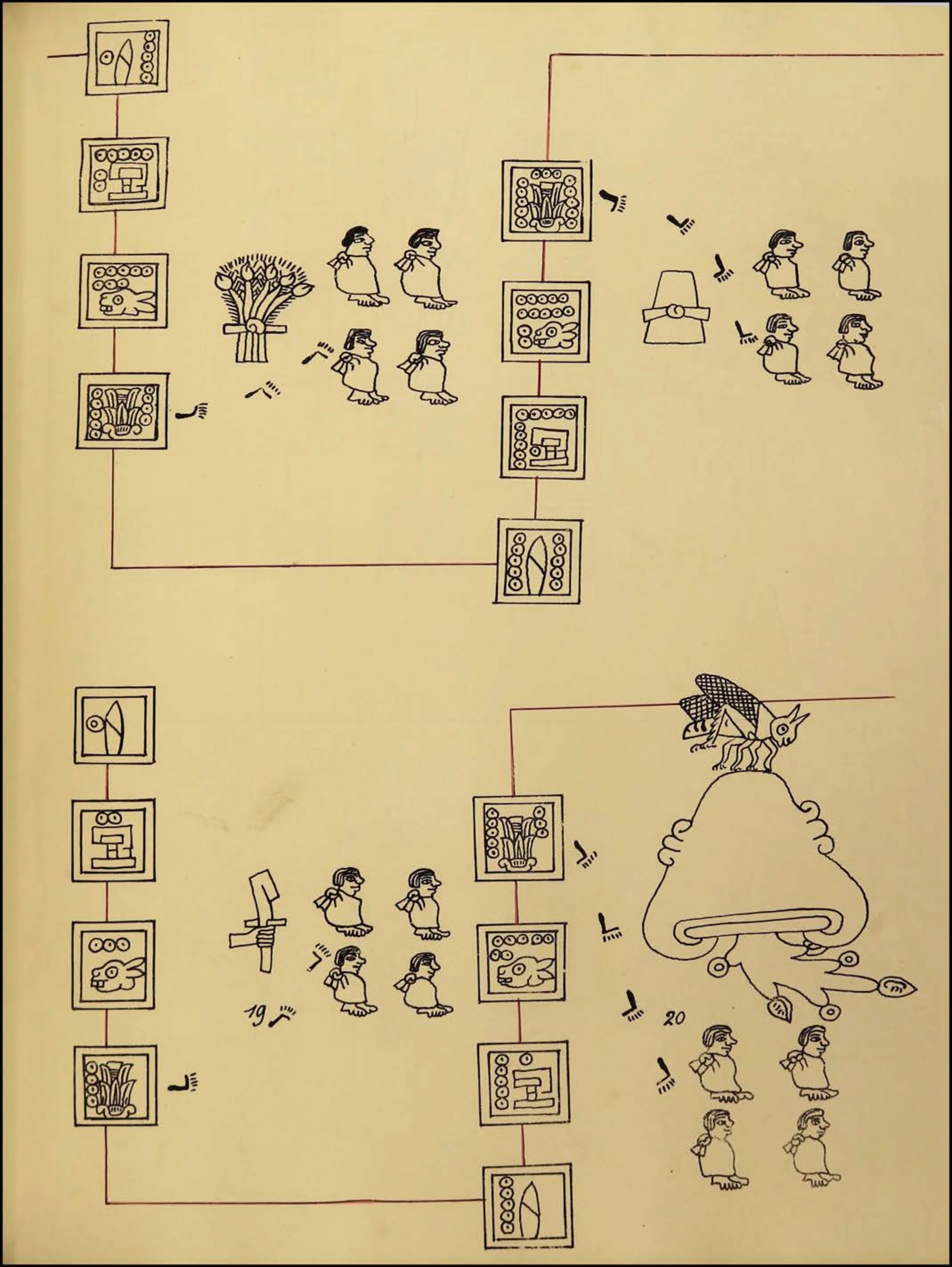
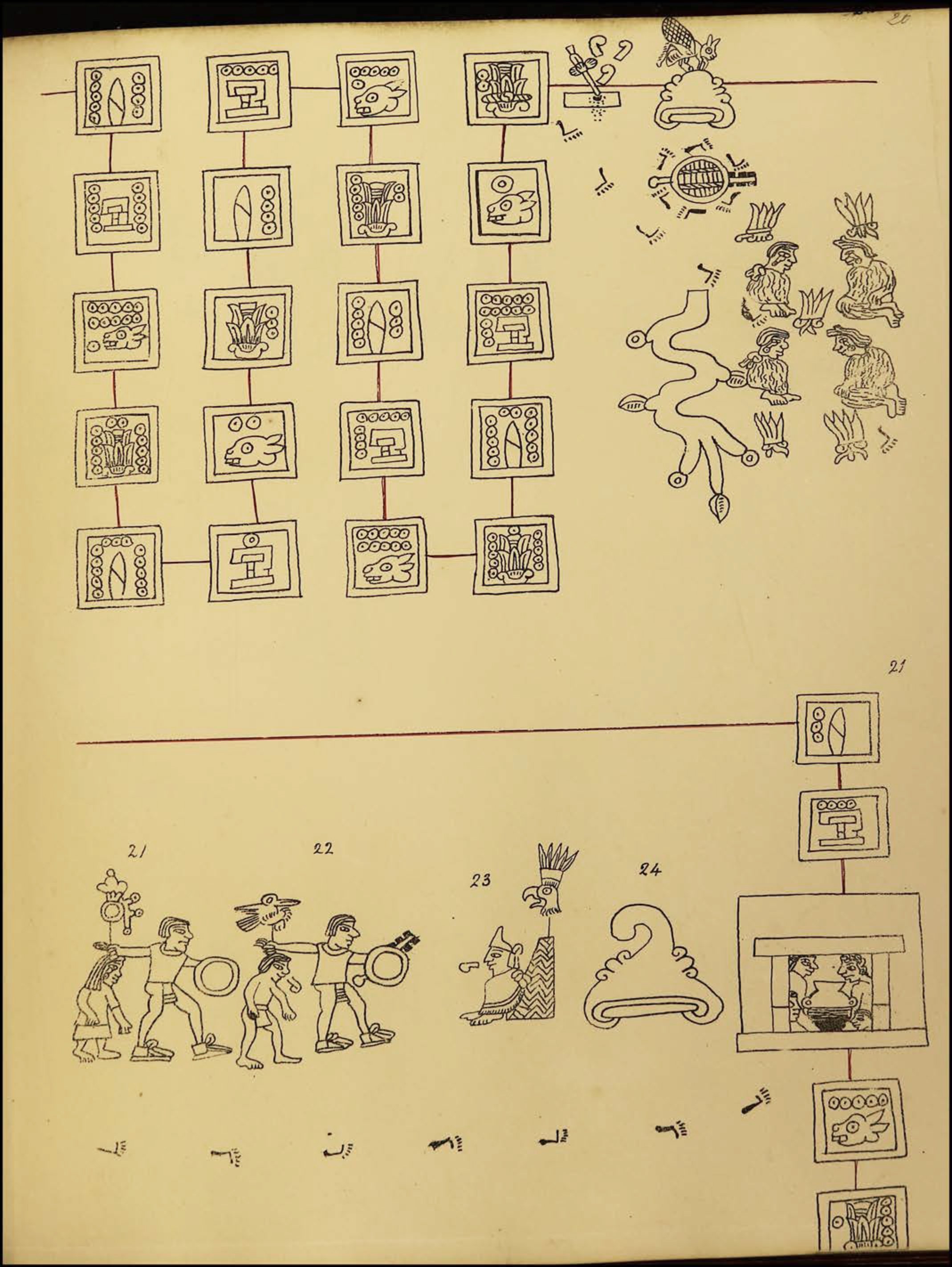
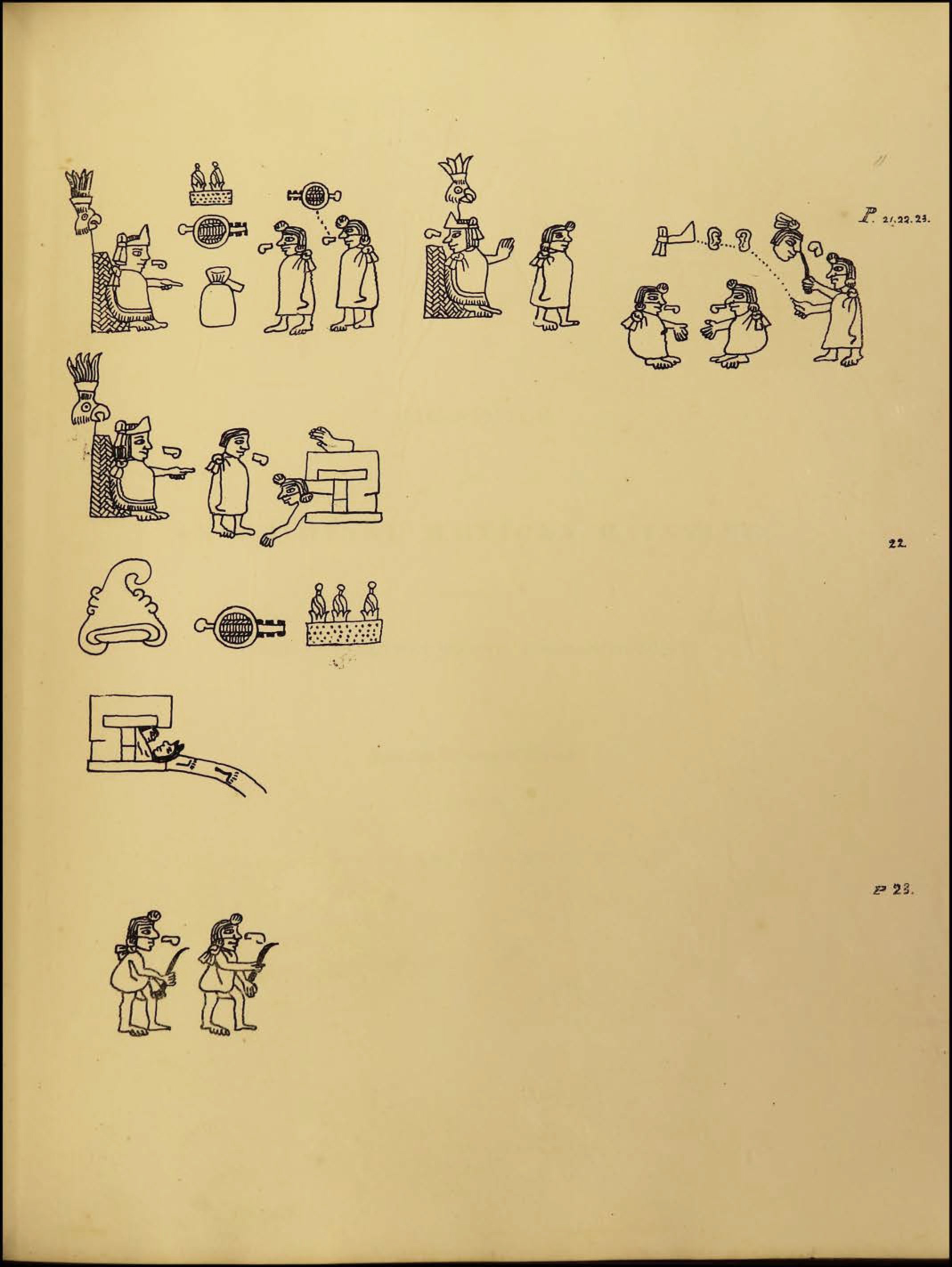
The codex is composed of a long strip of amatl paper, measuring approximately 14 feet in length, folded accordion-style. It consists of a series of pictorial panels accompanied by Nahuatl (Aztec language) descriptions written in Spanish. The illustrations depict various episodes of the Mexica migration, including their encounters with other indigenous groups, the founding of settlements, and the establishment of their capital.
The Codex Boturini is considered a valuable historical and cultural artifact, providing important visual and written records of the Mexica people and their migration.
The Codex Boturini is divided thematically into sections or panels that depict different episodes of the Mexica (Aztec) migration. The codex consists of a long strip of amatl paper that is folded accordion-style, creating multiple panels. Each panel focuses on a specific event or aspect of the migration journey, providing a visual narrative of the Mexica people's history and cultural development.
The panels in the Codex Boturini generally follow a chronological order, representing the different stages of the Mexica migration. They depict scenes such as the departure from Aztlan (the mythical homeland), encounters with other indigenous groups, founding of settlements, battles, and the establishment of the Mexica capital city of Tenochtitlan.
The panels are accompanied by Nahuatl (Aztec language) descriptions written in Spanish, providing additional information and context for each scene. These descriptions help to interpret the events depicted in the illustrations and enhance our understanding of the Mexica migration and their historical narrative.
According to the codex, Aztlan is depicted as a place of abundance and natural beauty. It is described as an island or region located to the north of the Valley of Mexico. The Mexica, along with several other Nahua-speaking groups, are believed to have originated from Aztlan.
While the codex provides visual representations of the migration, the accompanying Nahuatl descriptions in Spanish offer additional details and explanations about the events and locations depicted. However, it is important to note that the exact location of Aztlan and the historical accuracy of the Mexica migration as depicted in the codex continue to be subjects of debate among scholars.
While the exact number of panels in the Codex Boturini may vary in different accounts, it typically consists of around 20 to 25 panels. Each panel offers a unique visual representation of a specific event or aspect of the Mexica migration, contributing to the overall story depicted in the codex.
The exact origins of the Codex Boturini, also known as the Tira de la Peregrinación, are not entirely clear. However, it is believed to have been created in the late 16th century in Central Mexico, possibly in the region of Tenochtitlan, the capital of the Mexica (Aztec) Empire.
The codex was likely produced by indigenous artists who were familiar with the artistic and symbolic conventions of the time. The specific individuals responsible for its creation are unknown, as pre-Columbian codices were typically collaborative efforts involving multiple artists and scribes.
The Codex Boturini is named after Lorenzo Boturini Benaduci, an Italian collector and historian who acquired the codex in the 18th century. Boturini was passionate about the history and culture of Mexico and amassed a significant collection of indigenous manuscripts, including the Codex Boturini.
The Codex Boturini's creation was likely influenced by oral traditions, cultural memories, and historical accounts preserved by the Mexica people. It serves as an important visual record and narrative of the Mexica migration and their historical and cultural heritage.
The Codex Boturini is currently housed in the National Anthropology Museum in Mexico City, Mexico. The manuscript was acquired by the Mexican government in 1827 and has been in the possession of the National Anthropology Museum since its establishment in 1964. The codex is considered a significant cultural artifact and is a popular attraction for visitors to the museum who are interested in learning about the pre-Columbian history and culture of Mexico.
Facsimile of images in the Boturini Codex Antiquities of Mexico, Volume 1, Edited by Viscount Edward King Kingsborough. Viscount Edward King Kingsborough, also known as Edward King, 1st Earl of Kingston, was an Irish nobleman and antiquarian who lived from 1795 to 1837. He is best known for his monumental work titled "Antiquities of Mexico," Born in County Cork, Ireland, into an aristocratic Anglo-Irish family. He developed a keen interest in the history, culture, and antiquities of ancient civilizations, particularly those of the Americas. Inspired by his fascination with Mexican and Mesoamerican cultures, he embarked on an ambitious project to document and illustrate the history and artifacts of ancient Mexico. From 1831 to 1848, Viscount Kingsborough published nine volumes of the "Antiquities of Mexico," which contained detailed reproductions and descriptions of Mesoamerican codices, manuscripts, and archaeological artifacts.
~
El Códice Boturini, también conocido como la Tira de la Peregrinación, es un documento histórico importante, ya que proporciona información valiosa sobre la cultura, la historia y la migración del pueblo mexica (azteca). Representa el viaje legendario de los mexicas desde su patria mítica de Aztlán hasta el Valle de México, donde finalmente establecieron su ciudad capital de Tenochtitlan, la actual Ciudad de México.
El códice está compuesto por una larga tira de papel amatl, que mide aproximadamente 14 pies de largo, doblada en forma de acordeón. Consiste en una serie de paneles pictóricos acompañados de descripciones en náhuatl (lengua azteca) escritas en español. Las ilustraciones representan varios episodios de la migración mexica, incluidos sus encuentros con otros grupos indígenas, la fundación de asentamientos y el establecimiento de su capital.
El Códice Boturini se considera un valioso artefacto histórico y cultural, que proporciona importantes registros visuales y escritos del pueblo mexica y su migración.
El Códice Boturini está dividido temáticamente en secciones o paneles que representan diferentes episodios de la migración mexica (azteca). El códice consta de una larga tira de papel amatl que se dobla en forma de acordeón, creando múltiples paneles. Cada panel se enfoca en un evento o aspecto específico del viaje migratorio, proporcionando una narrativa visual de la historia y el desarrollo cultural del pueblo mexica. Los paneles del Códice Boturini generalmente siguen un orden cronológico, representando las diferentes etapas de la migración mexica. Representan escenas como la salida de Aztlán (la patria mítica), encuentros con otros grupos indígenas, fundación de asentamientos, batallas y el establecimiento de la capital mexica de Tenochtitlán.
Los paneles están acompañados de descripciones en náhuatl (idioma azteca) escritas en español, que brindan información adicional y contexto para cada escena. Estas descripciones ayudan a interpretar los eventos representados en las ilustraciones y mejoran nuestra comprensión de la migración mexica y su narrativa histórica. Según el códice, Aztlán se representa como un lugar de abundancia y belleza natural. Se describe como una isla o región ubicada al norte del Valle de México. Se cree que los mexicas, junto con varios otros grupos de habla nahua, se originaron en Aztlán.
Si bien el códice proporciona representaciones visuales de la migración, las descripciones en náhuatl que lo acompañan en español ofrecen detalles y explicaciones adicionales sobre los eventos y lugares representados. Sin embargo, es importante notar que la ubicación exacta de Aztlán y la precisión histórica de la migración mexica como se describe en el códice continúan siendo temas de debate entre los estudiosos. Si bien la cantidad exacta de paneles en el Codex Boturini puede variar en diferentes cuentas, generalmente consta de alrededor de 20 a 25 paneles. Cada panel ofrece una representación visual única de un evento o aspecto específico de la migración mexica, lo que contribuye a la historia general representada en el códice.
Los orígenes exactos del Códice Boturini, también conocido como Tira de la Peregrinación, no están del todo claros. Sin embargo, se cree que fue creado a fines del siglo XVI en el centro de México, posiblemente en la región de Tenochtitlán, la capital del imperio mexica (azteca). El códice probablemente fue producido por artistas indígenas que estaban familiarizados con las convenciones artísticas y simbólicas de la época. Se desconocen los individuos específicos responsables de su creación, ya que los códices precolombinos eran típicamente esfuerzos de colaboración que involucraban a múltiples artistas y escribas. El Códice Boturini lleva el nombre de Lorenzo Boturini Benaduci, un coleccionista e historiador italiano que adquirió el códice en el siglo XVIII. Boturini fue un apasionado de la historia y la cultura de México y acumuló una importante colección de manuscritos indígenas, incluido el Codex Boturini.
La creación del Codex Boturini probablemente estuvo influenciada por tradiciones orales, memorias culturales y relatos históricos conservados por el pueblo mexica. Sirve como un importante registro visual y narrativo de la migración mexica y su patrimonio histórico y cultural. El Códice Boturini se encuentra actualmente en el Museo Nacional de Antropología en la Ciudad de México, México. El manuscrito fue adquirido por el gobierno mexicano en 1827 y ha estado en posesión del Museo Nacional de Antropología desde su establecimiento en 1964. El códice se considera un artefacto cultural importante y es una atracción popular para los visitantes del museo que están interesados en aprender sobre la historia y la cultura precolombina de México.
Facsímil de imágenes del Códice Boturini Antigüedades de México, volumen 1, editado por el vizconde Edward King Kingsborough. El vizconde Edward King Kingsborough, también conocido como Edward King, primer conde de Kingston, fue un noble y anticuario irlandés que vivió entre 1795 y 1837. Es mejor conocido por su obra monumental titulada "Antigüedades de México". Nacido en el condado de Cork, Irlanda, en una familia aristocrática angloirlandesa. Desarrolló un gran interés en la historia, la cultura y las antigüedades de las civilizaciones antiguas, particularmente las de las Américas. Inspirado por su fascinación por las culturas mexicana y mesoamericana, se embarcó en un proyecto ambicioso para documentar e ilustrar la historia y los artefactos del México antiguo. De 1831 a 1848, el vizconde de Kingsborough publicó nueve volúmenes de "Antigüedades de México", que contenían reproducciones y descripciones detalladas de códices, manuscritos y artefactos arqueológicos mesoamericanos.