English | Español
CODEX MENDOZA
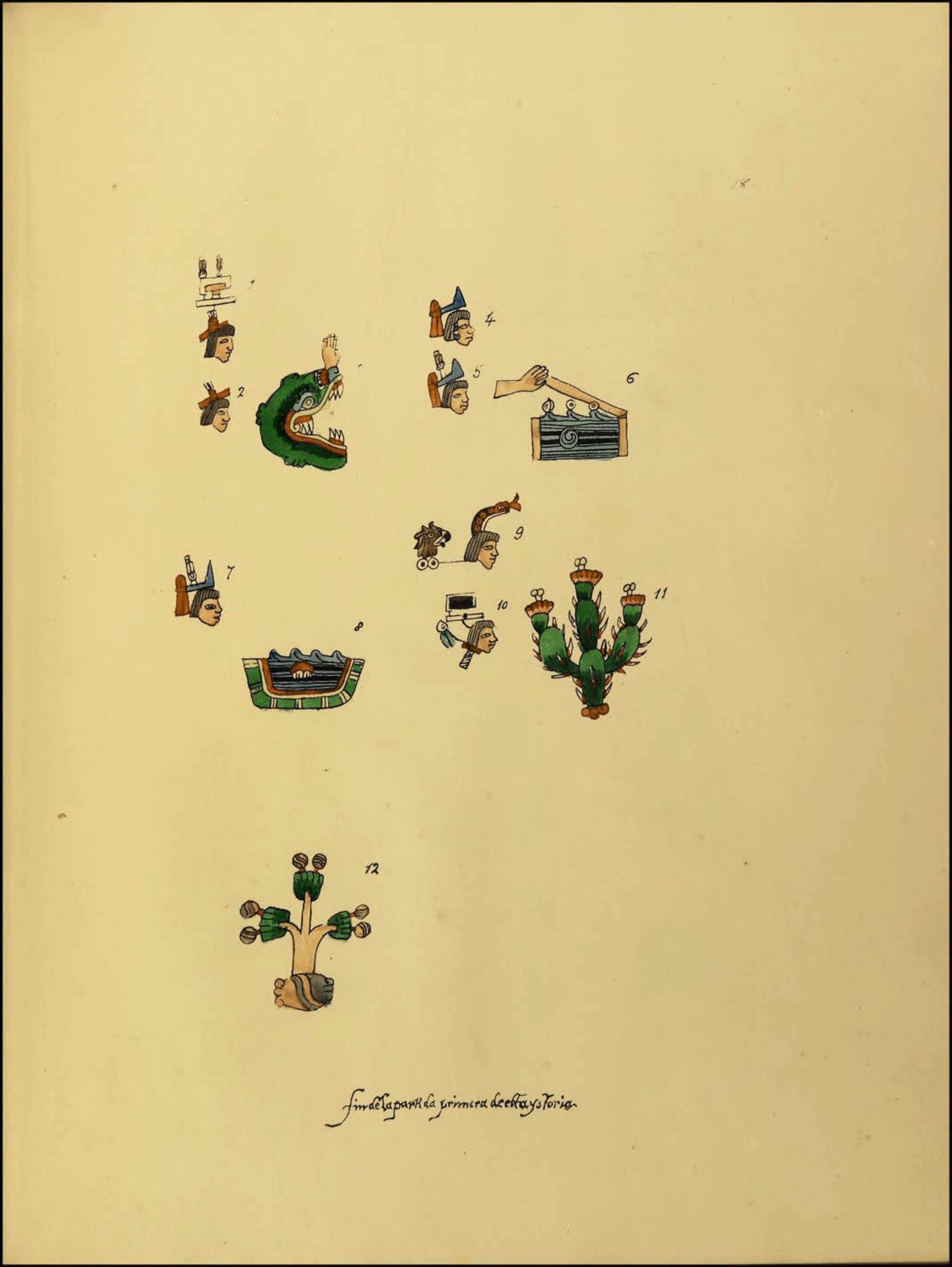
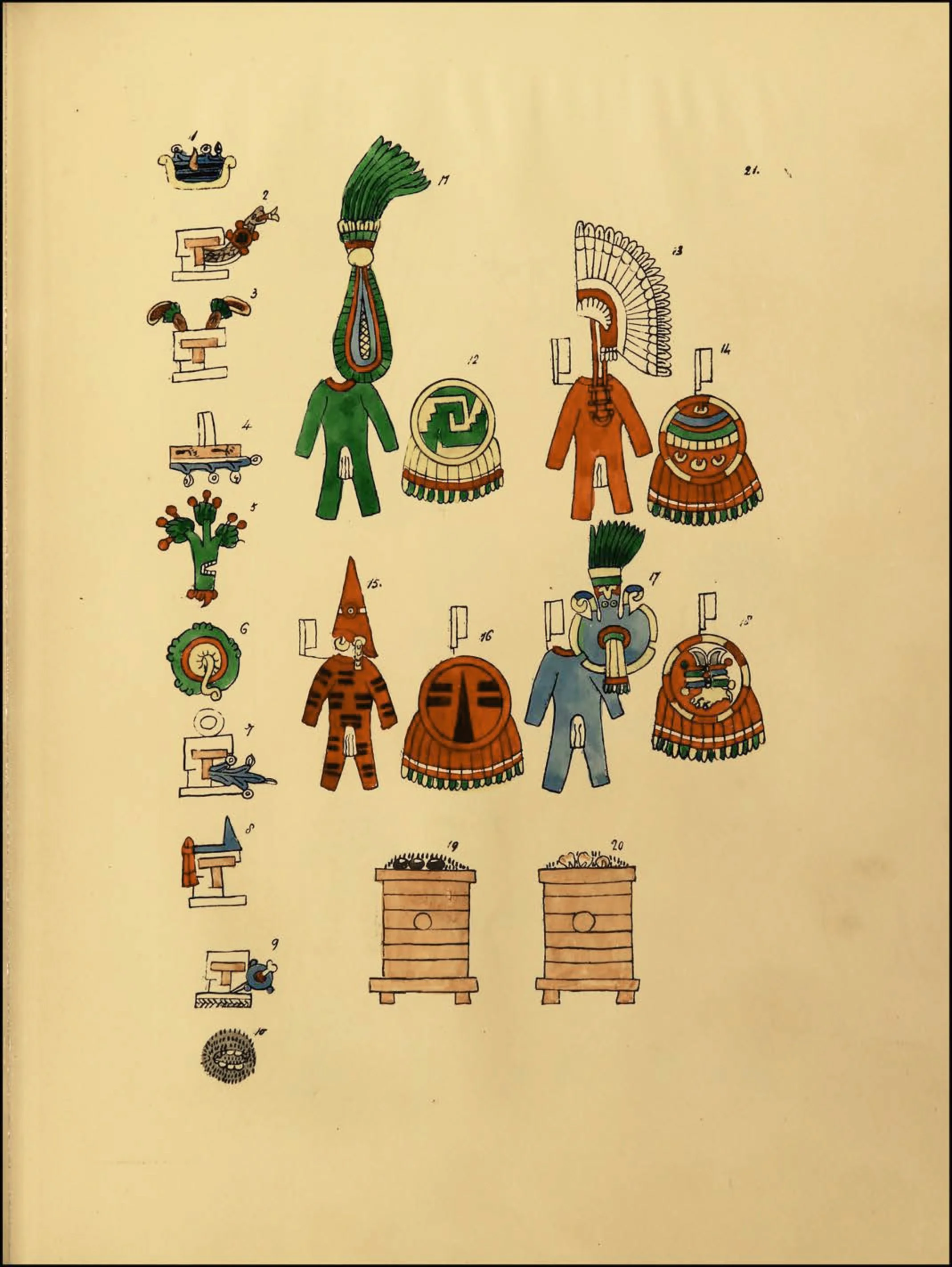
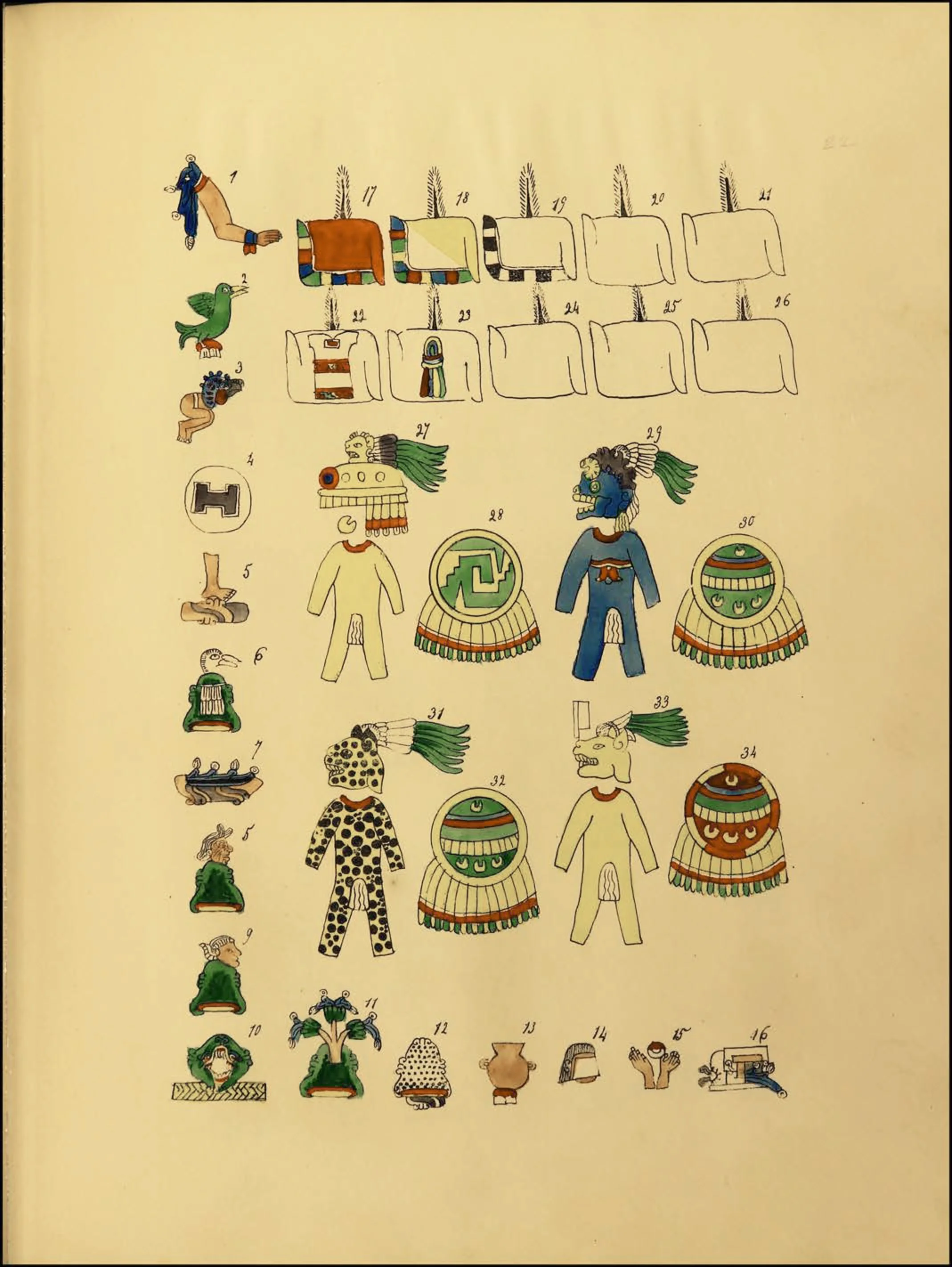
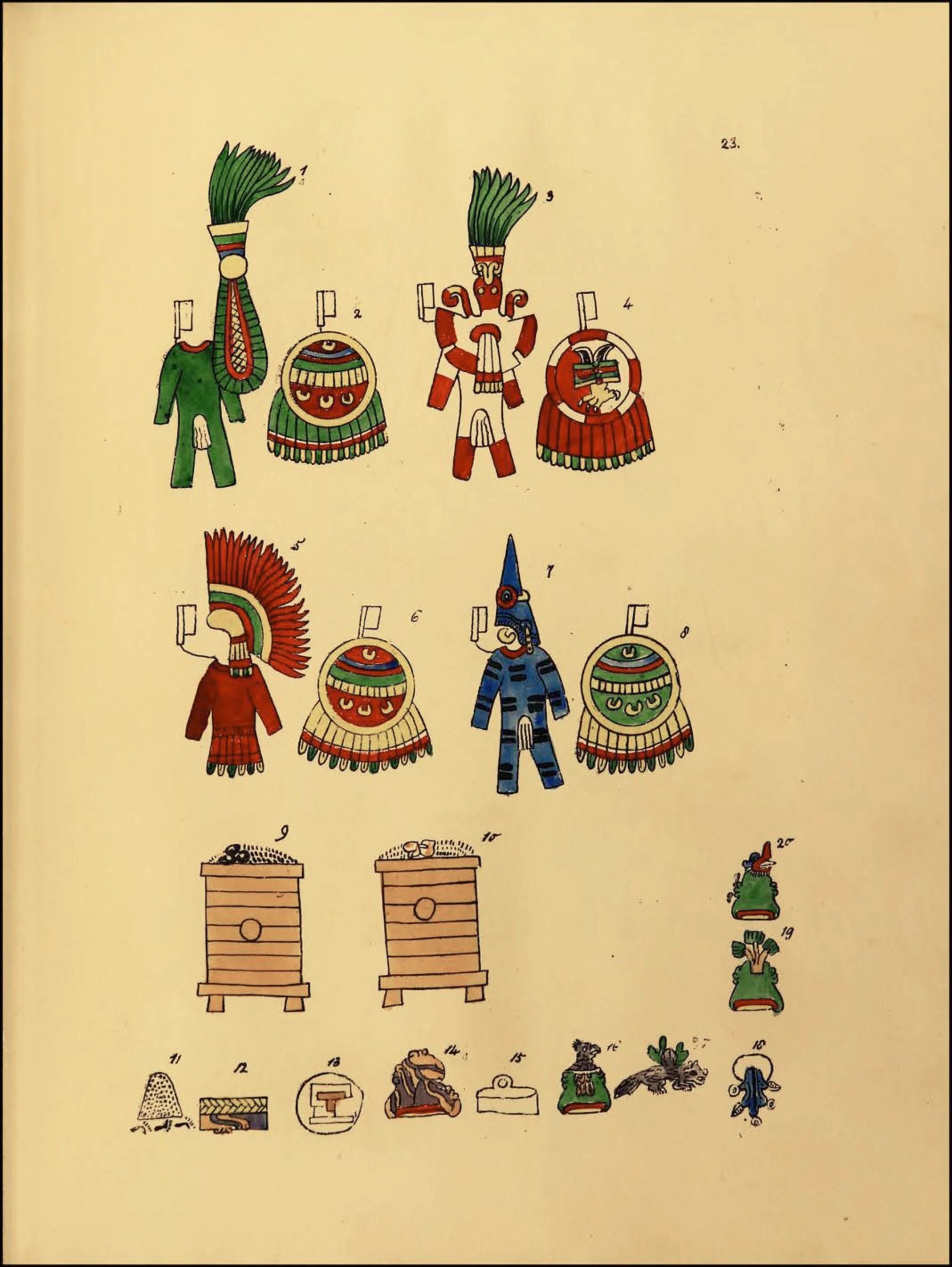
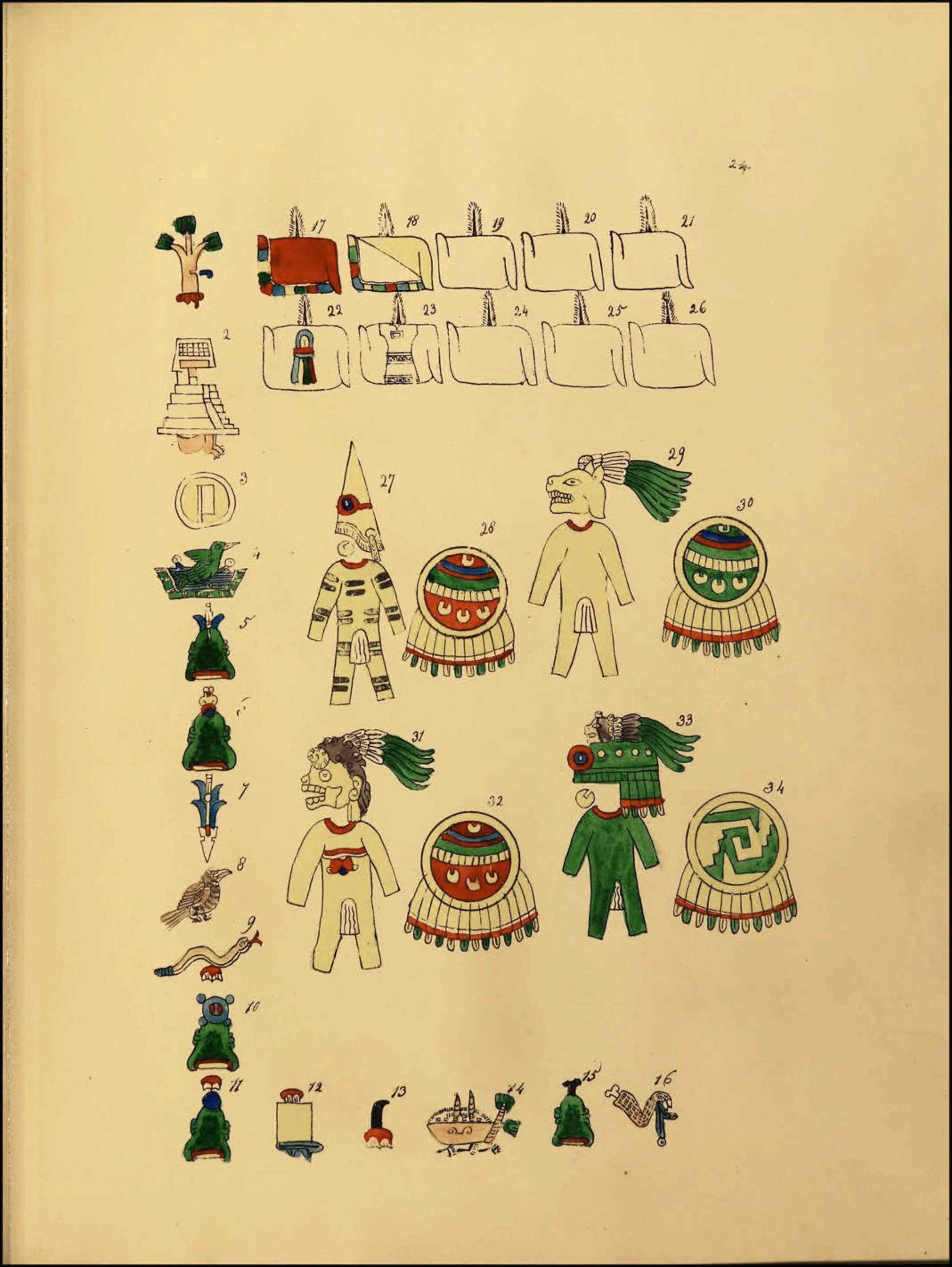
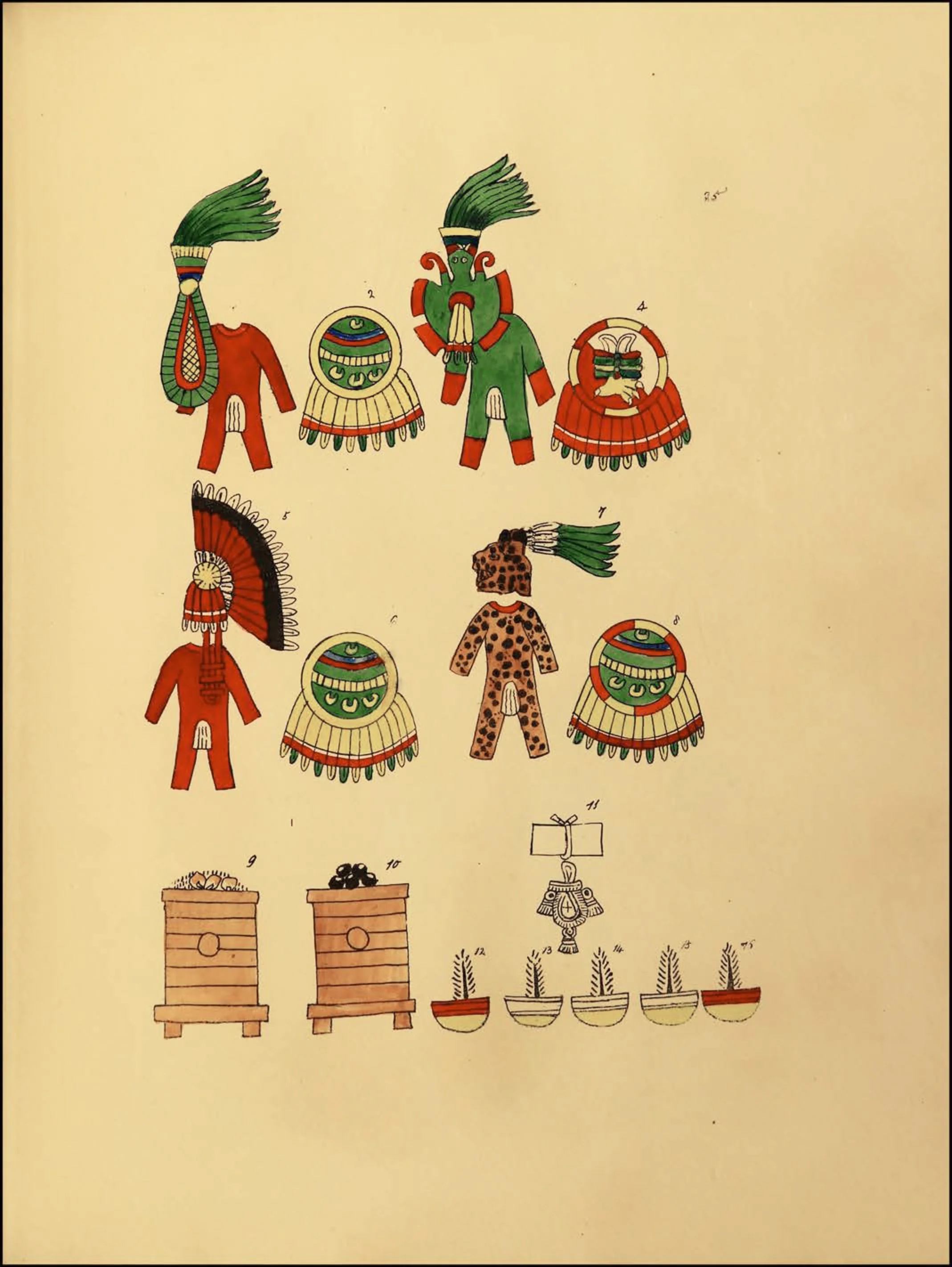
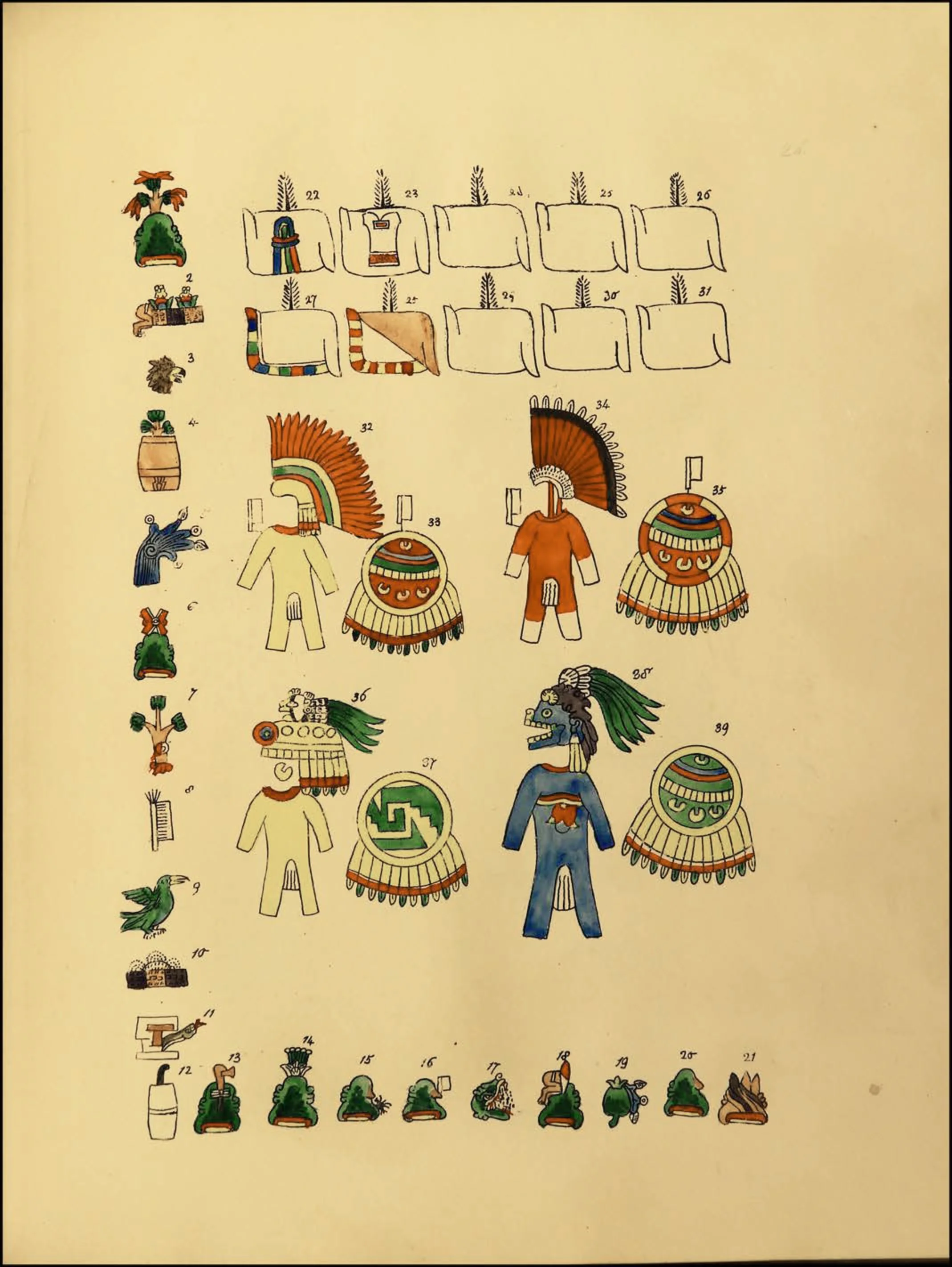
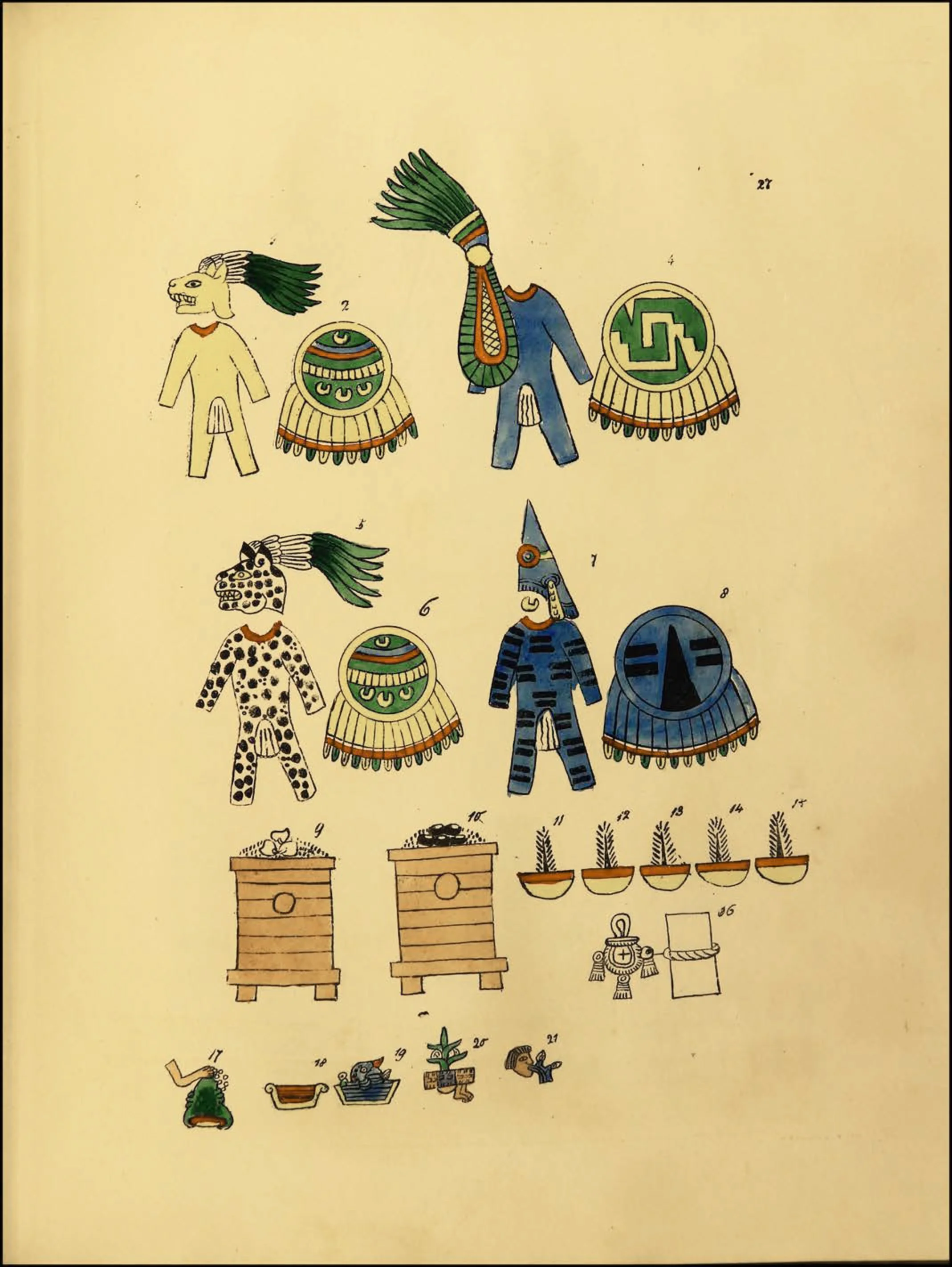
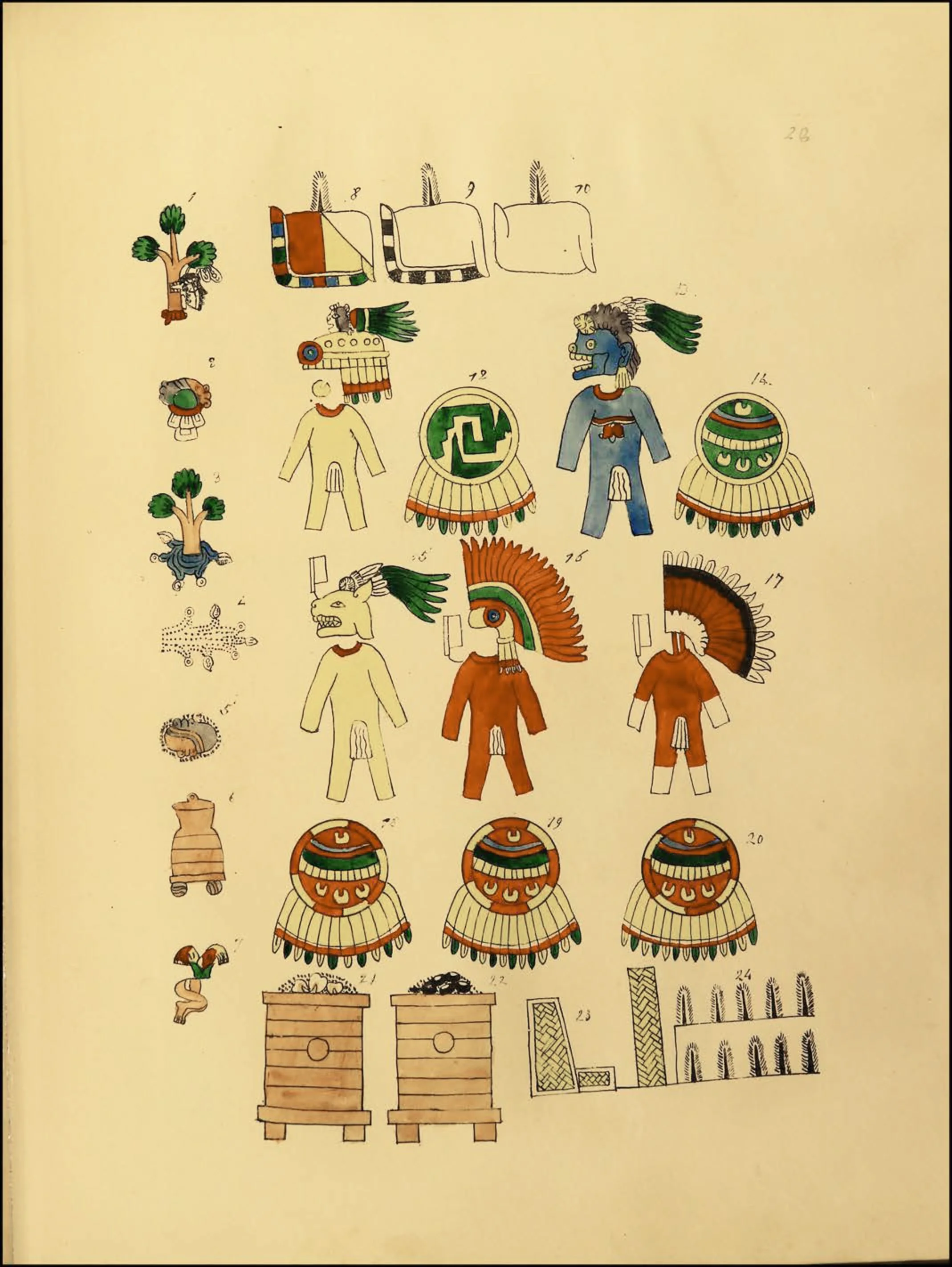
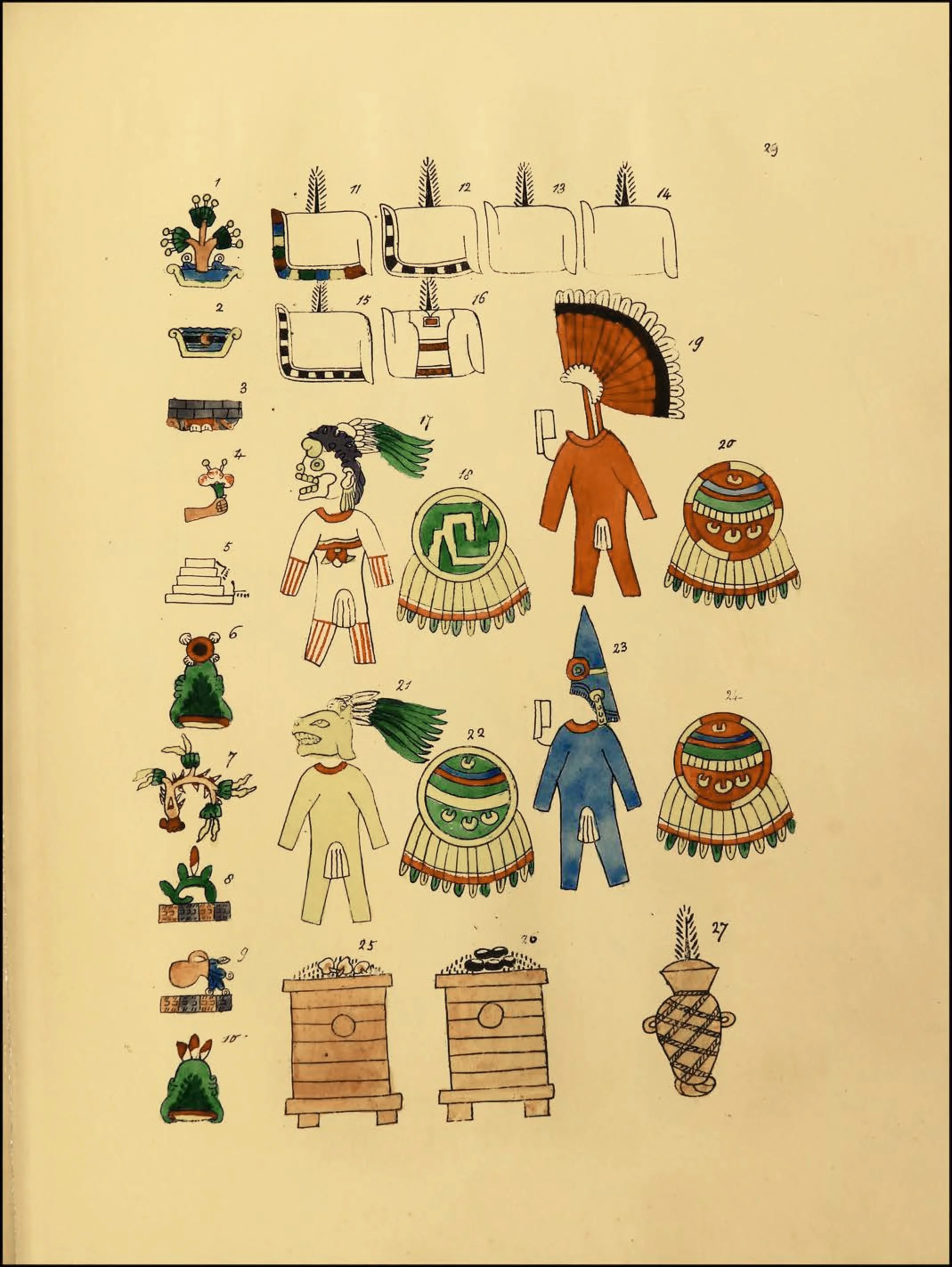
The Codex Mendoza is an Aztec codex, created about twenty years after the Spanish invasion of Mexico and the destruction of the Aztec empire with the intent that it be seen by Charles V, the Holy Roman Emperor and King of Spain. It contains a history of the Aztec rulers and their conquests, a list of the tribute paid by the conquered, and a description of daily Aztec life, in traditional Aztec hieroglyphs with Spanish explanations and commentary. It is named after Antonio de Mendoza, then the viceroy of New Spain, who may have commissioned it.
After creation in Mexico City, it was sent by ship to Spain. The fleet, however, was attacked by French privateers, and the codex, along with the rest of the booty, was taken to France. There it came into the possession of André Thévet, cosmographer to King Henry II of France. Thévet wrote his name in five places on the codex, twice with the date 1553.
It was later bought by the Englishman Richard Hakluyt for 20 French francs. Some time after 1616 it was passed to Samuel Purchase, then to his son, and then to John Selden. The codex was deposited into the Bodleian Library at Oxford University in 1659, 5 years after Selden's death, where it remained in obscurity until 1831, when it was rediscovered by Viscount (later Lord) Kingsborough and brought to the attention of scholars
The codex is written in the Nahuatl language using traditional Aztec mnemonic hieroglyphic with a translation and explanation of the text provided in Spanish. Don Antonio de Mendoza (1495-1552), the viceroy of New Spain, who supervised its creation was a leading patron of Aztec artists.
The Codex Mendoza depicts various aspects of Aztec history, society, and culture. It is organized into three sections:
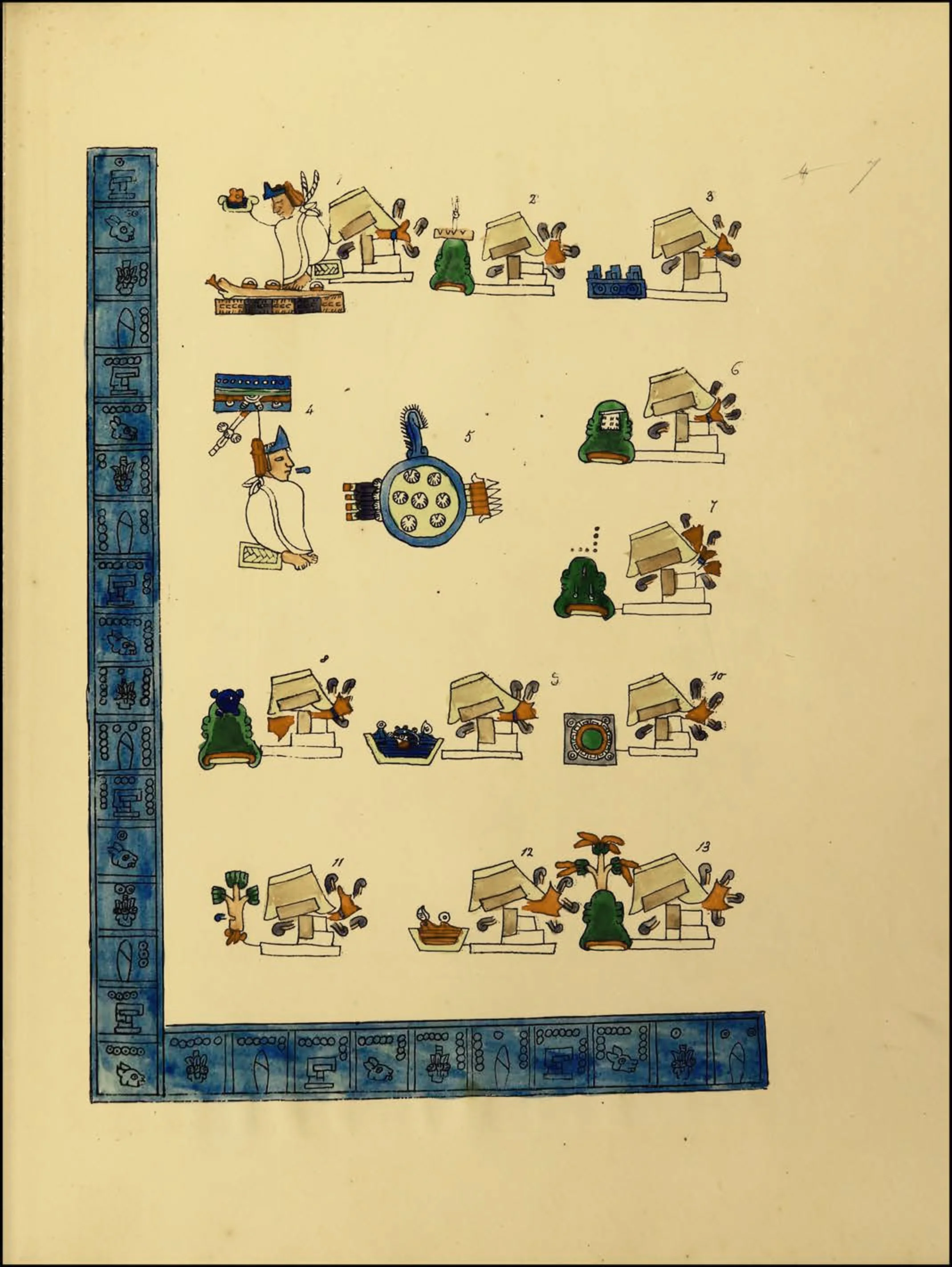
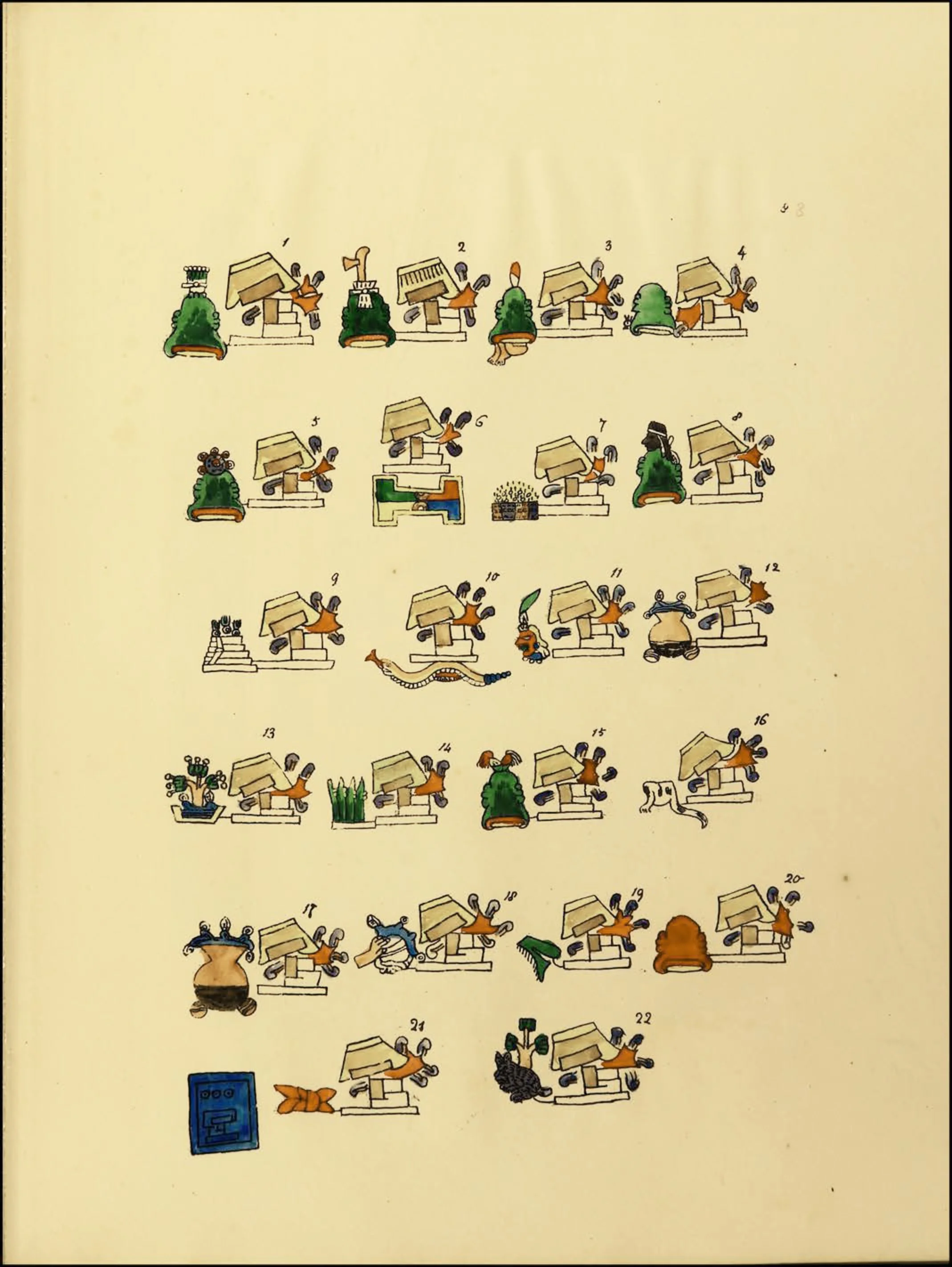
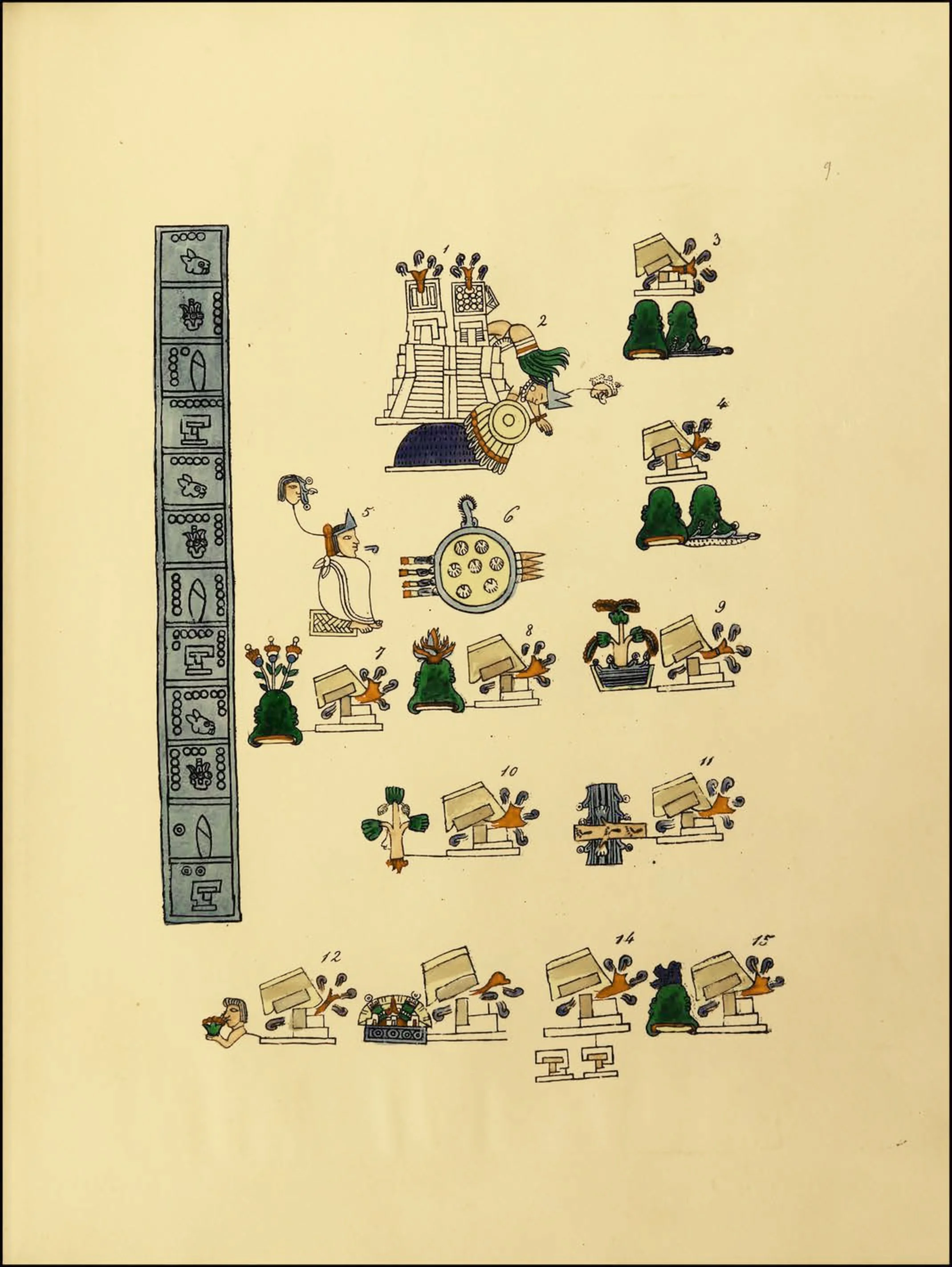
The first section contains a history of the Aztec people, including their migration from their ancestral homeland, their founding of the city of Tenochtitlan, and their conquests of neighboring regions, and the Aztec rulers.
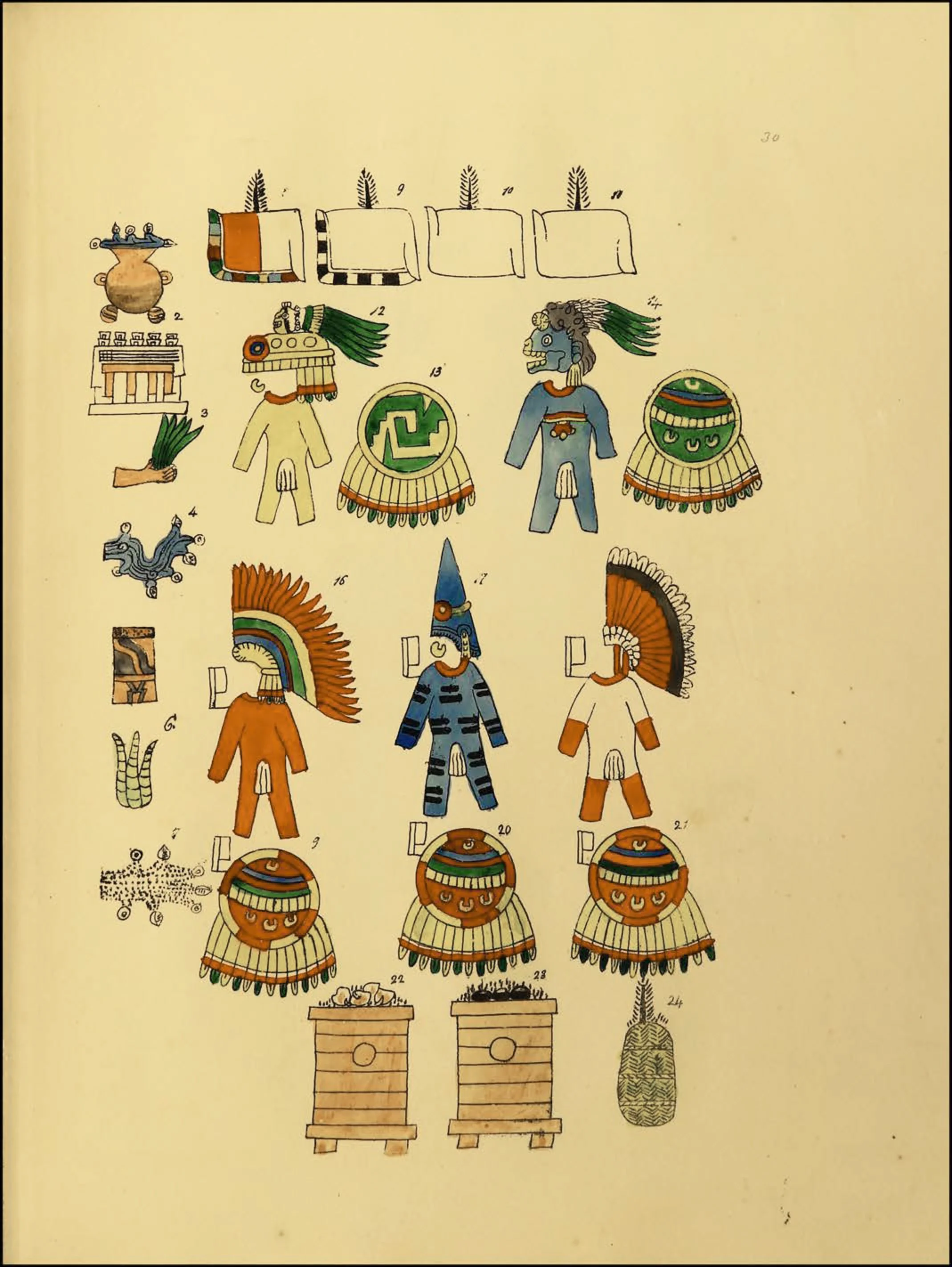
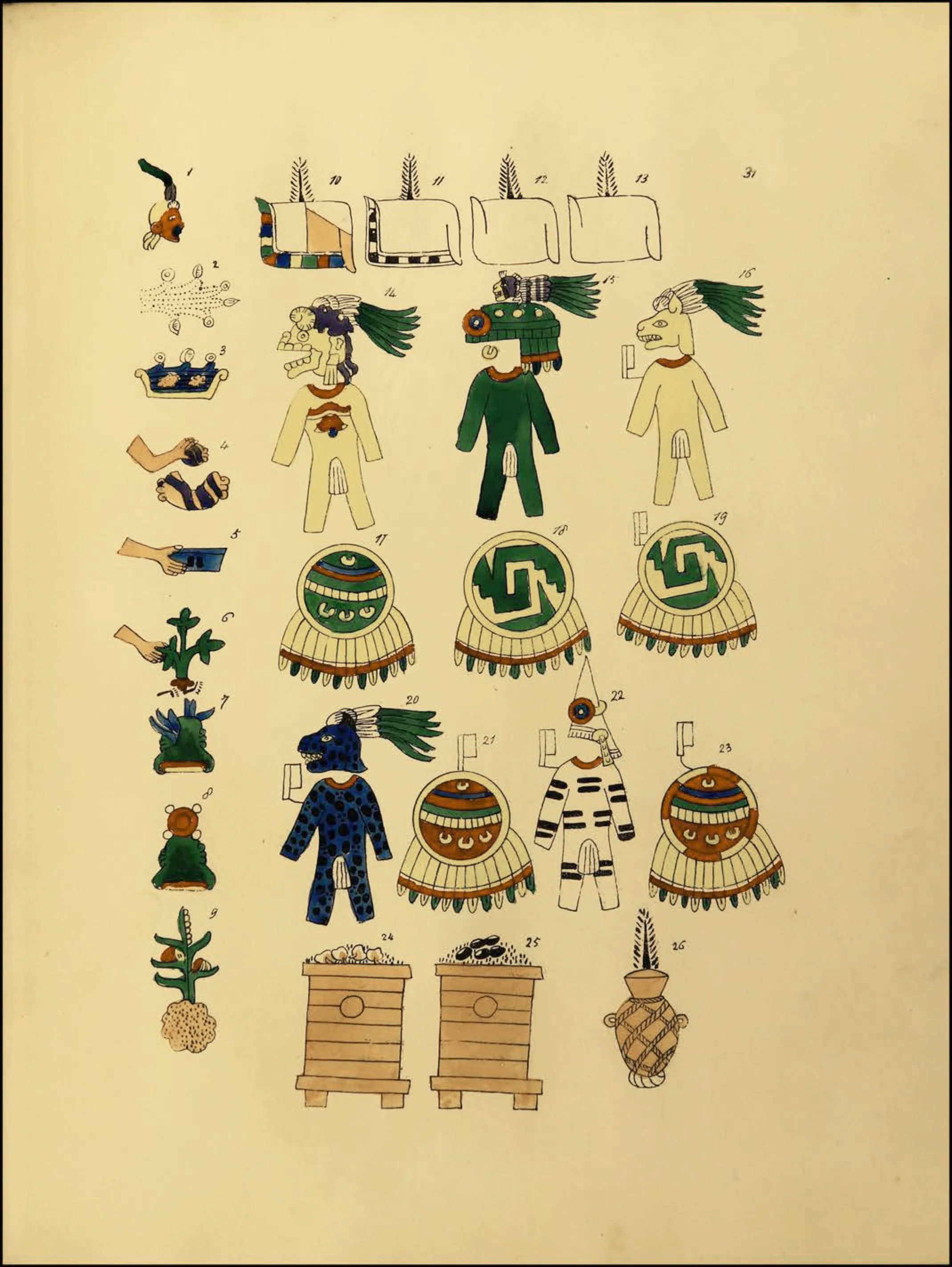
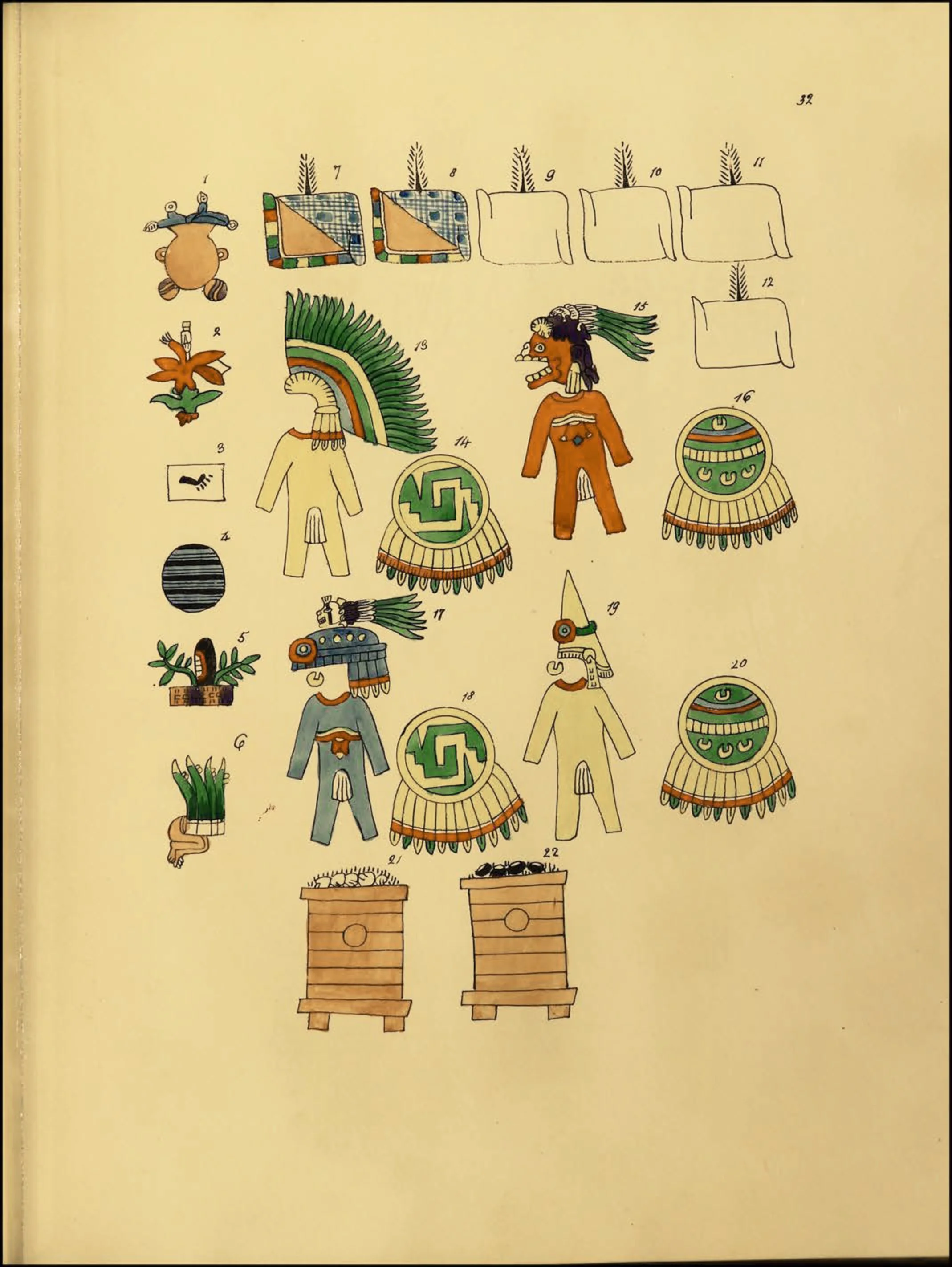
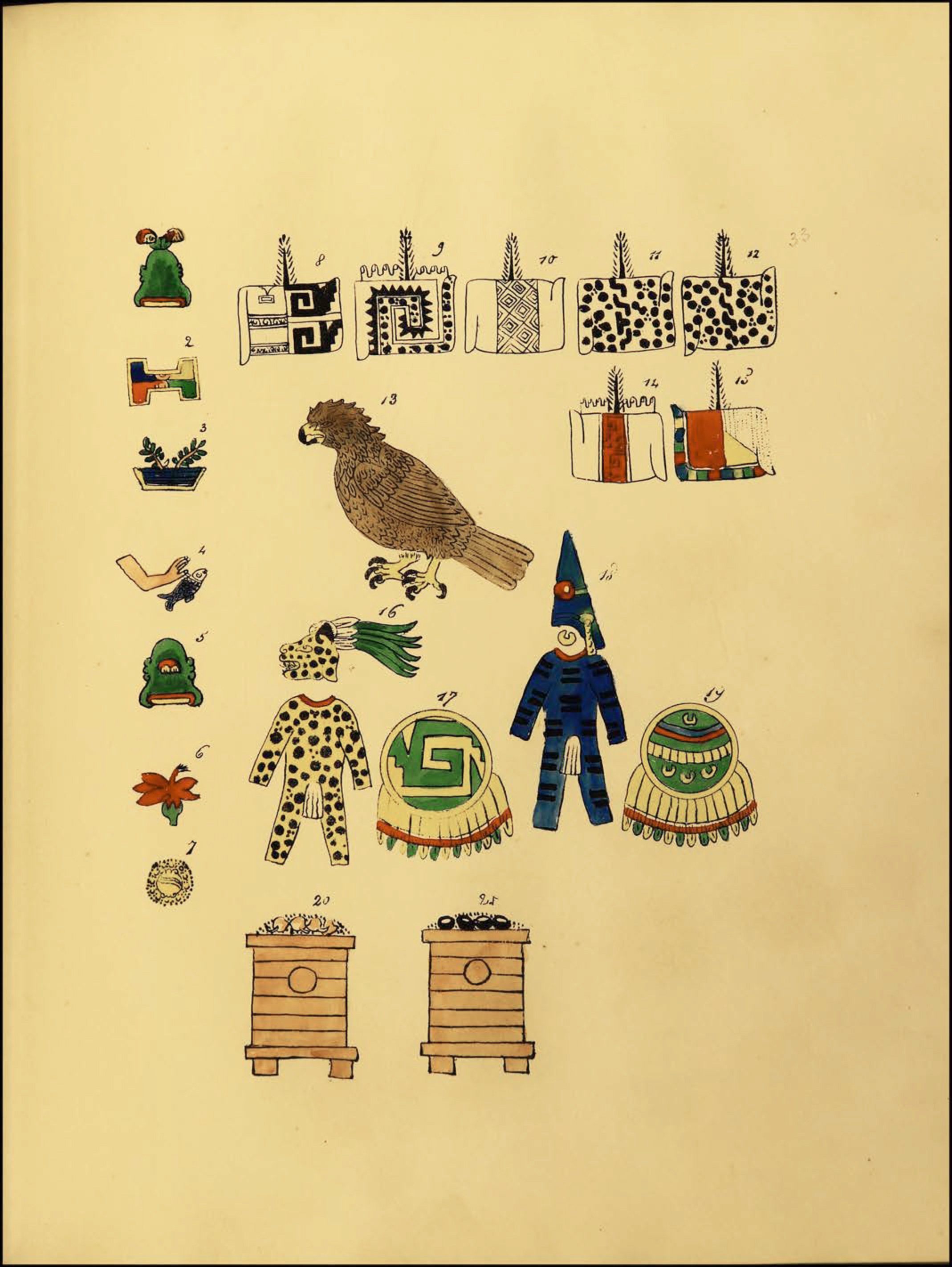
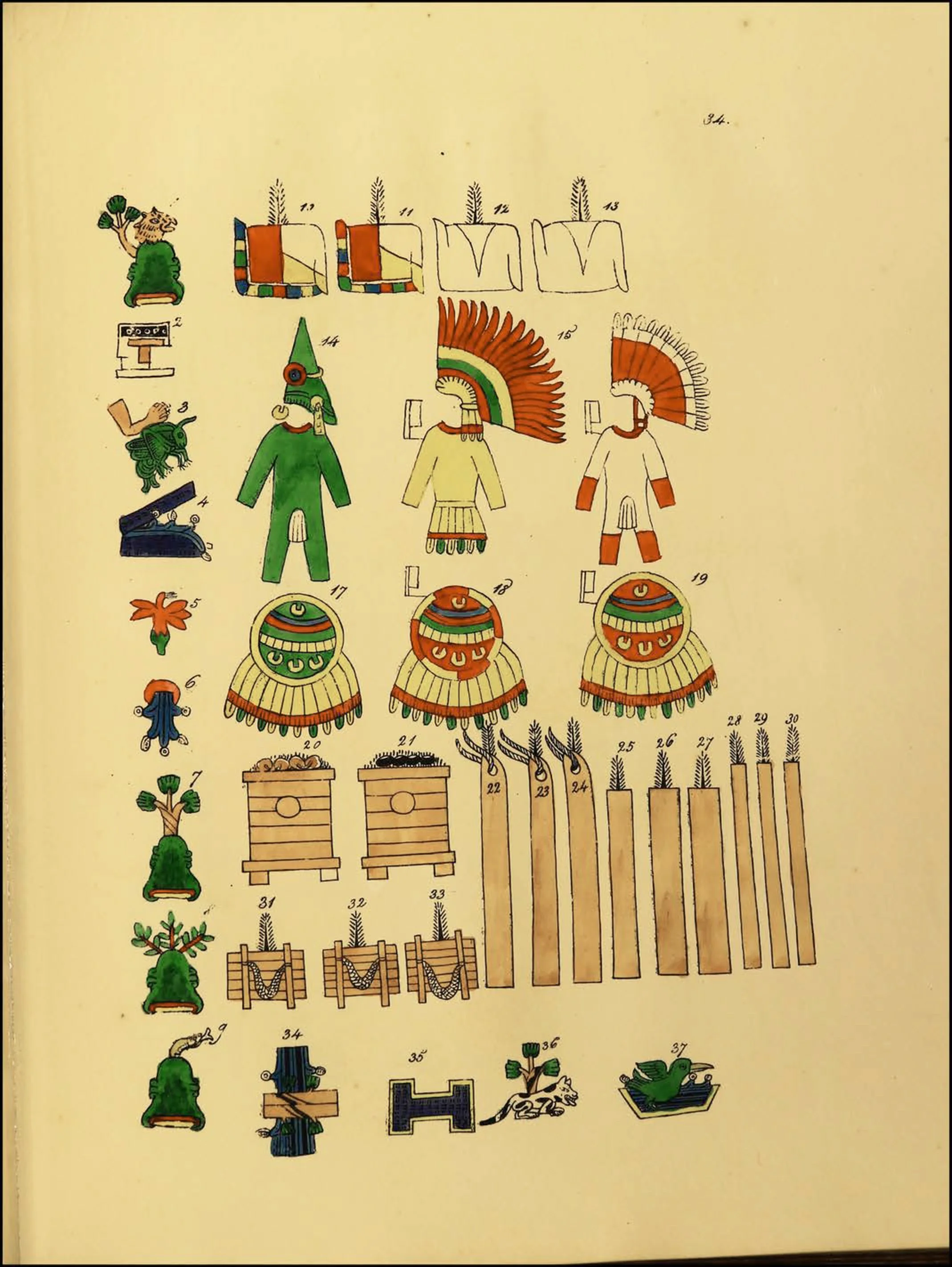
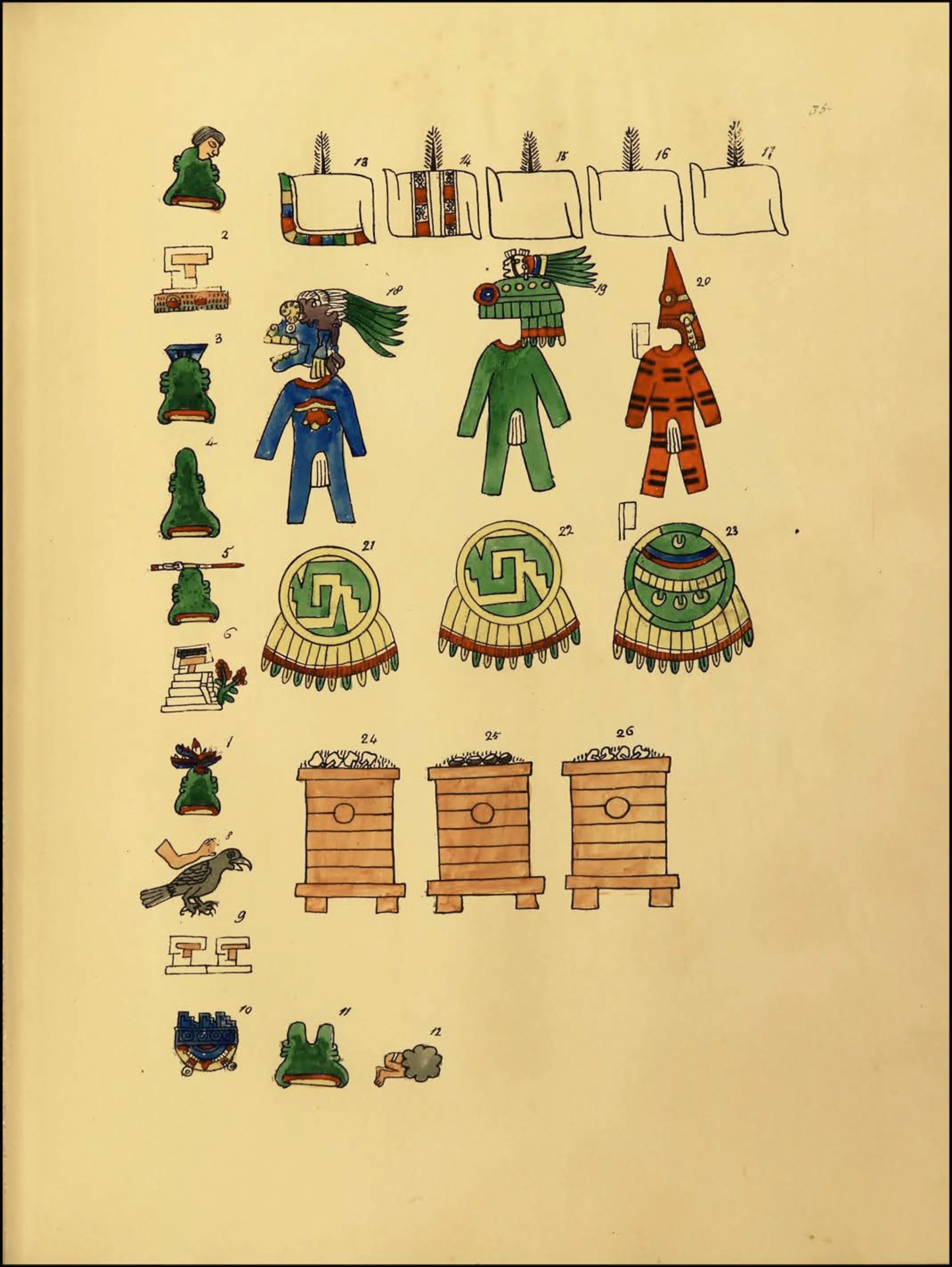
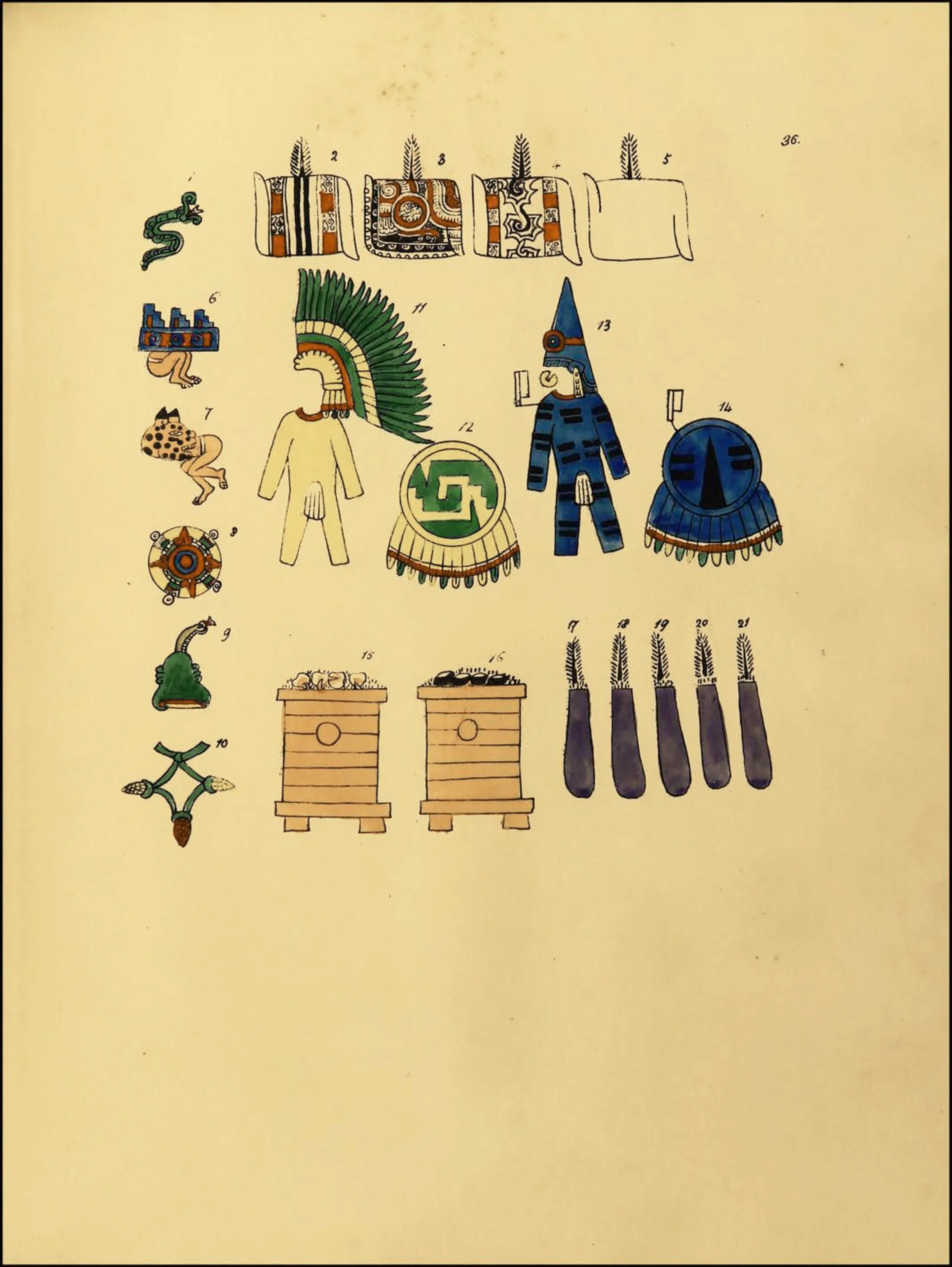
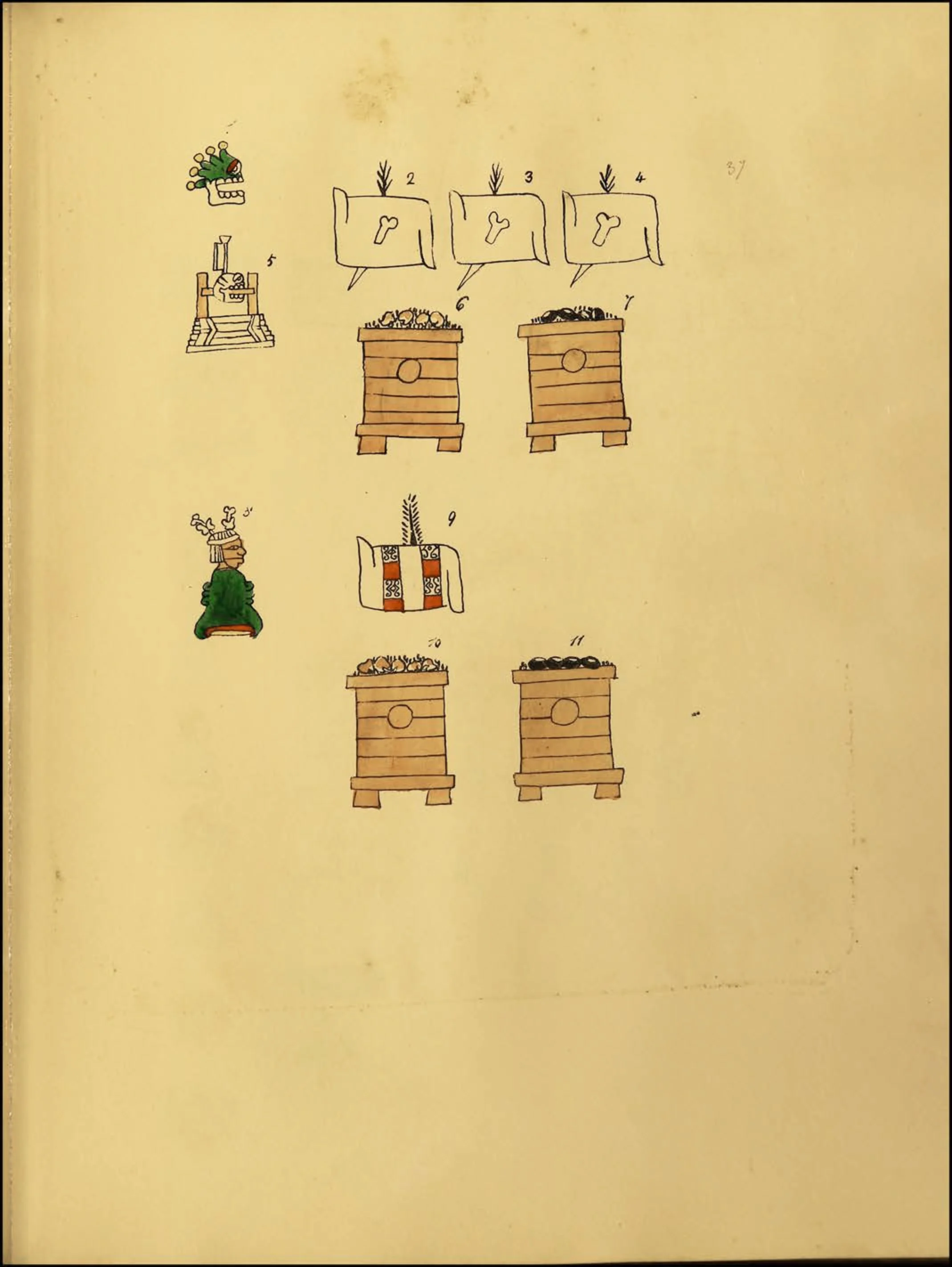
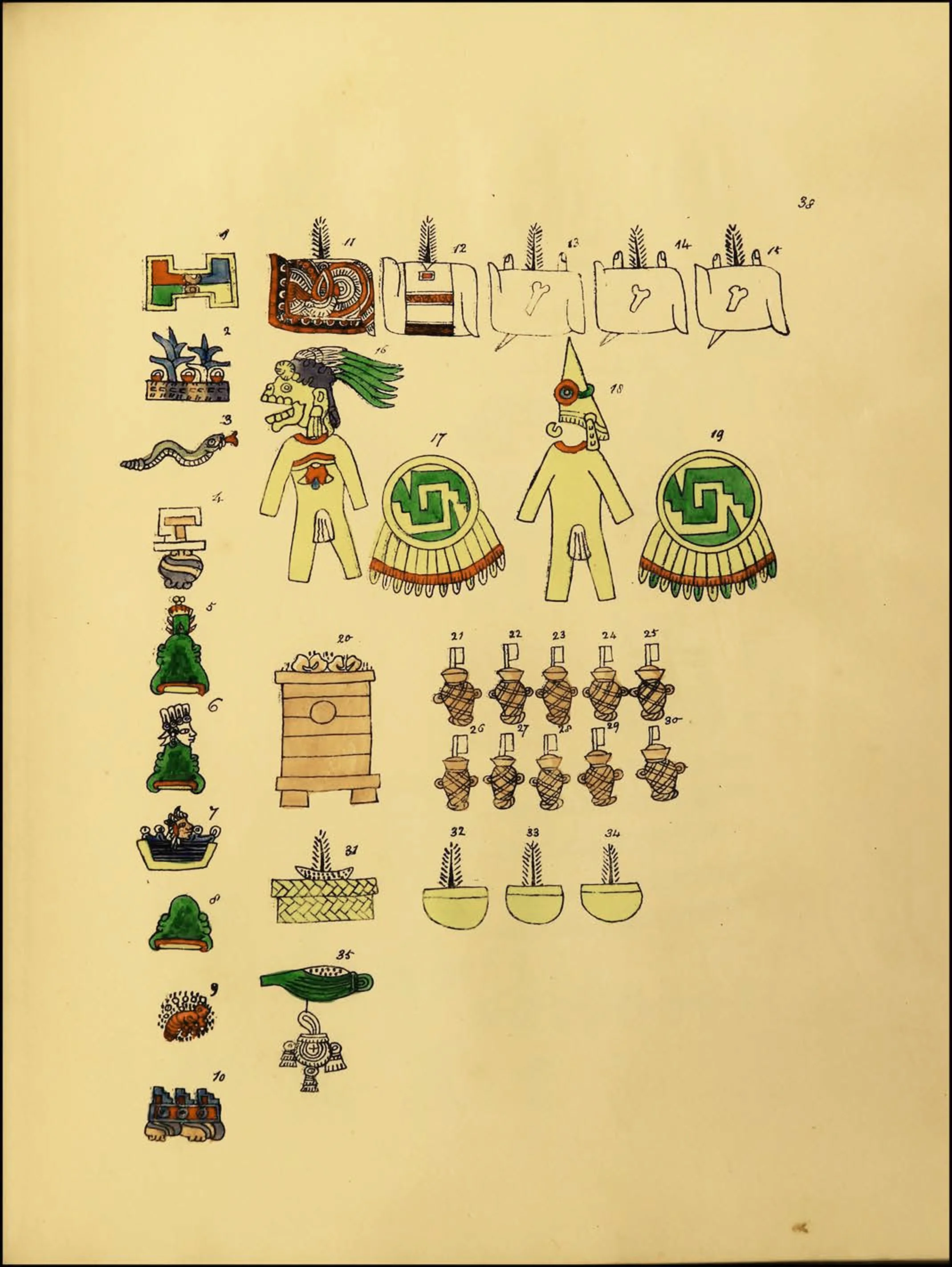
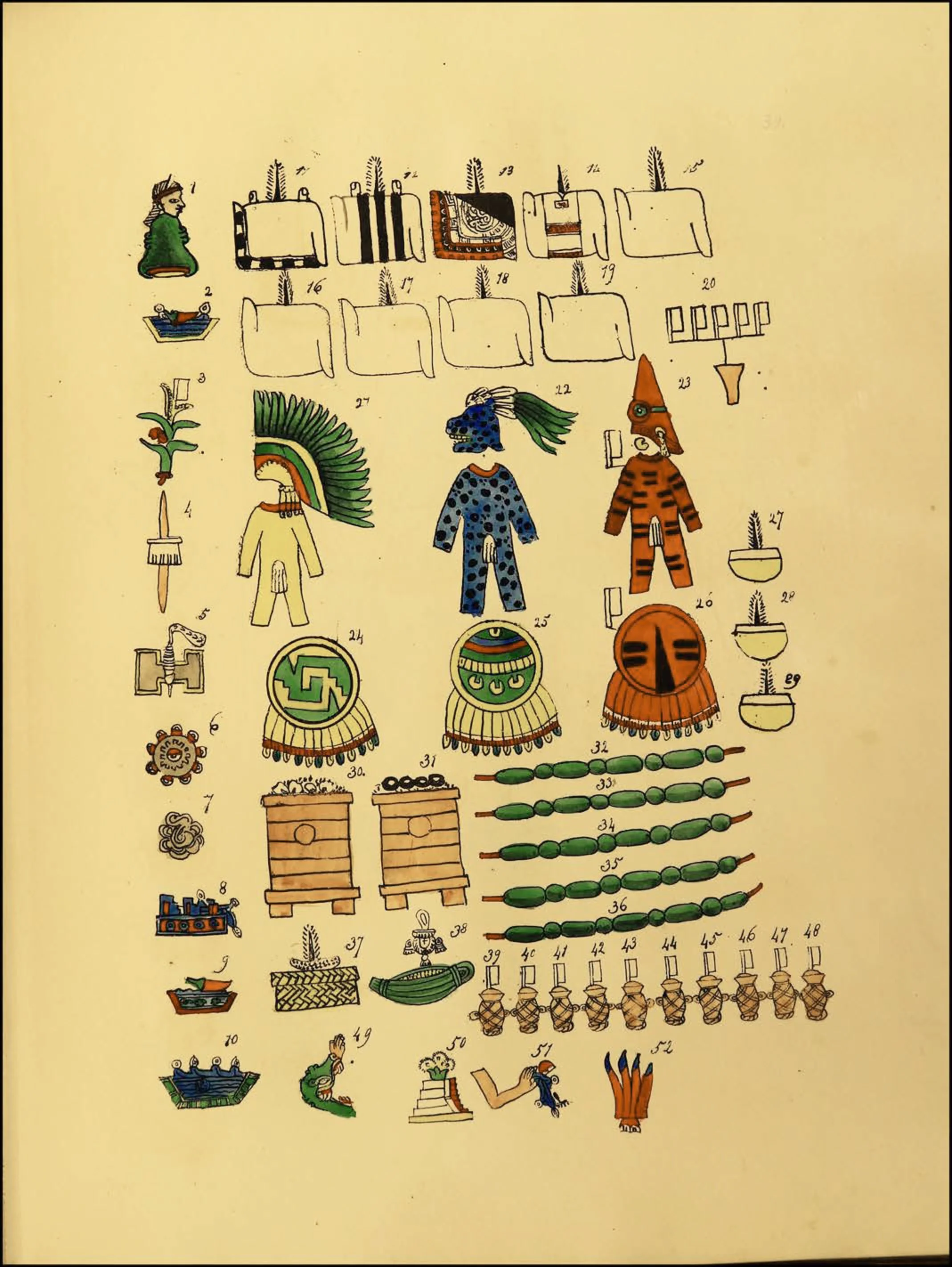
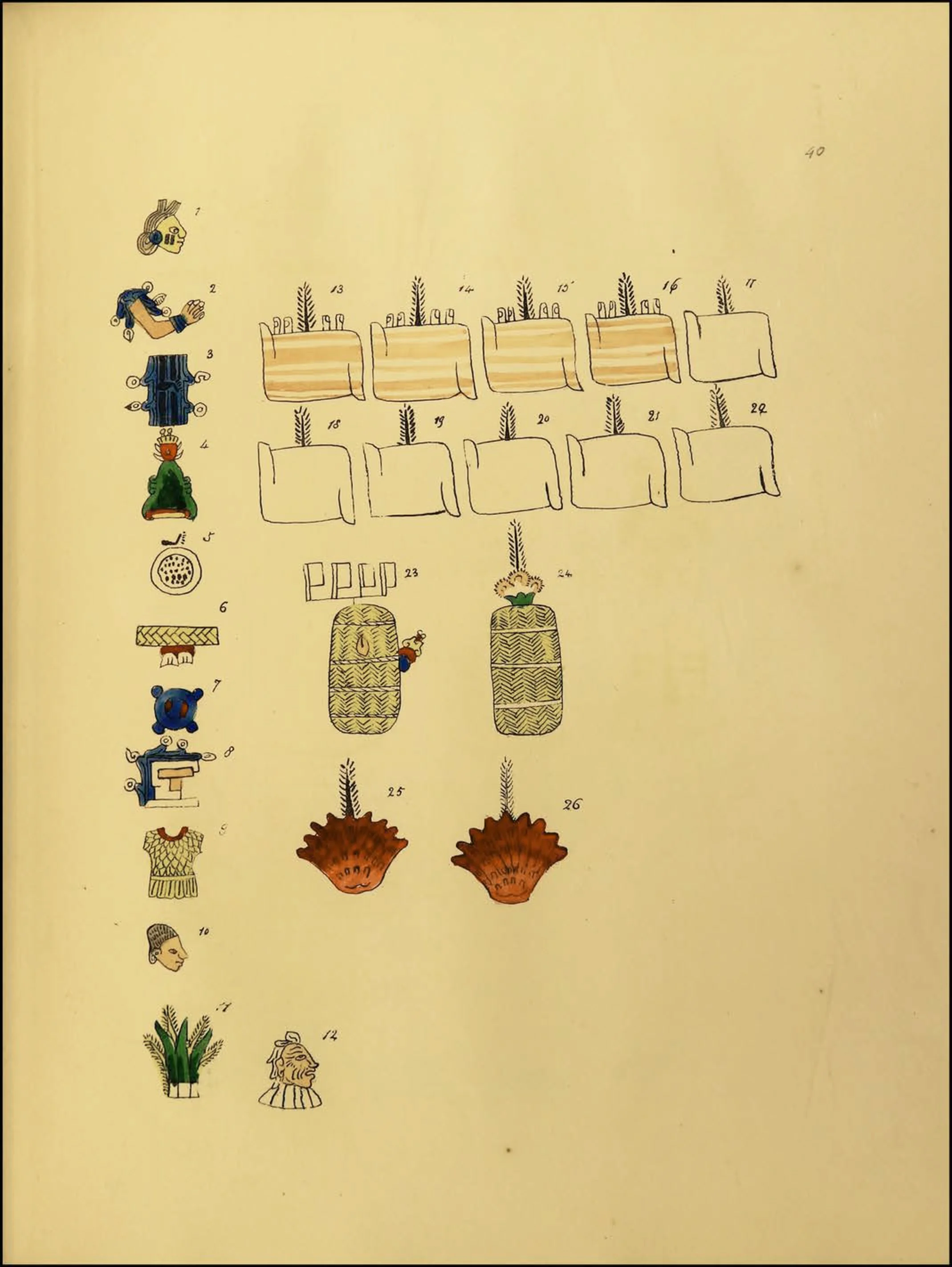
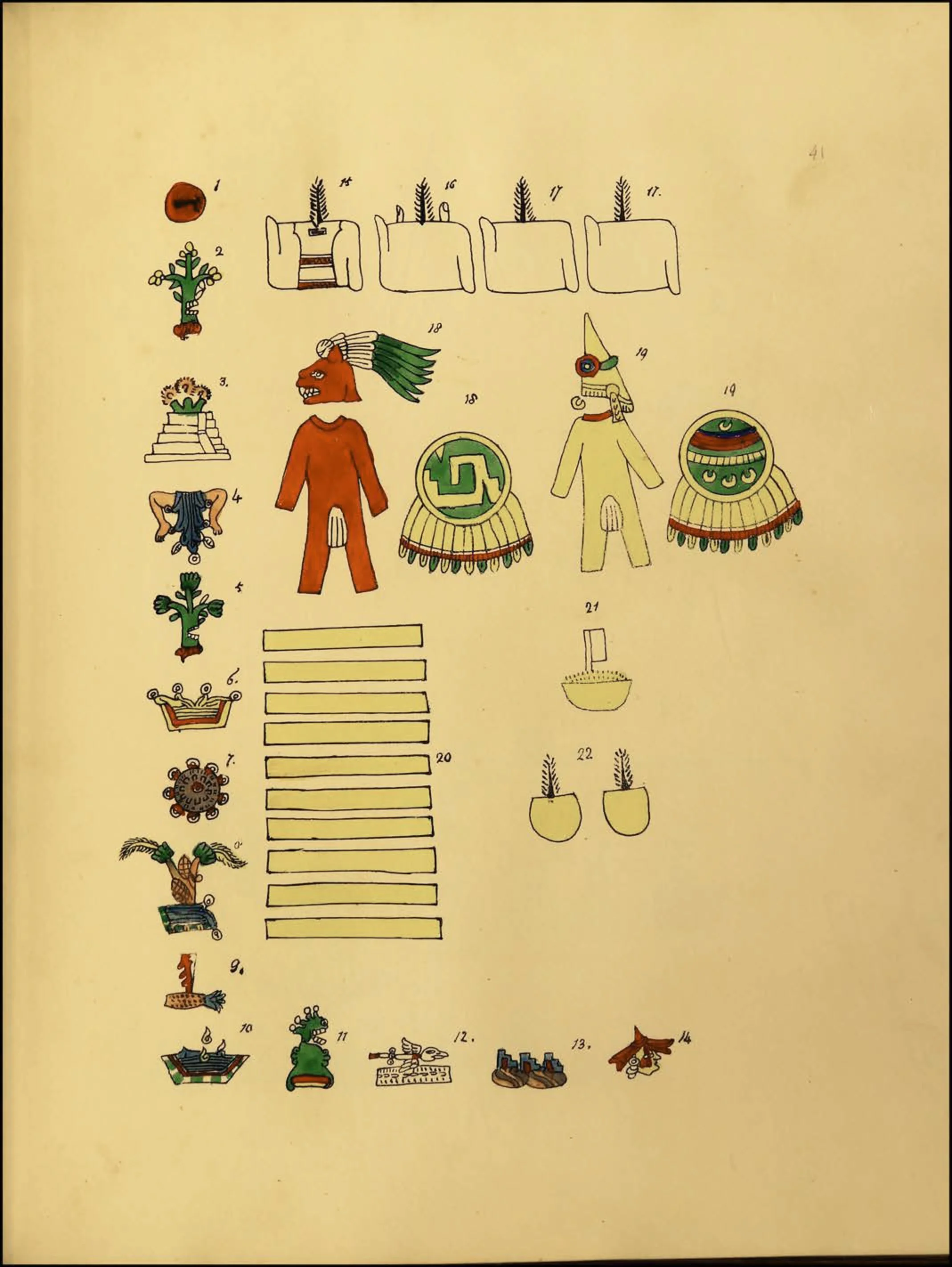
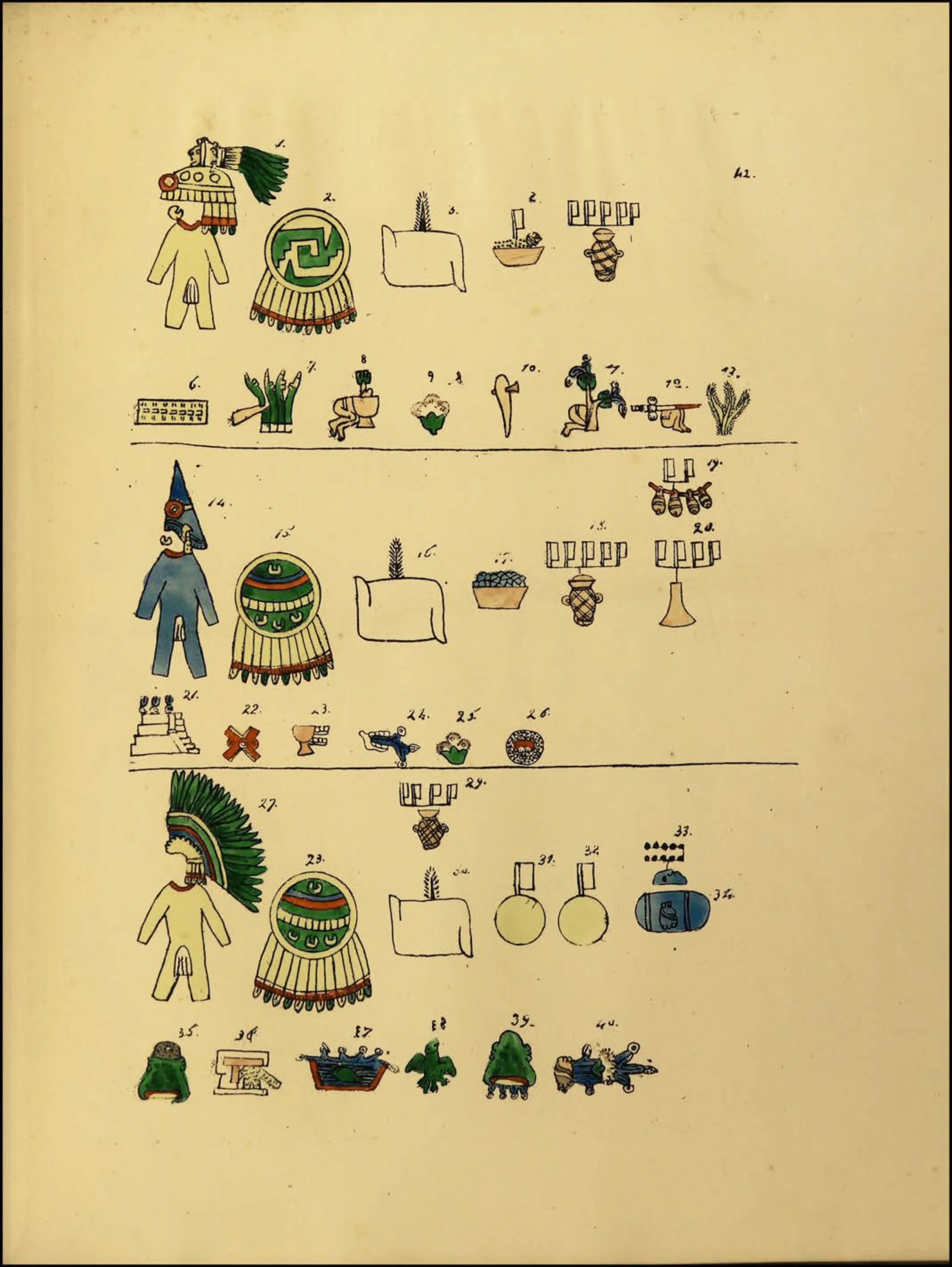
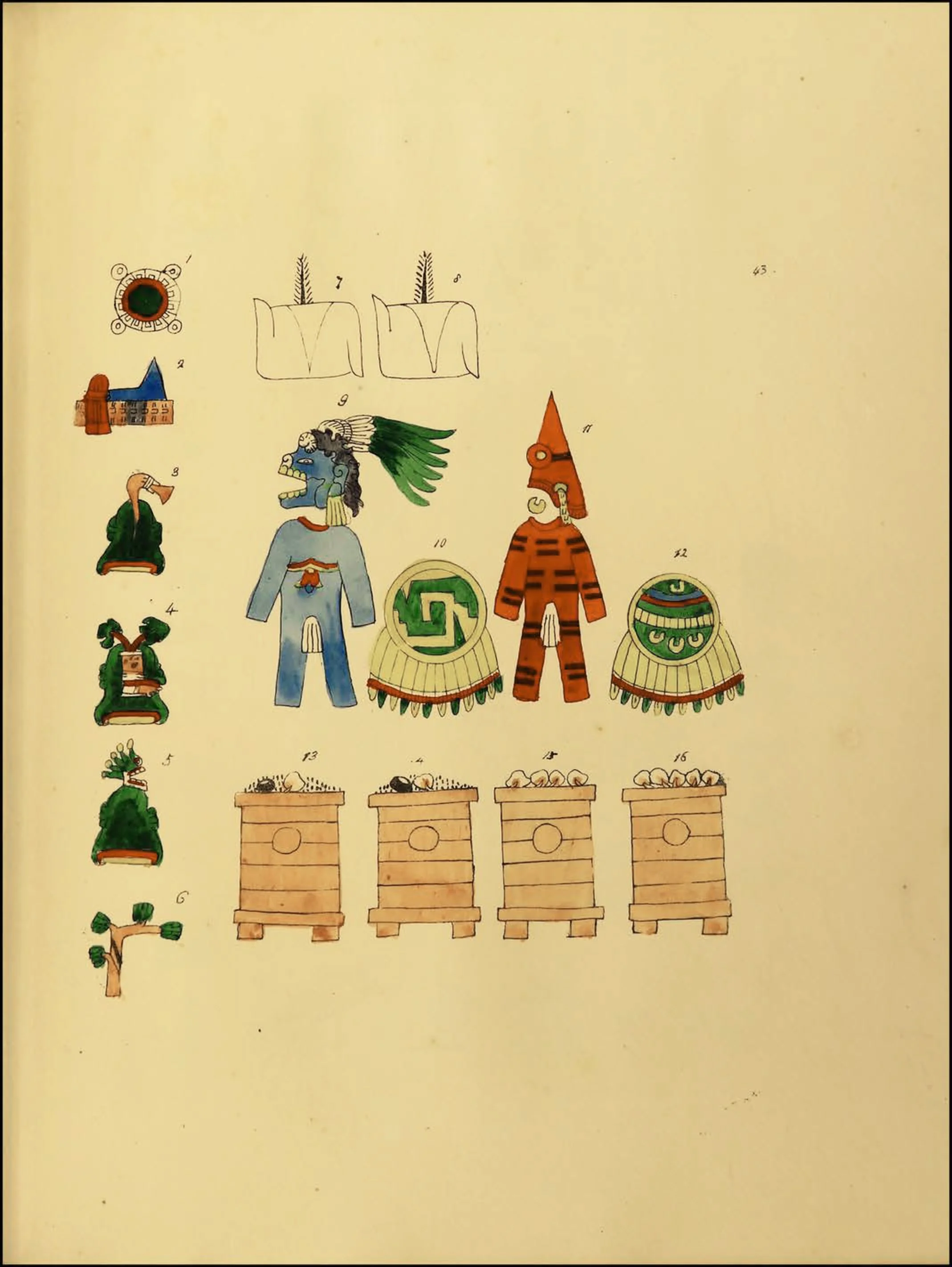
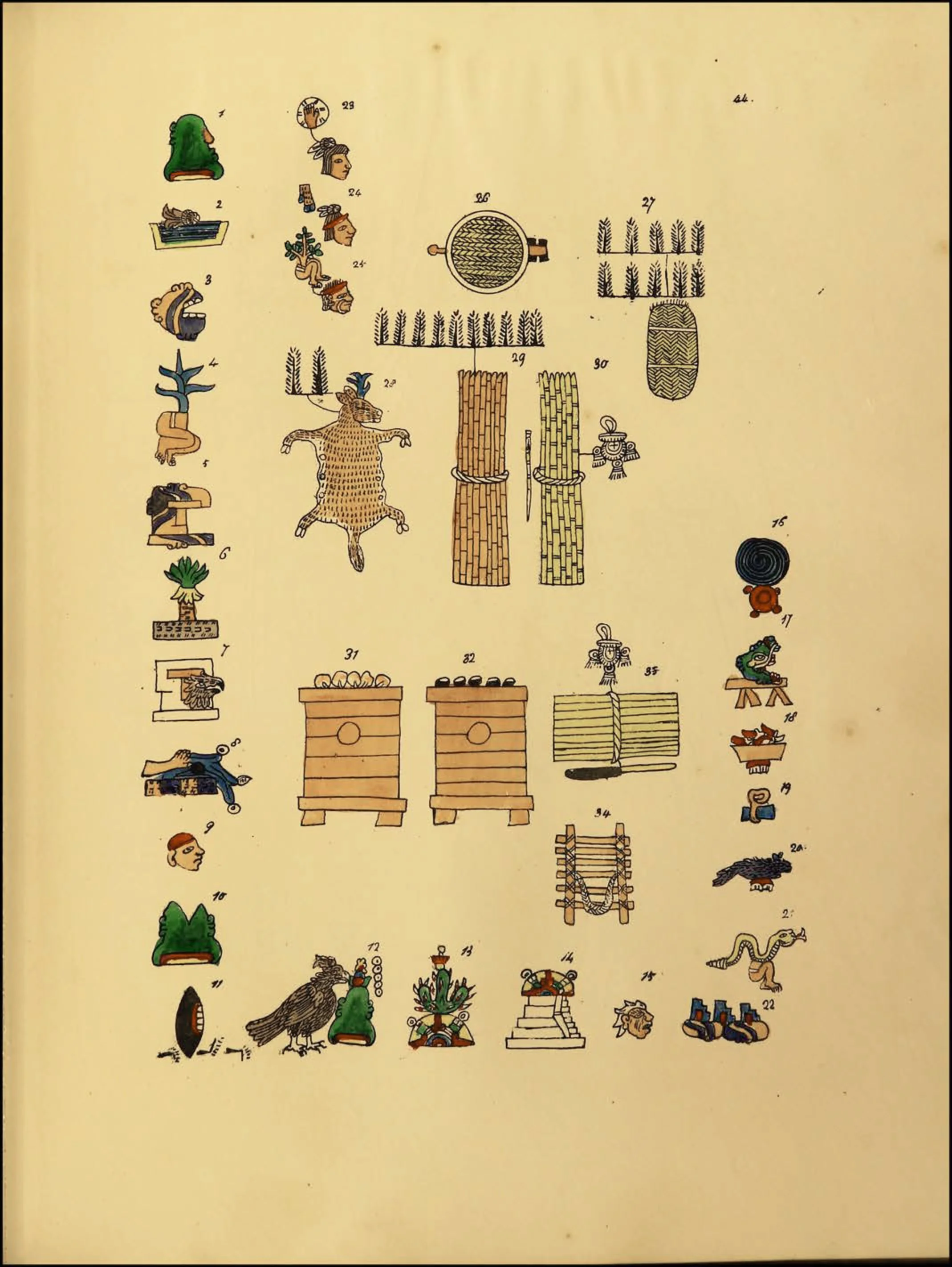
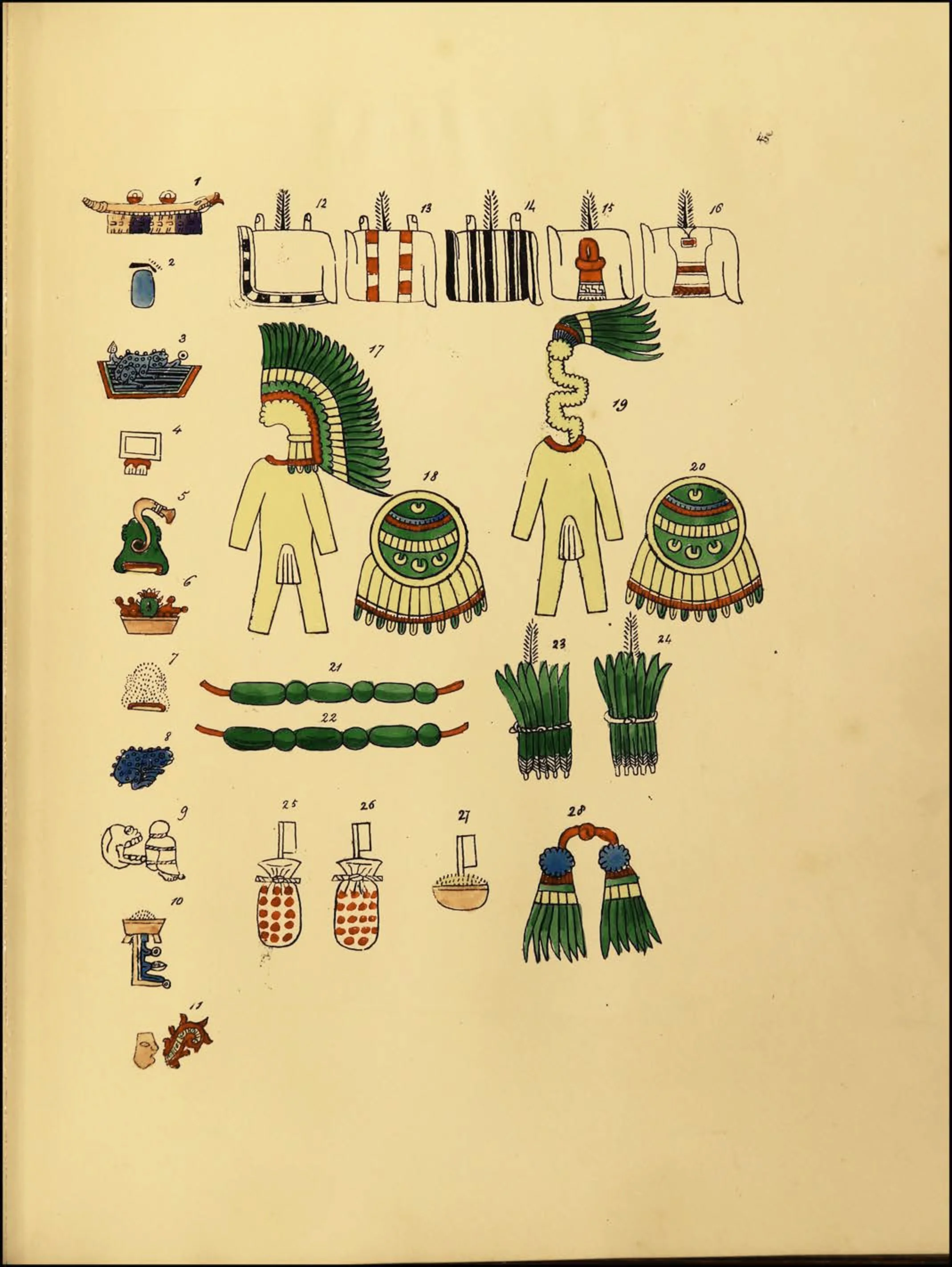
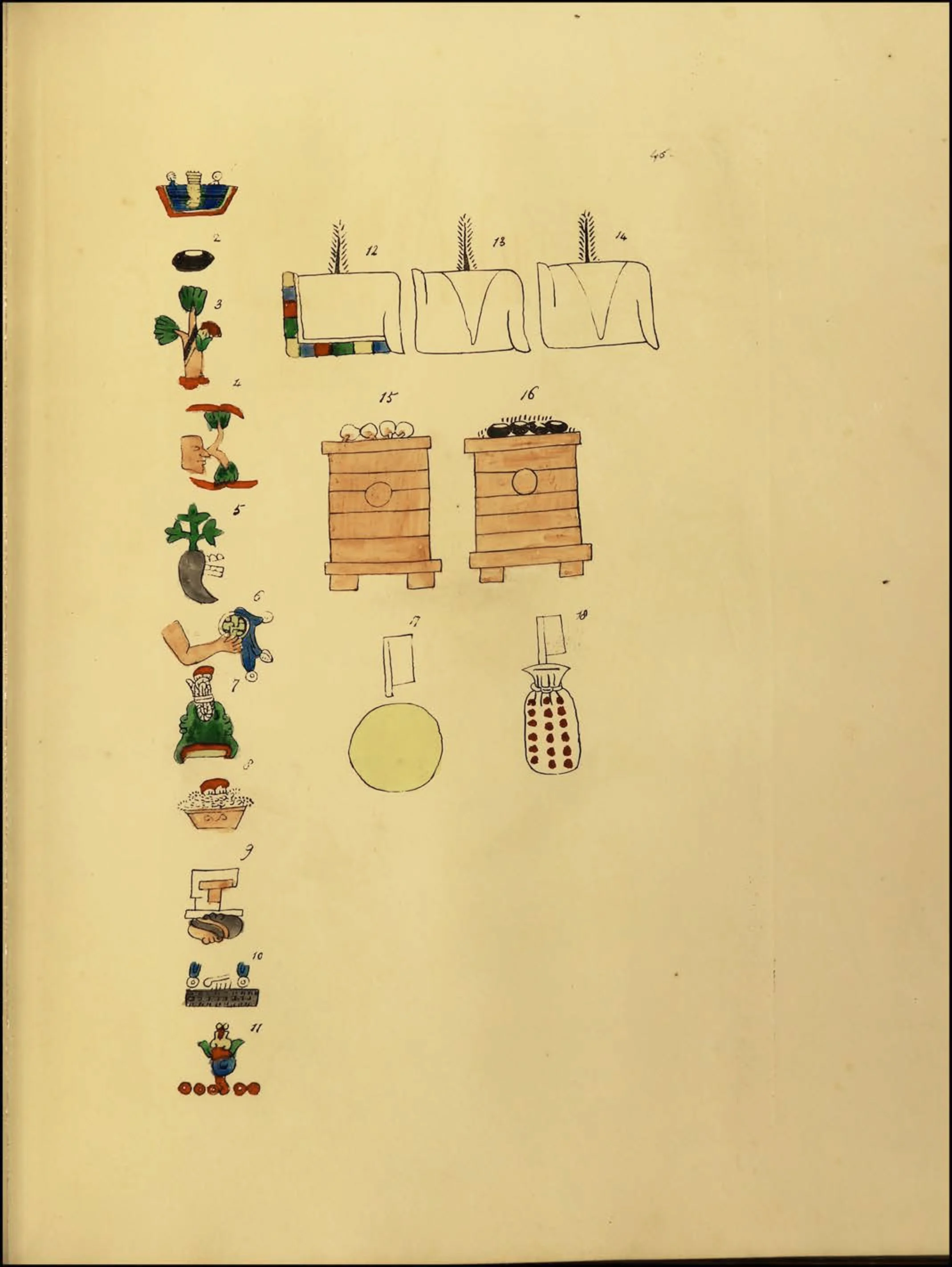
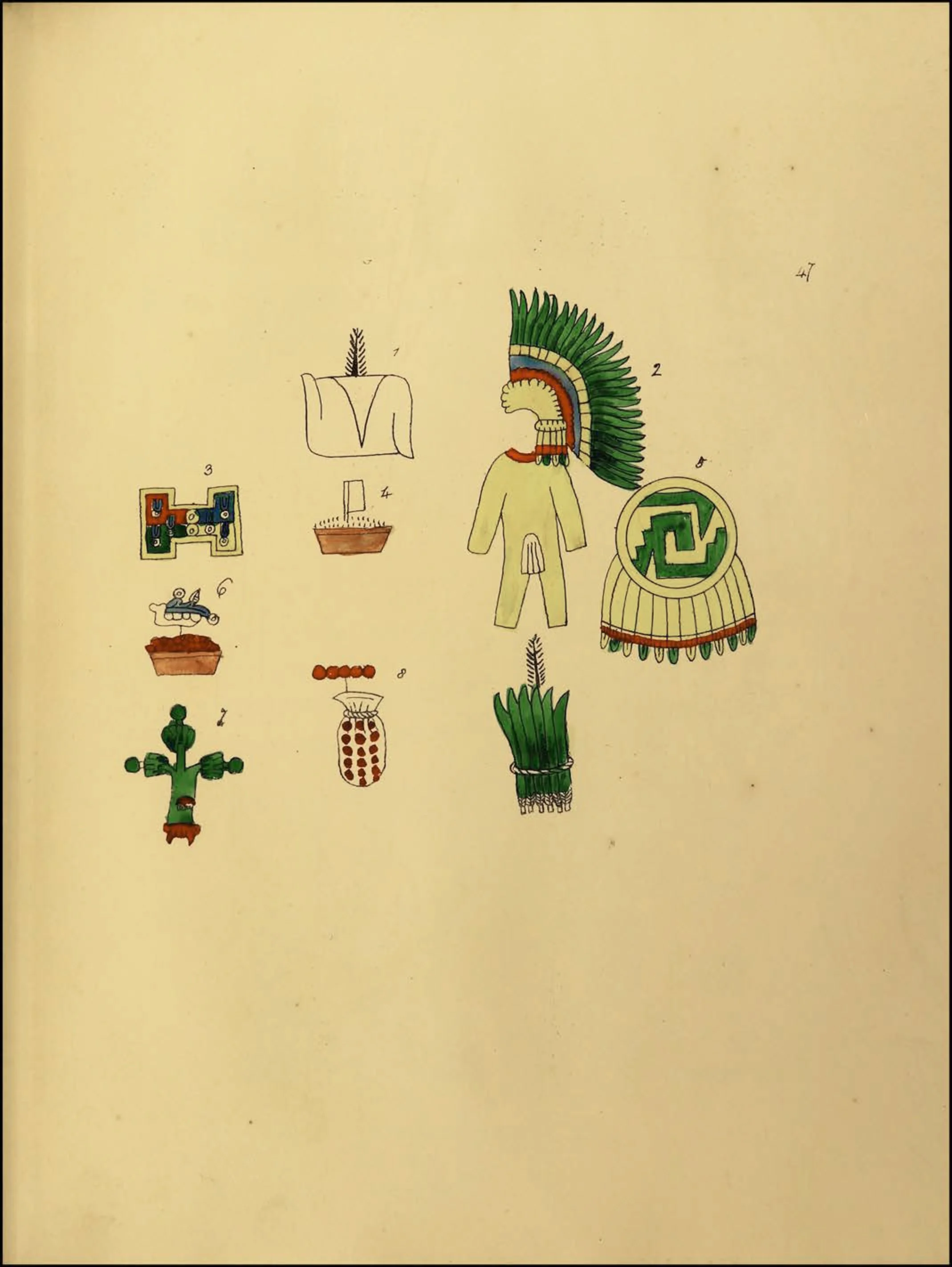
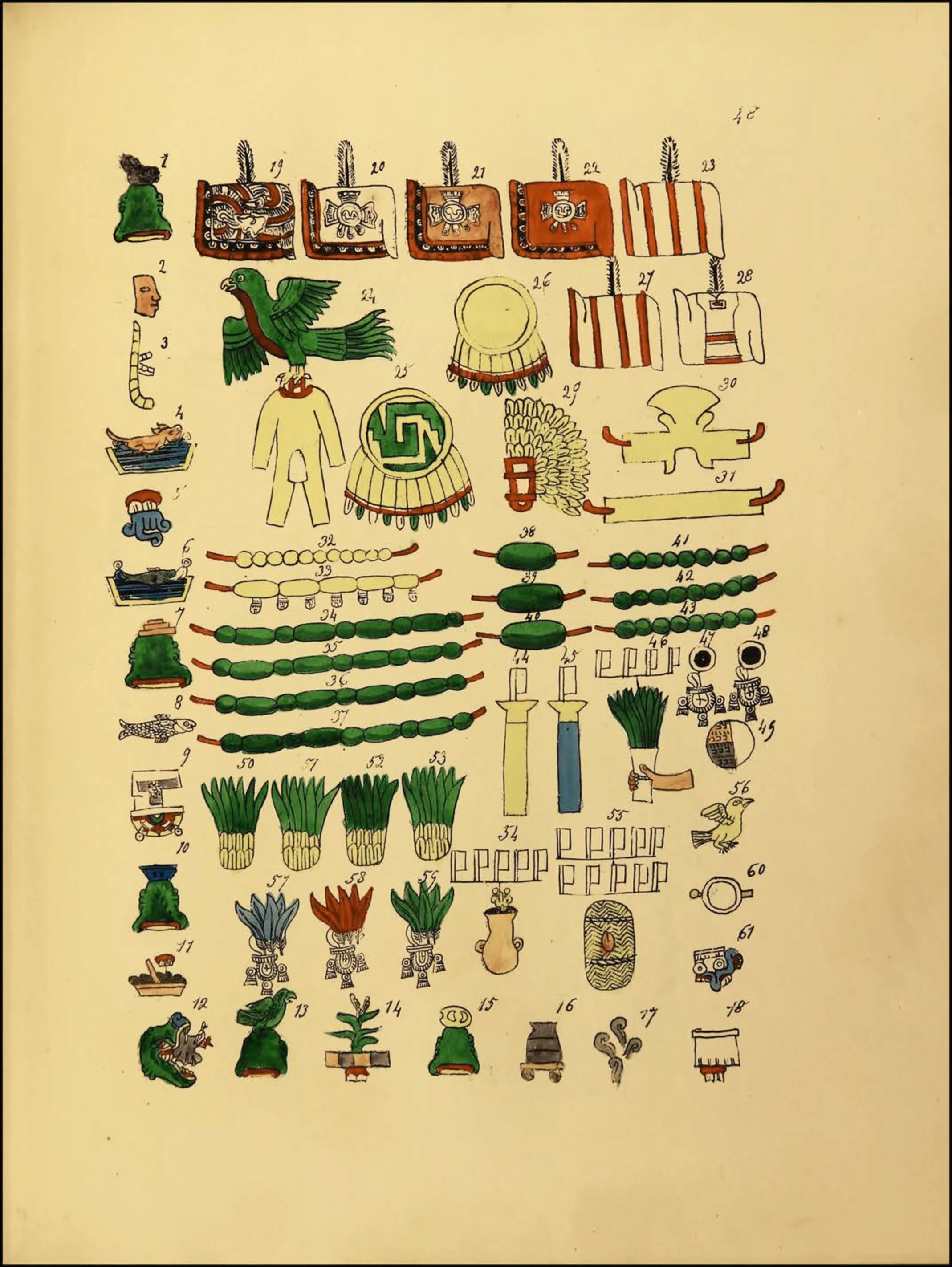
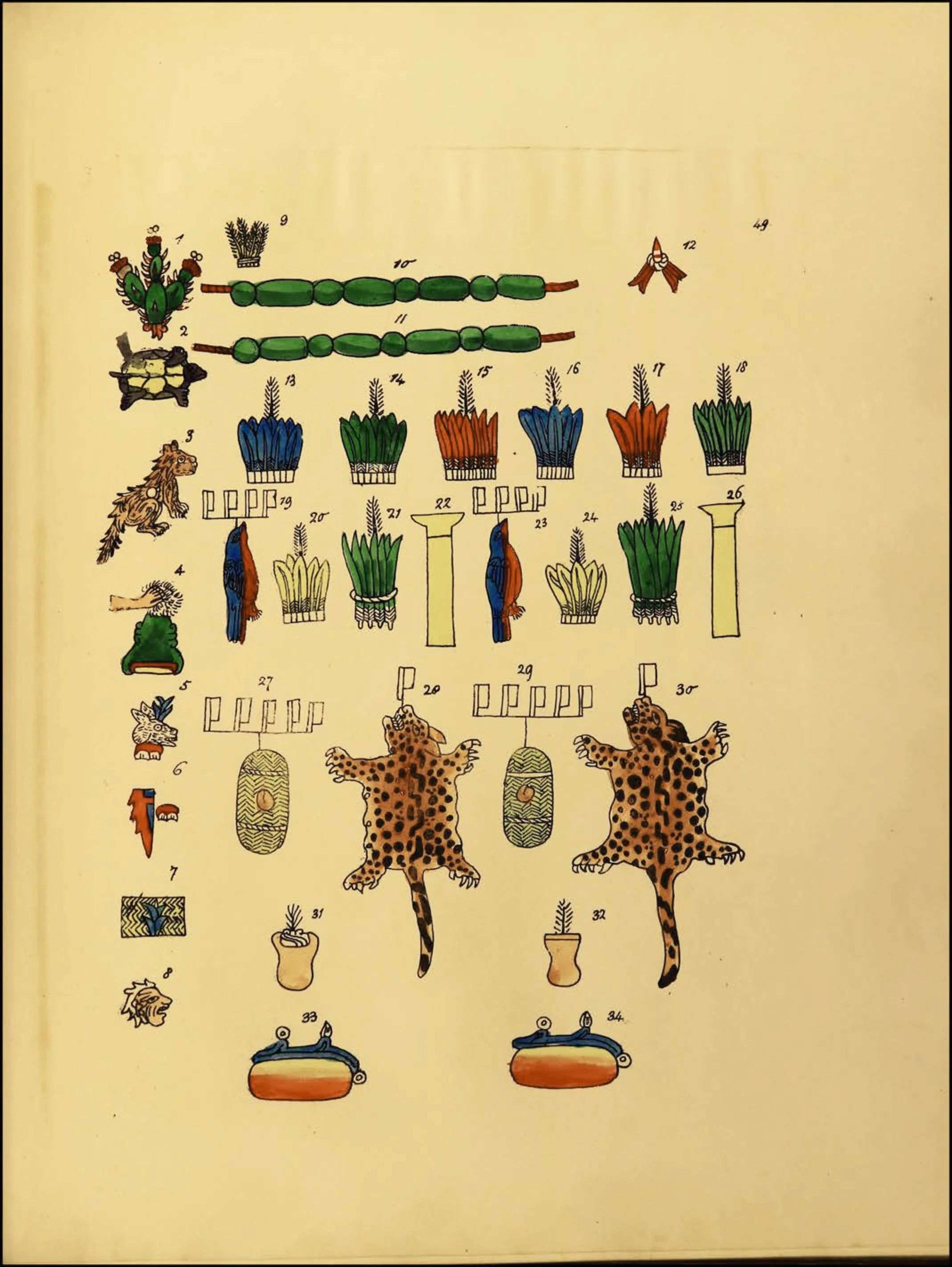
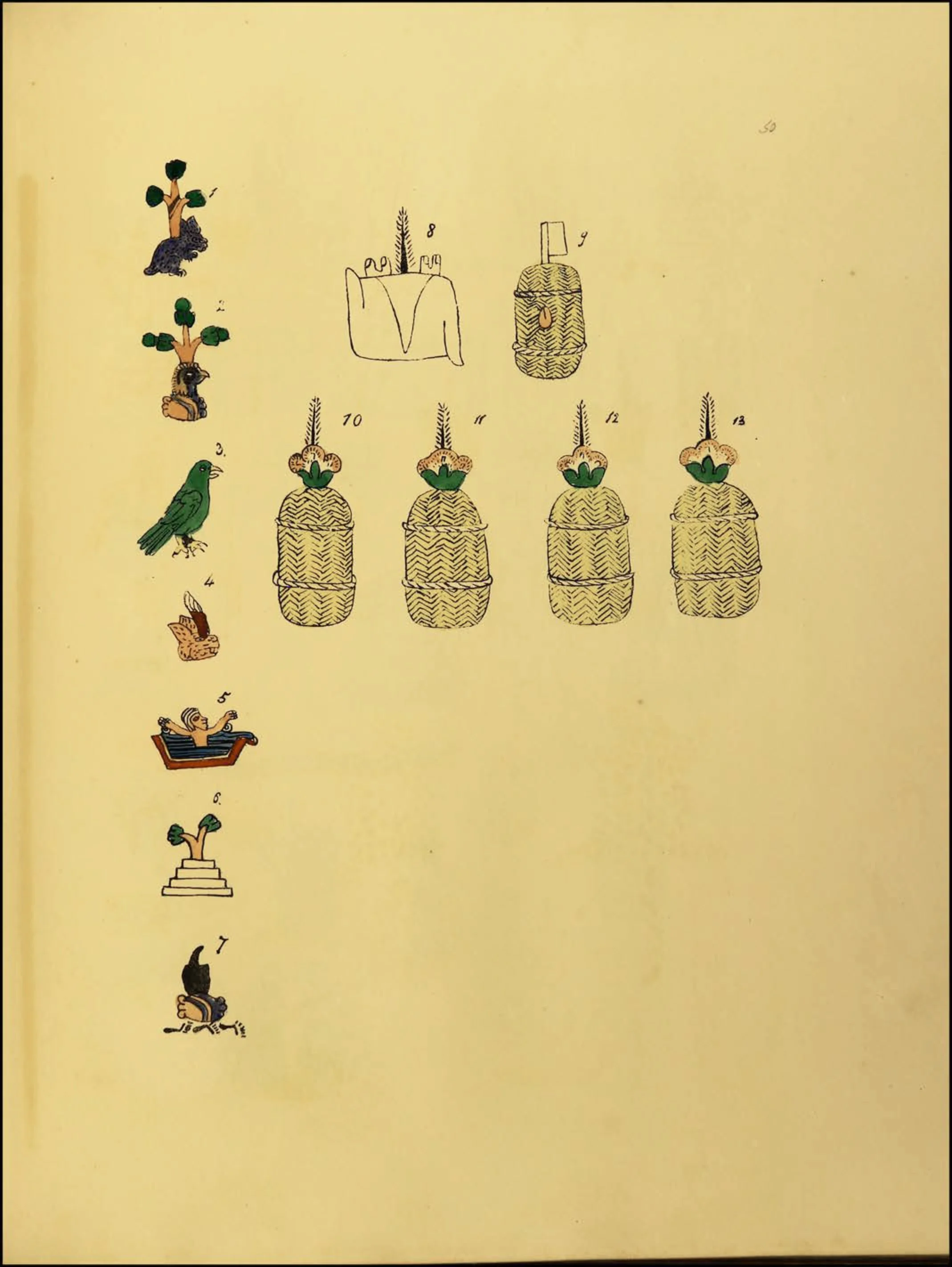
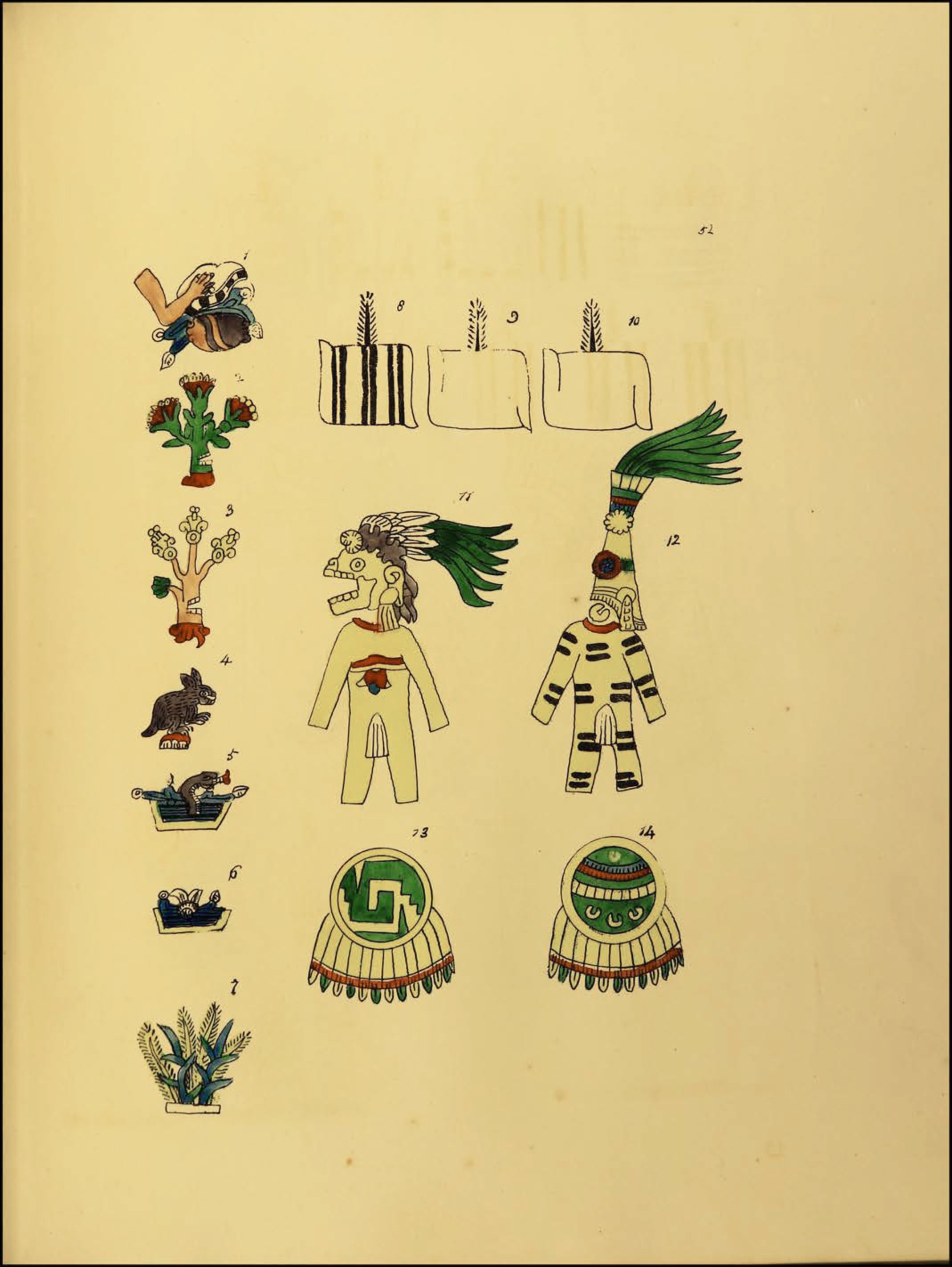
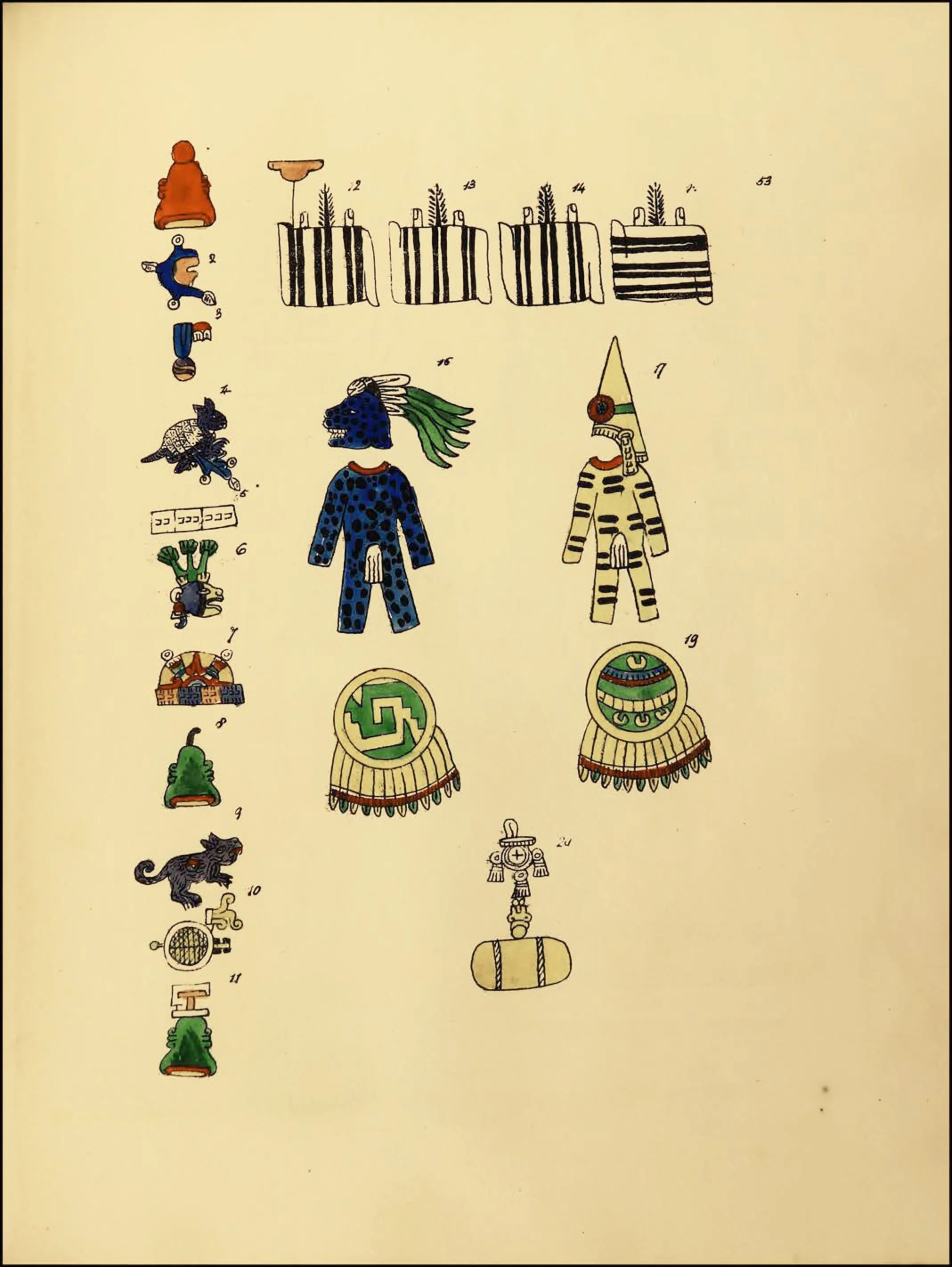
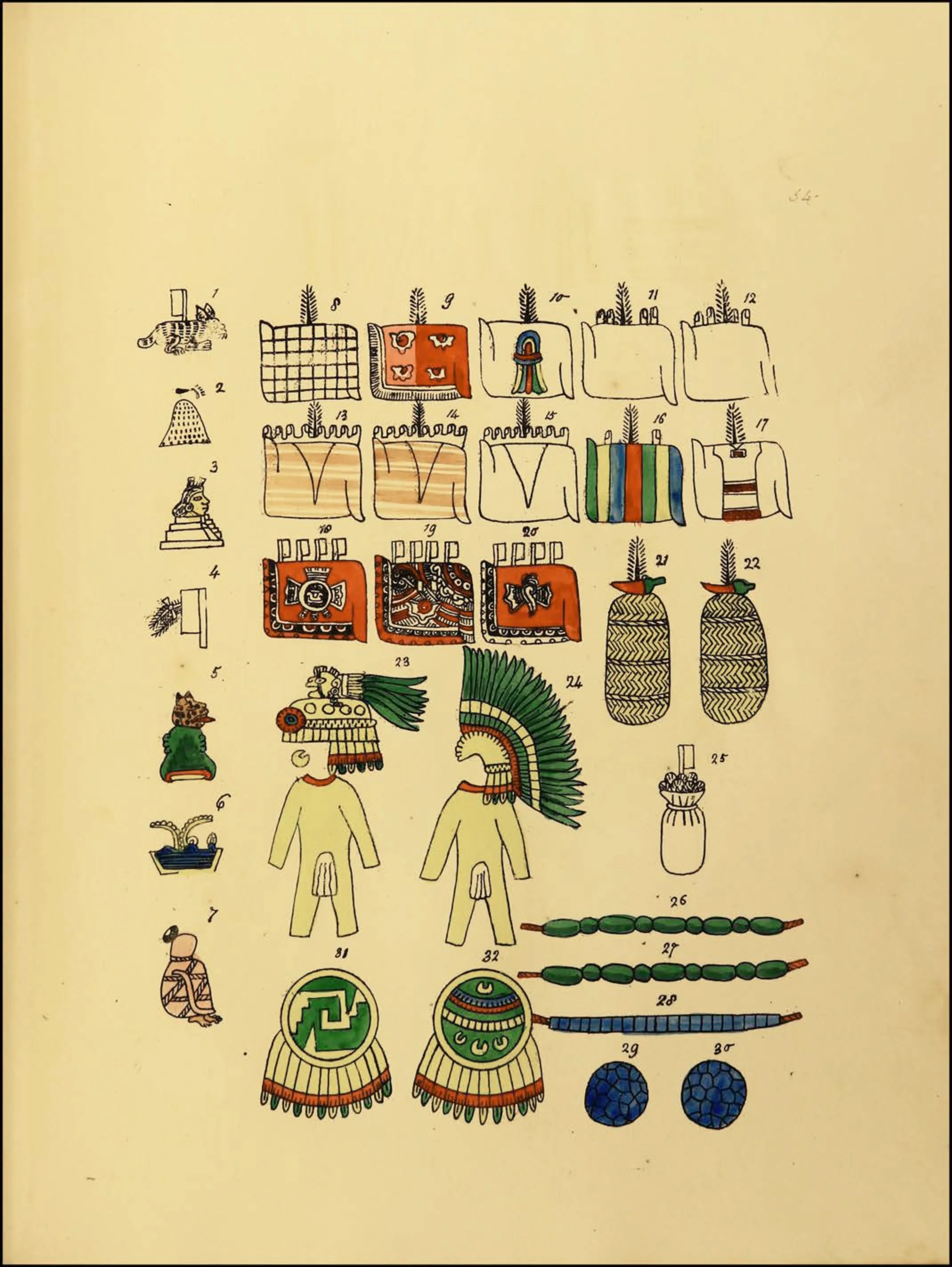
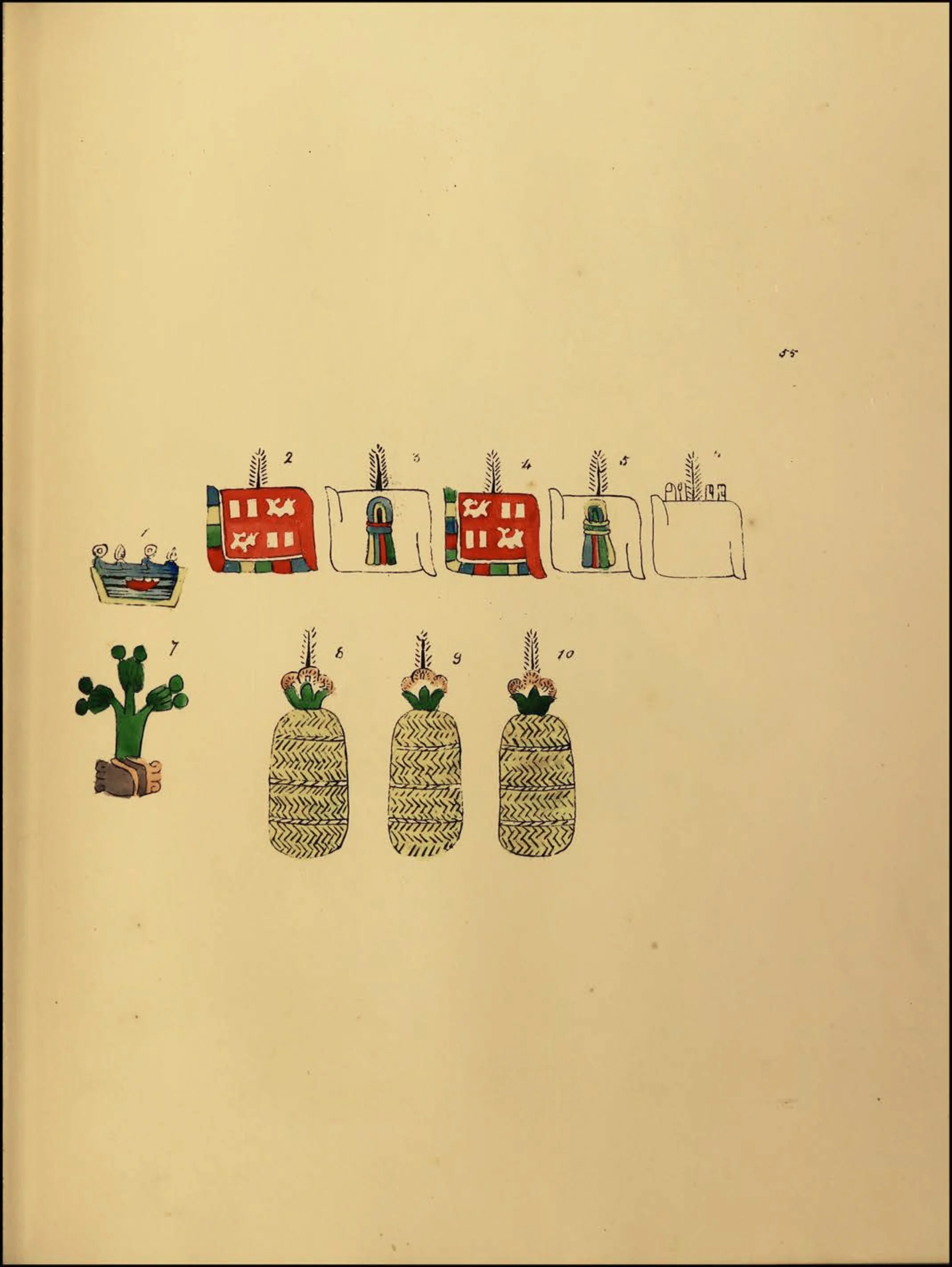
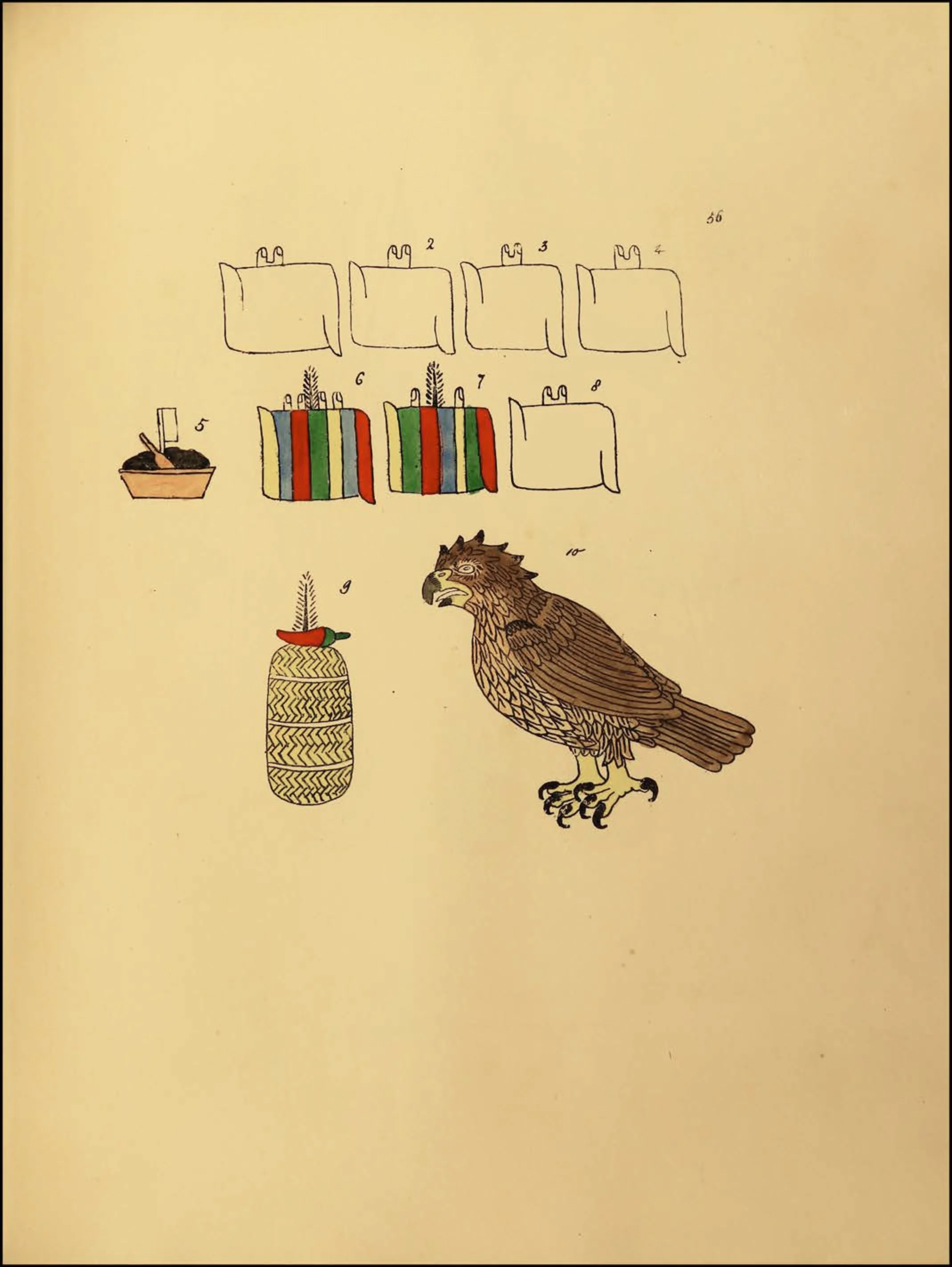
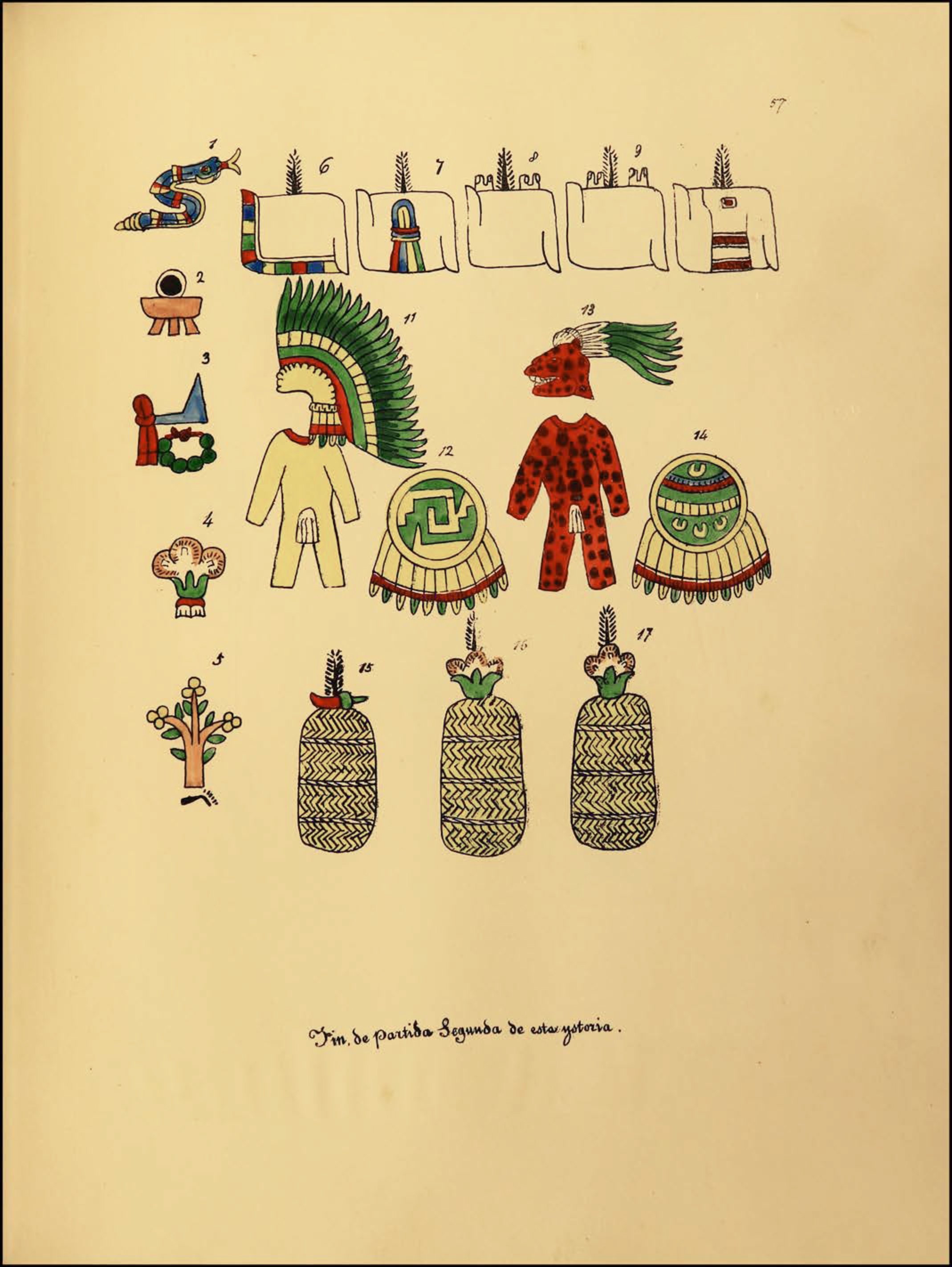
The second section is a detailed tribute list that describes the various goods and services that different regions and peoples were required to provide to the Aztec empire as tribute. This section includes illustrations of the tribute items, such as textiles, food, and weapons, as well as the people who produced or provided them.
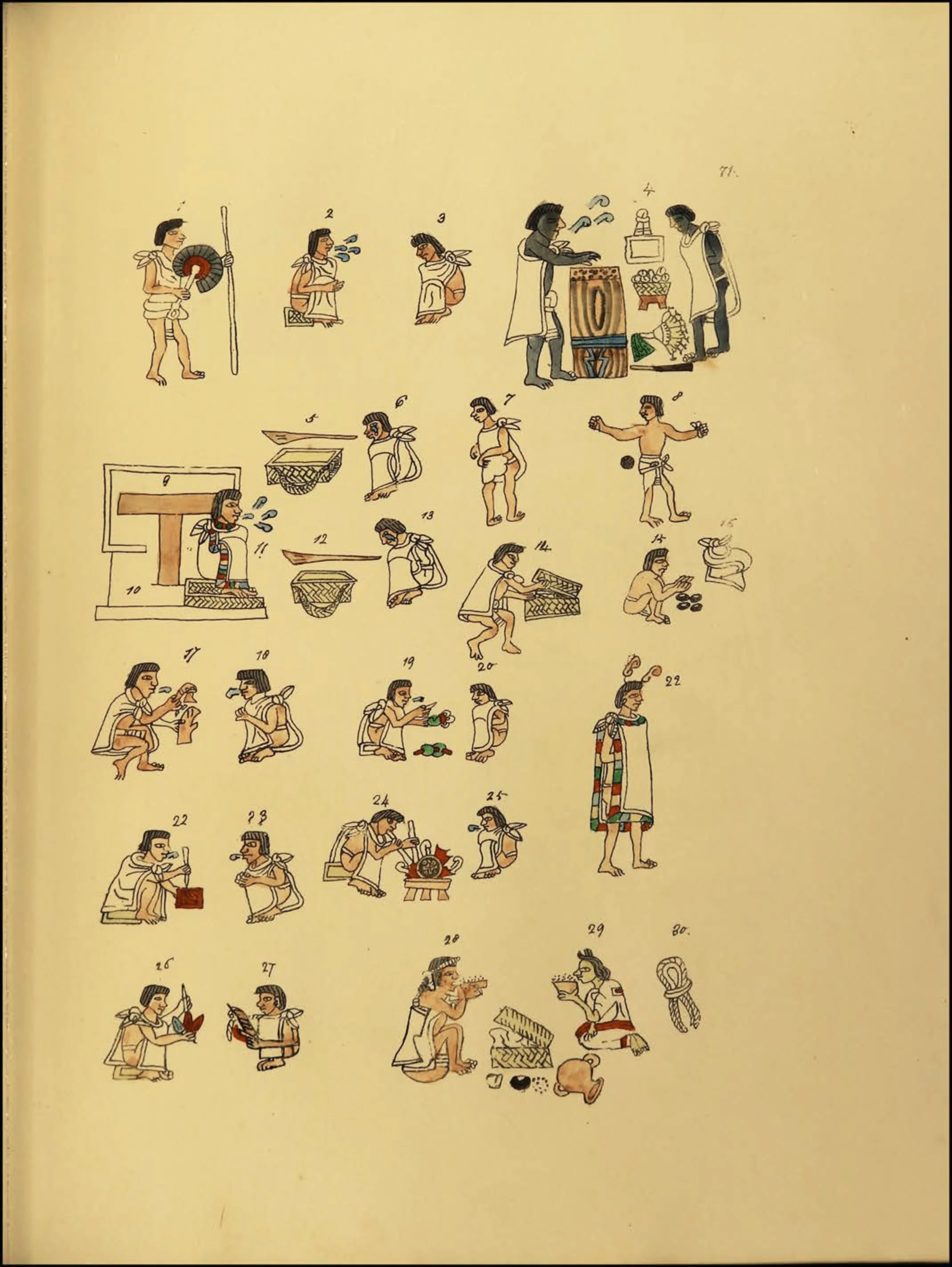
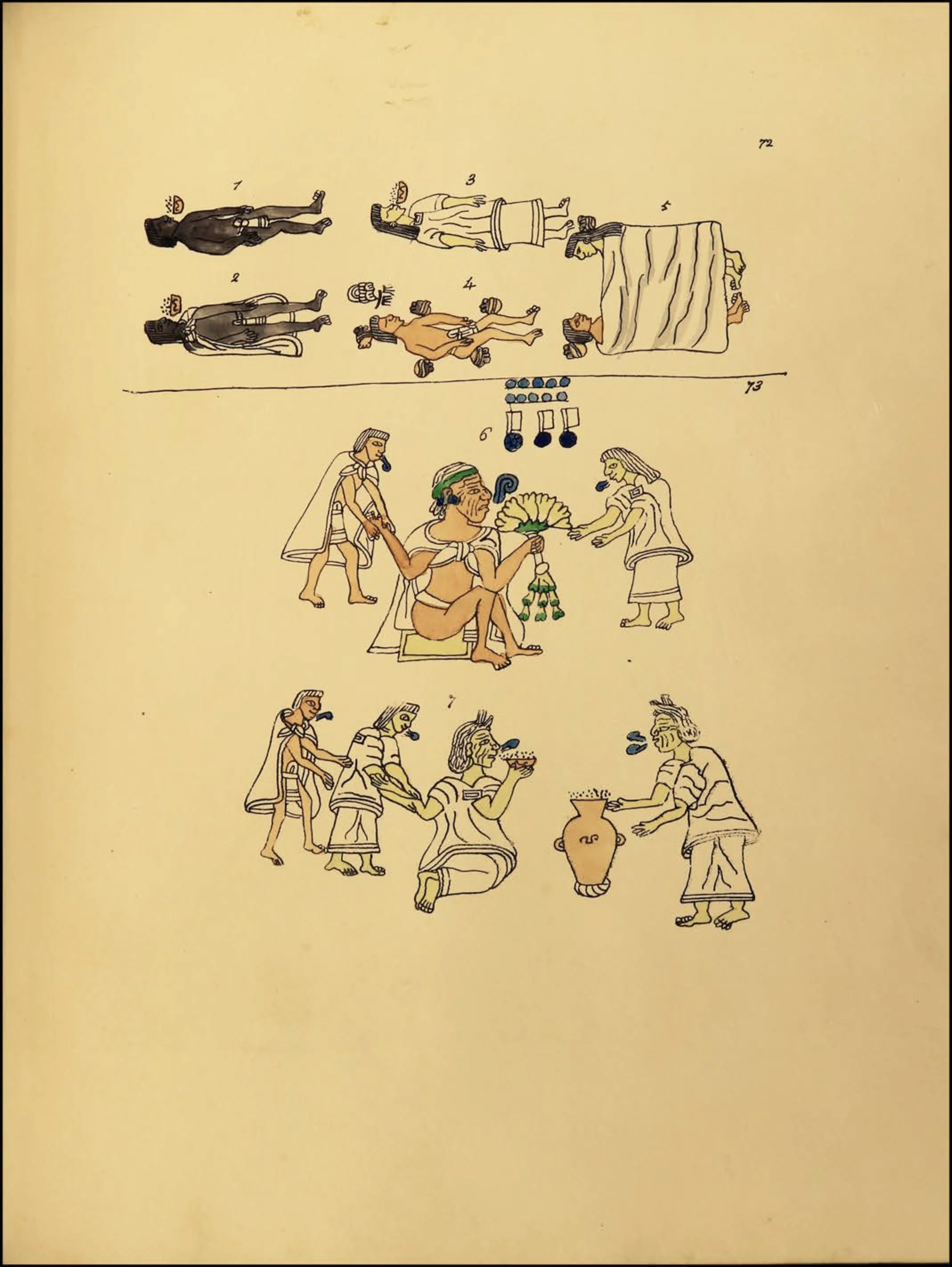
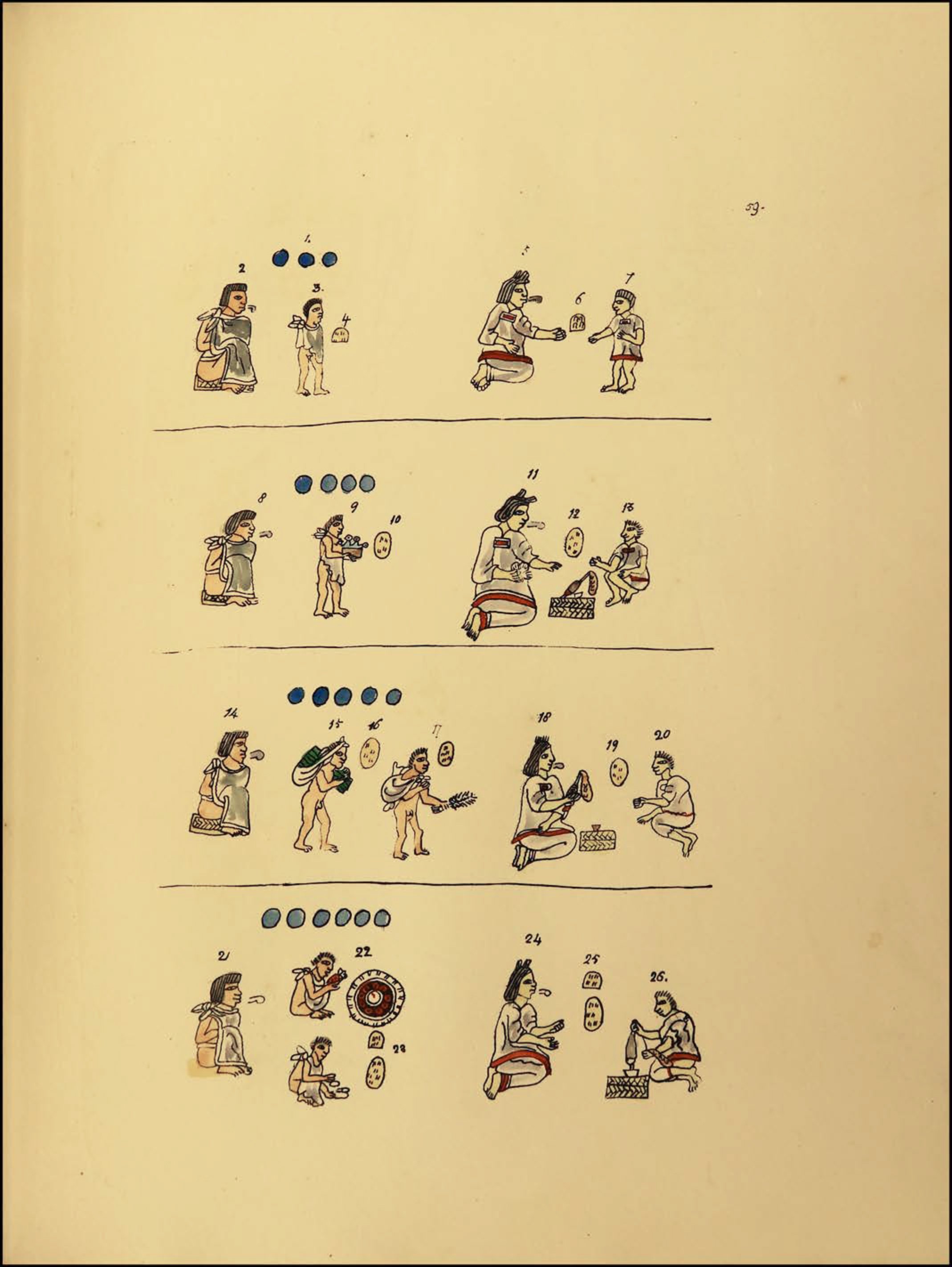
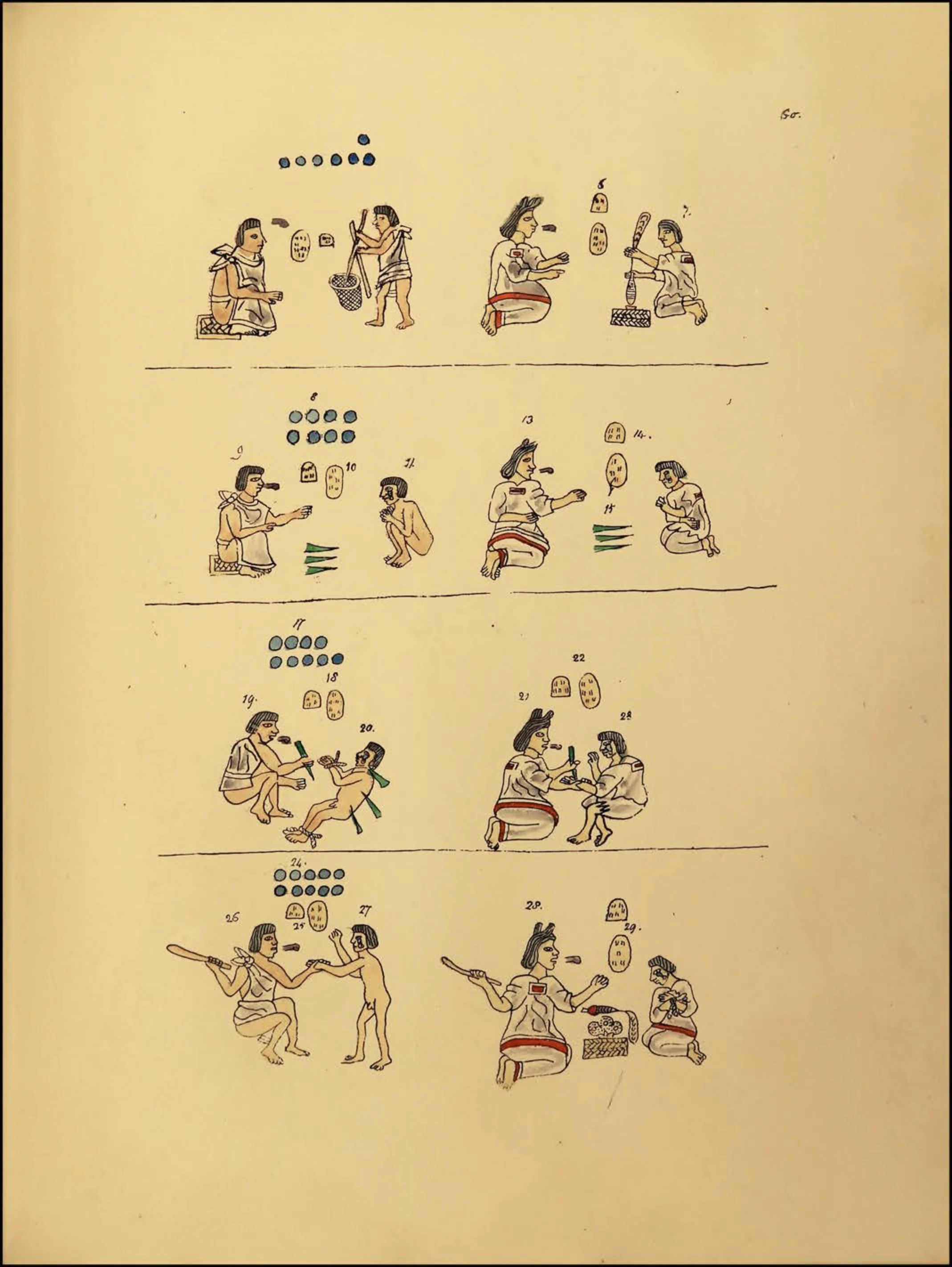
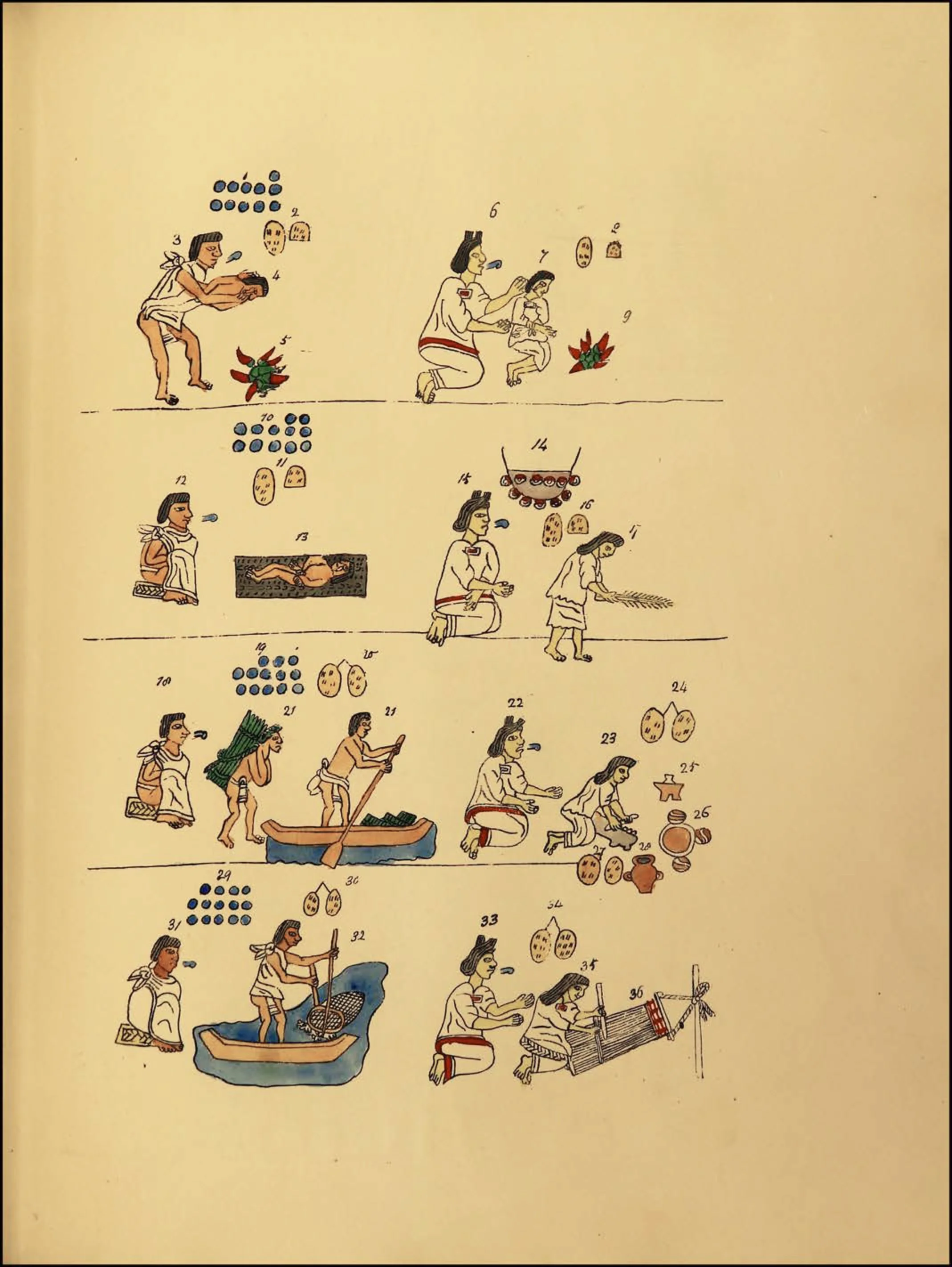
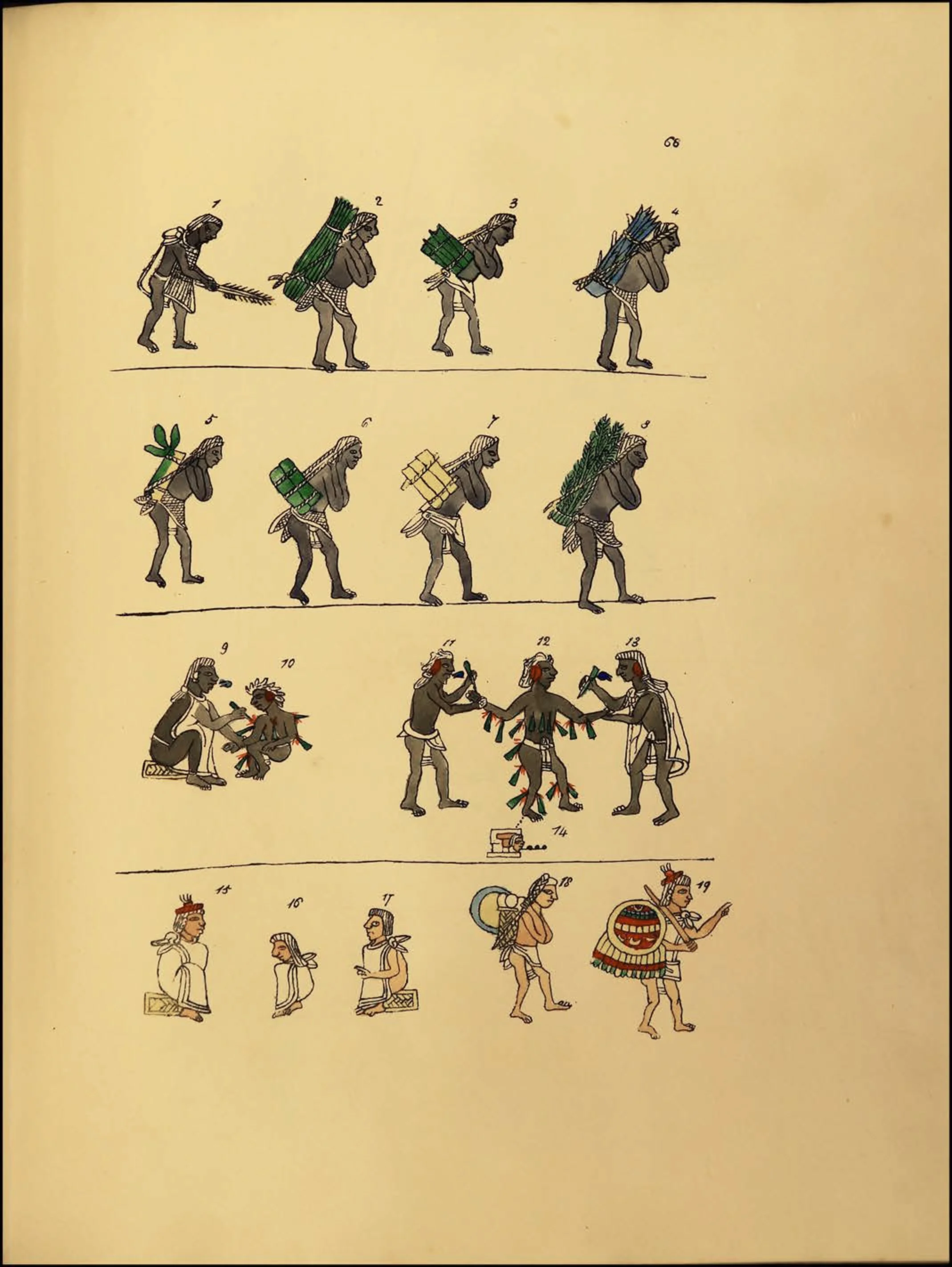
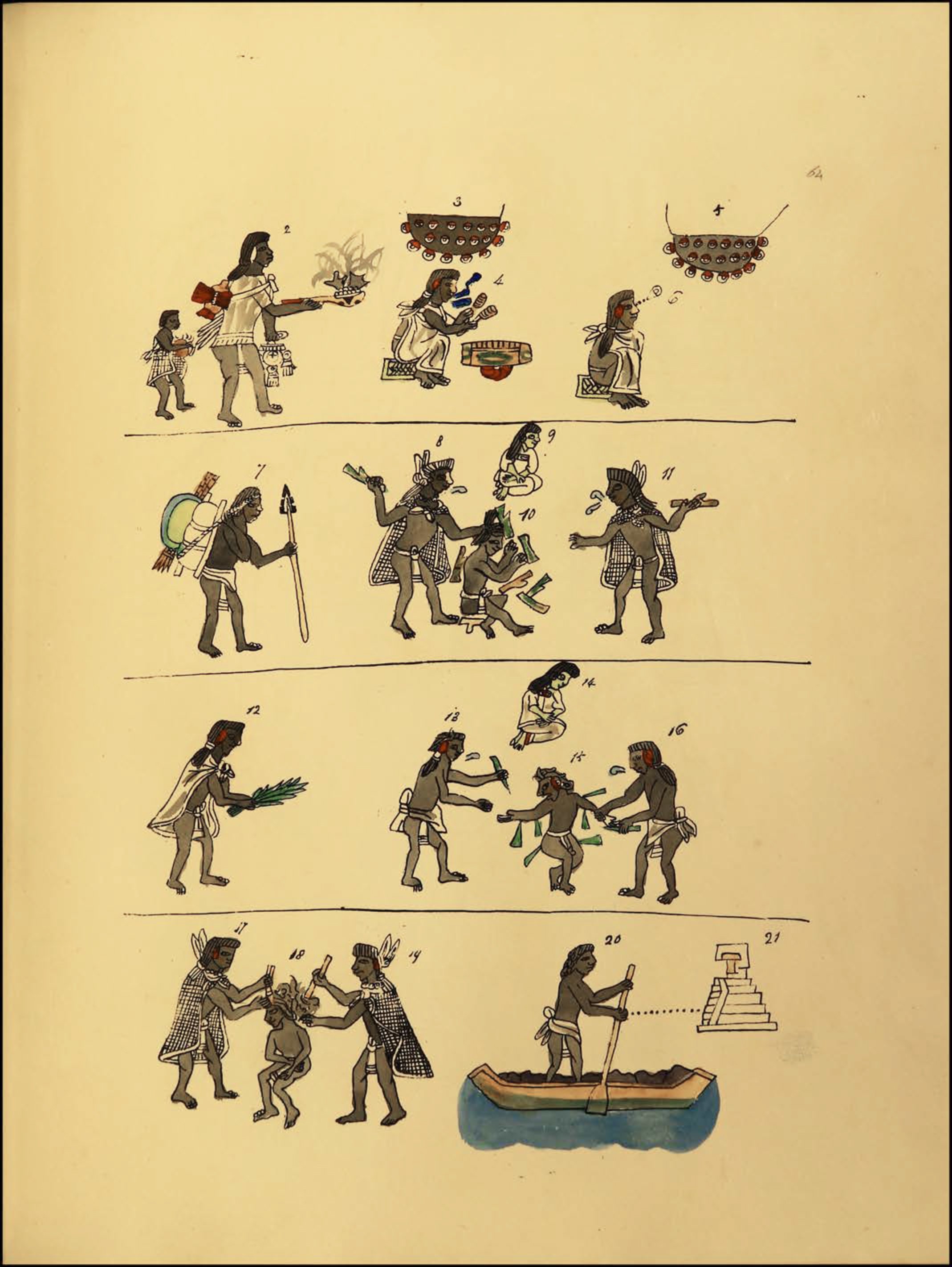
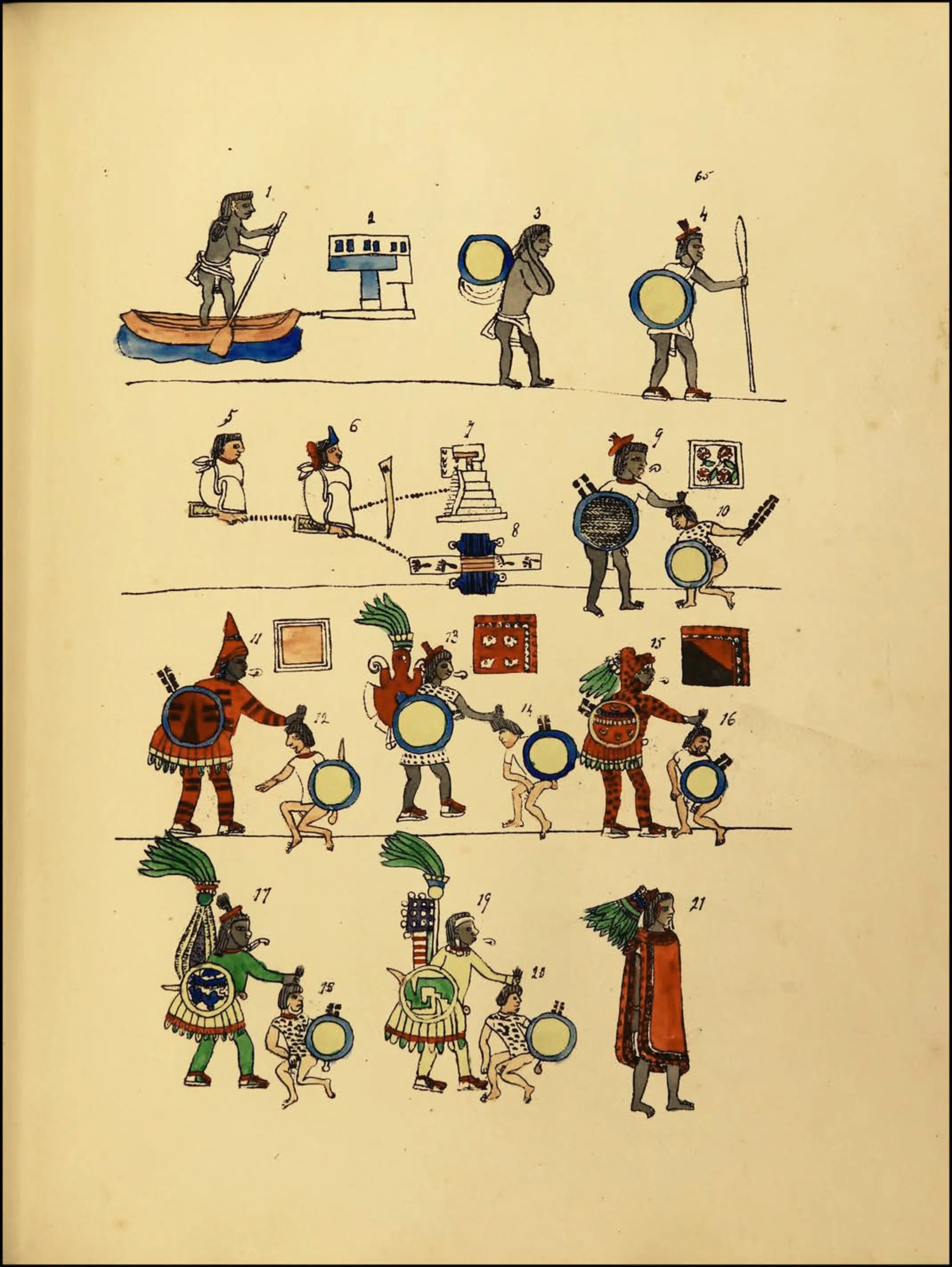
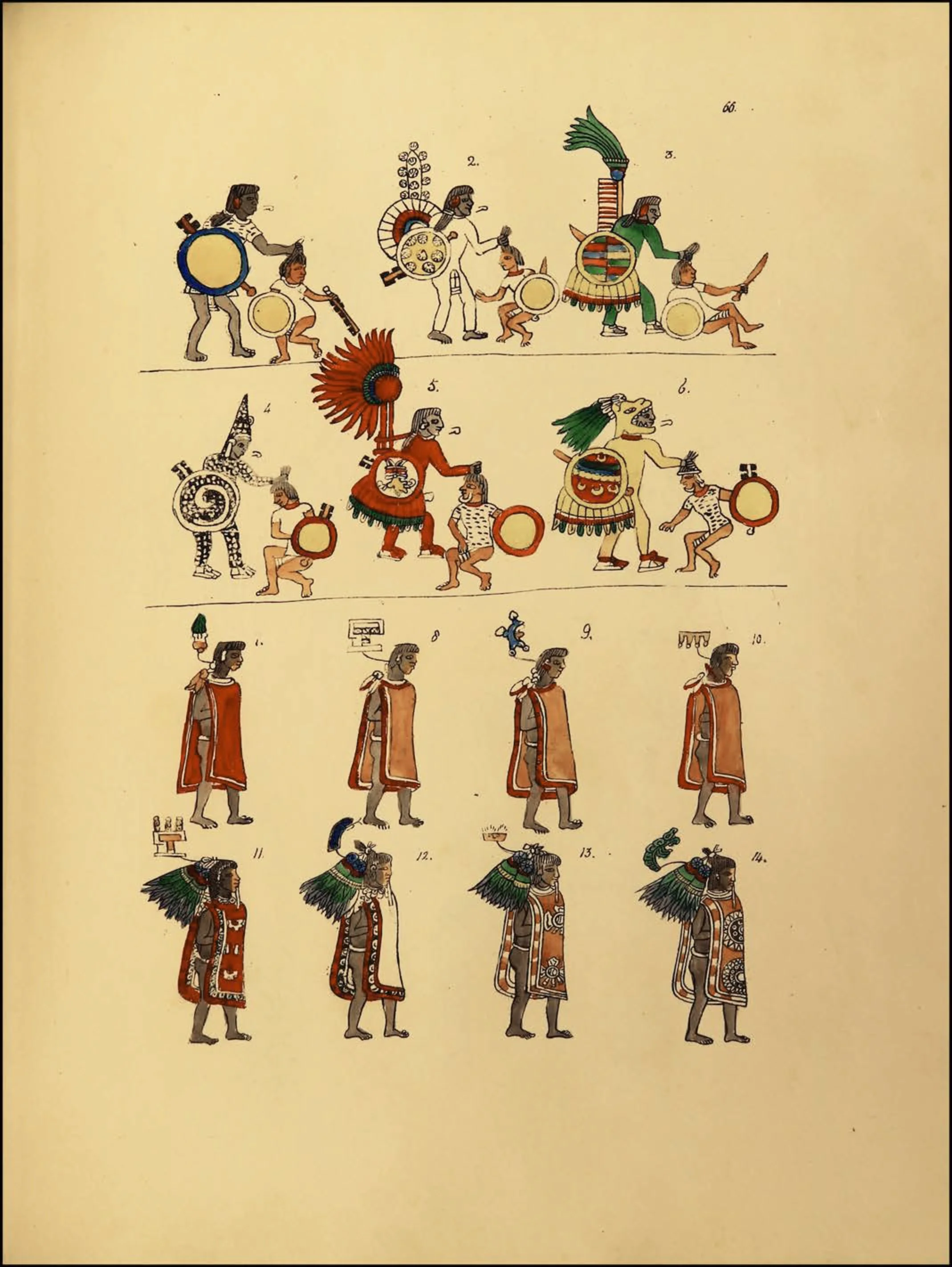
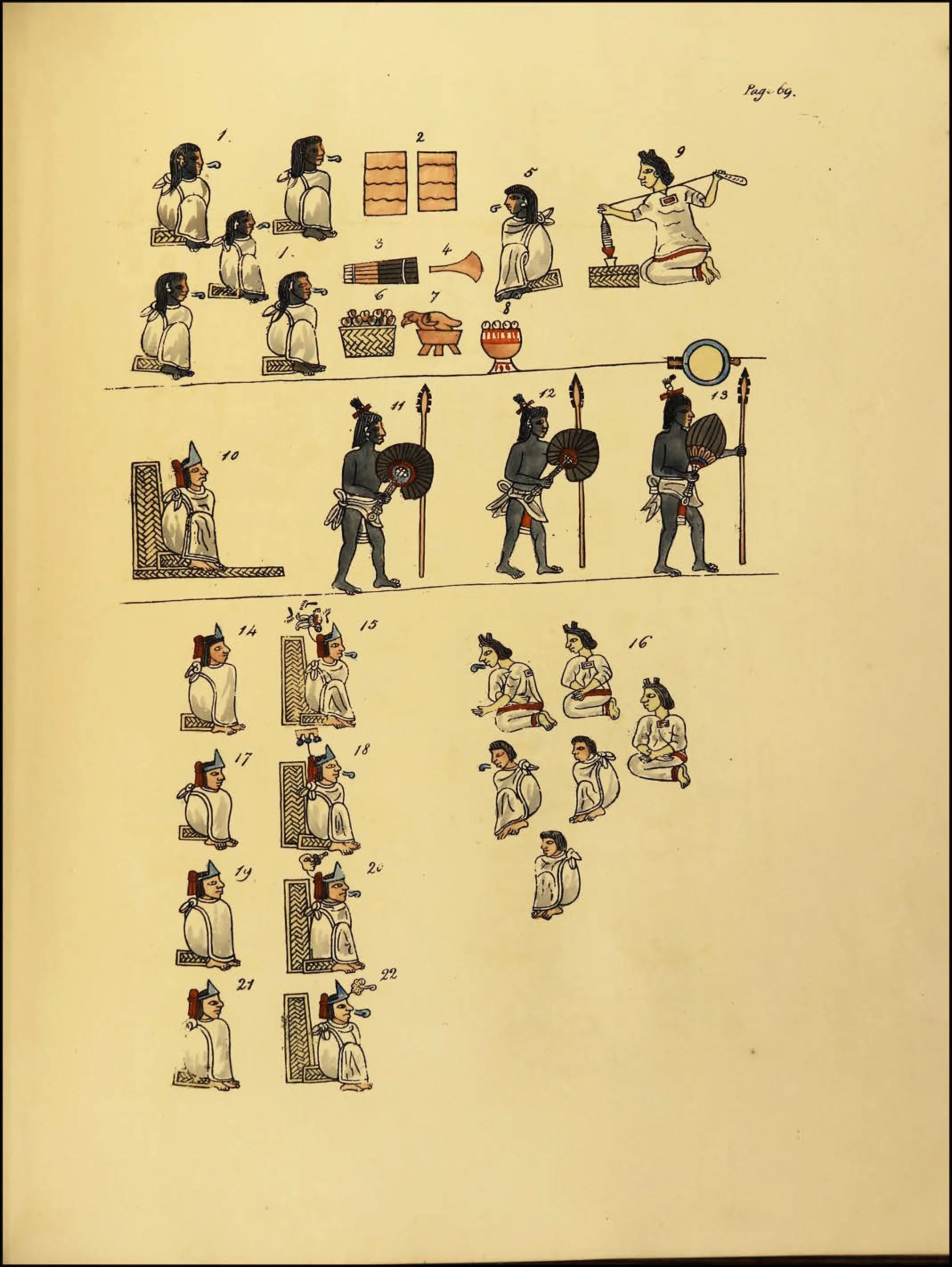
The third section describes various aspects of Aztec daily life and religious practices. This includes illustrations of market scenes, farming, fishing, and hunting, as well as depictions of religious ceremonies, such as human sacrifice and the worship of deities.
The codex is read by analyzing its pictorial and written elements. Each page contains illustrations, accompanied by glyphs and explanatory text in Nahuatl, the Aztec language. Scholars have studied the codex to learn more about Aztec culture, religion, and politics, as well as to gain insight into the Spanish invasion and the destruction of the Aztec empire and its impact on the indigenous peoples of Mexico.
Particular details in the Codex:
Tribute: The codex shows the tribute paid by different regions of the Aztec empire, including textiles, cacao, gold, and slaves.
Rulers: The codex includes portraits of Aztec rulers, such as Moctezuma II, as well as a list of their reigns.
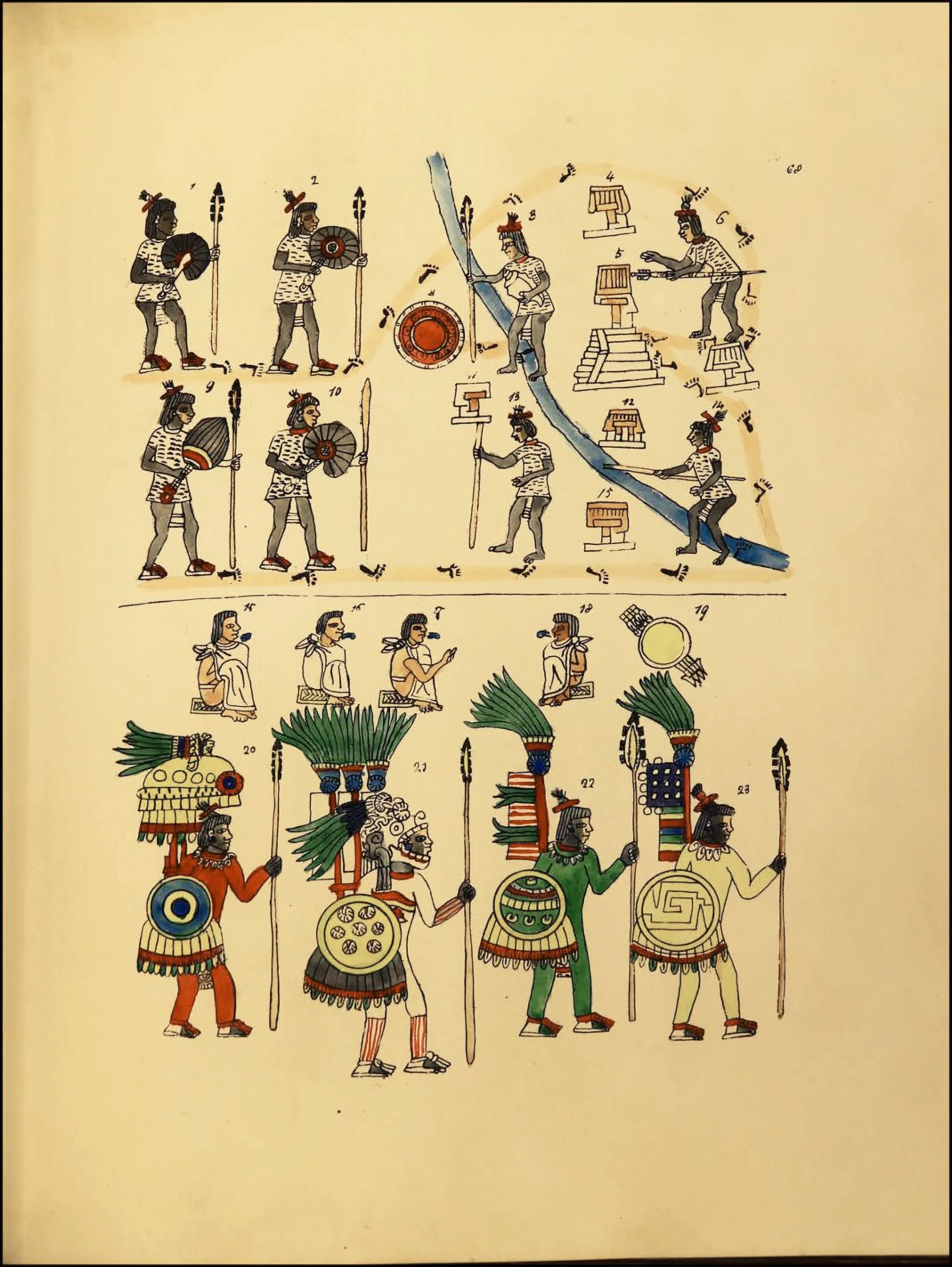
Warfare: The codex depicts scenes of warfare, including soldiers, weapons, and tactics.
Agriculture: The codex shows various agricultural practices, including planting and harvesting crops.
Religion: The codex portrays Aztec religious practices, including human sacrifice, as well as the gods and goddesses worshipped by the Aztecs.
Trade: The codex depicts scenes of trade and commerce, including the use of marketplaces and currency.
The Codex Mendoza is a valuable historical document that offers a glimpse into the world of the Aztecs and the early interactions between the indigenous people of Mexico and the Spanish colonizers. Today, the Codex Mendoza is considered one of the most important surviving Aztec documents and is a valuable resource for scholars studying Mesoamerican history and culture.
CÓDIGO MENDOZA
El Códice Mendoza es un códice azteca, creado unos veinte años después de la invasión española de México y la destrucción del imperio azteca con la intención de que Carlos V, emperador del Sacro Imperio Romano Germánico y rey de España, lo viera. Contiene una historia de los gobernantes aztecas y sus conquistas, una lista del tributo pagado por los conquistados y una descripción de la vida diaria azteca, en jeroglíficos aztecas tradicionales con explicaciones y comentarios en español. Lleva el nombre de Antonio de Mendoza, entonces virrey de Nueva España, quien pudo haberlo encargado.
Después de la creación en la Ciudad de México, fue enviado por barco a España. La flota, sin embargo, fue atacada por corsarios franceses y el códice, junto con el resto del botín, fue llevado a Francia. Allí pasó a manos de André Thévet, cosmógrafo del rey Enrique II de Francia. Thévet escribió su nombre en cinco lugares del códice, dos veces con la fecha de 1553.
Más tarde fue comprado por el inglés Richard Hakluyt por 20 francos franceses. Algún tiempo después de 1616 pasó a Samuel Purchase, luego a su hijo y luego a John Selden. El códice se depositó en la Biblioteca Bodleian de la Universidad de Oxford en 1659, 5 años después de la muerte de Selden, donde permaneció en la oscuridad hasta 1831, cuando fue redescubierto por el vizconde (luego Lord) Kingsborough y llamó la atención de los eruditos.
El códice está escrito en el idioma náhuatl usando jeroglíficos mnemotécnicos tradicionales aztecas con una traducción y explicación del texto en español. Don Antonio de Mendoza (1495-1552), el virrey de la Nueva España, quien supervisó su creación, fue un importante mecenas de los artistas aztecas.
El Códice Mendoza describe varios aspectos de la historia, la sociedad y la cultura aztecas. Está organizado en tres secciones:
La primera sección contiene una historia del pueblo azteca, incluida su migración desde su patria ancestral, la fundación de la ciudad de Tenochtitlan y sus conquistas de las regiones vecinas, y los gobernantes aztecas.
La segunda sección es una lista detallada de tributos que describe los diversos bienes y servicios que las diferentes regiones y pueblos debían proporcionar al imperio azteca como tributo. Esta sección incluye ilustraciones de los artículos de tributo, como textiles, alimentos y armas, así como las personas que los produjeron o proporcionaron.
La tercera sección describe varios aspectos de la vida cotidiana y las prácticas religiosas de los aztecas. Esto incluye ilustraciones de escenas de mercado, agricultura, pesca y caza, así como representaciones de ceremonias religiosas, como sacrificios humanos y adoración de deidades.
El códice se lee analizando sus elementos pictóricos y escritos. Cada página contiene ilustraciones, acompañadas de glifos y texto explicativo en náhuatl, el idioma azteca. Los eruditos han estudiado el códice para aprender más sobre la cultura, la religión y la política aztecas, así como para comprender mejor la invasión española y la destrucción del imperio azteca y su impacto en los pueblos indígenas de México.
Detalles particulares en el Codex:
Tributo: El códice muestra el tributo pagado por diferentes regiones del imperio azteca, incluyendo textiles, cacao, oro y esclavos.
Gobernantes: El códice incluye retratos de gobernantes aztecas, como Moctezuma II, así como una lista de sus reinados.
Guerra: el códice describe escenas de guerra, incluidos soldados, armas y tácticas.
Agricultura: El códice muestra varias prácticas agrícolas, incluida la siembra y la cosecha de cultivos.
Religión: el códice describe las prácticas religiosas aztecas, incluido el sacrificio humano, así como los dioses y diosas adorados por los aztecas.
Comercio: el códice representa escenas de comercio y comercio, incluido el uso de mercados y moneda.
El Códice Mendoza es un valioso documento histórico que ofrece una mirada al mundo de los aztecas y las primeras interacciones entre los pueblos indígenas de México y los colonizadores españoles. En la actualidad, el Códice Mendoza se considera uno de los documentos aztecas más importantes que se conservan y es un recurso valioso para los académicos que estudian la historia y la cultura mesoamericanas.
Copy of the collection of Mendoza preserved by the Selden Collection of Manuscripts, in the Bodleian Library of Oxford. Viscount Edward King Kingsborough (editor) Antiquities of Mexico: comprising facsimiles of ancient Mexican paintings and Hieroglyphics.
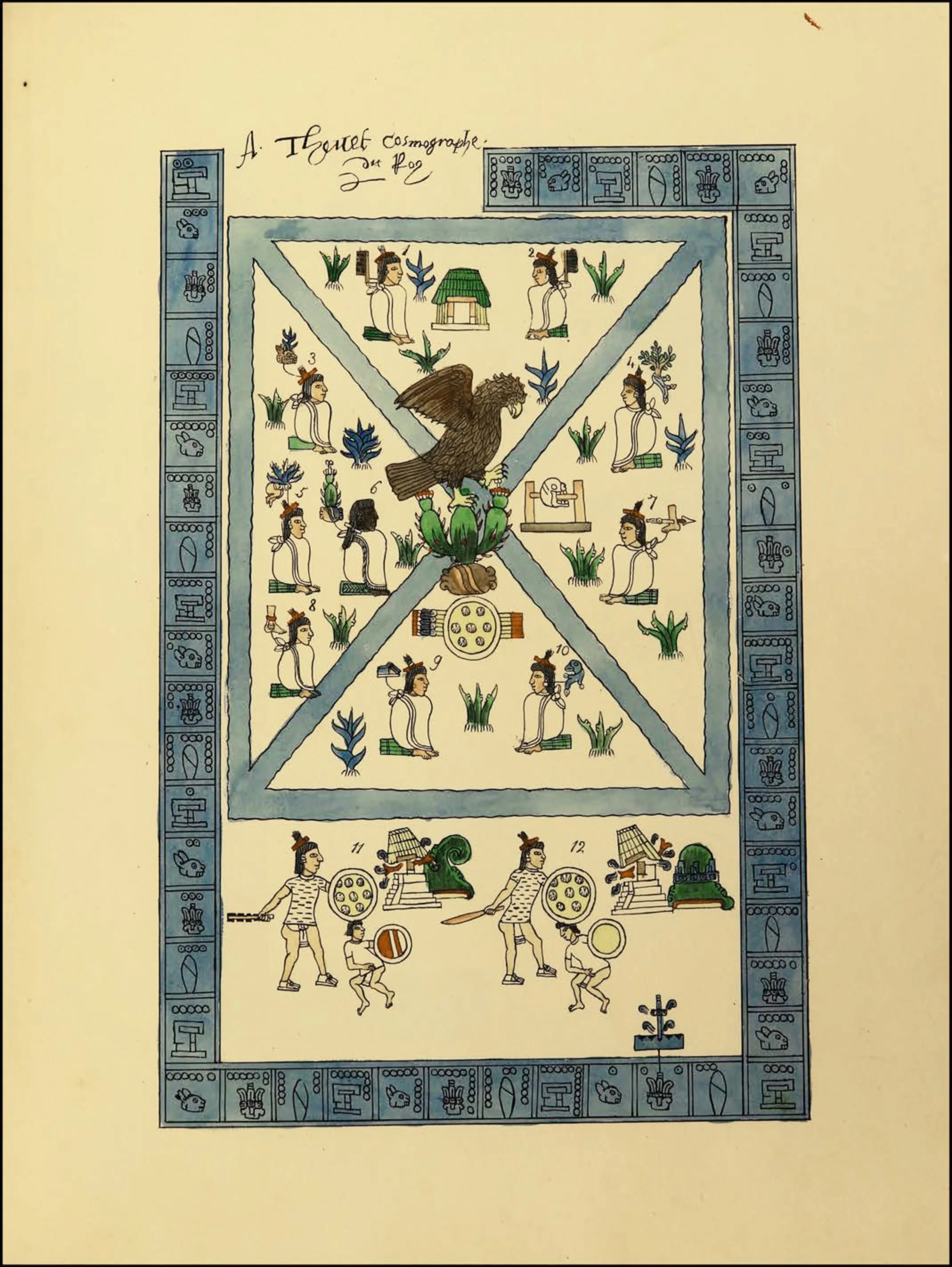
Depicts the founding of Tenochtitlan, and the conquest of Colhuacan and Tenayucan.
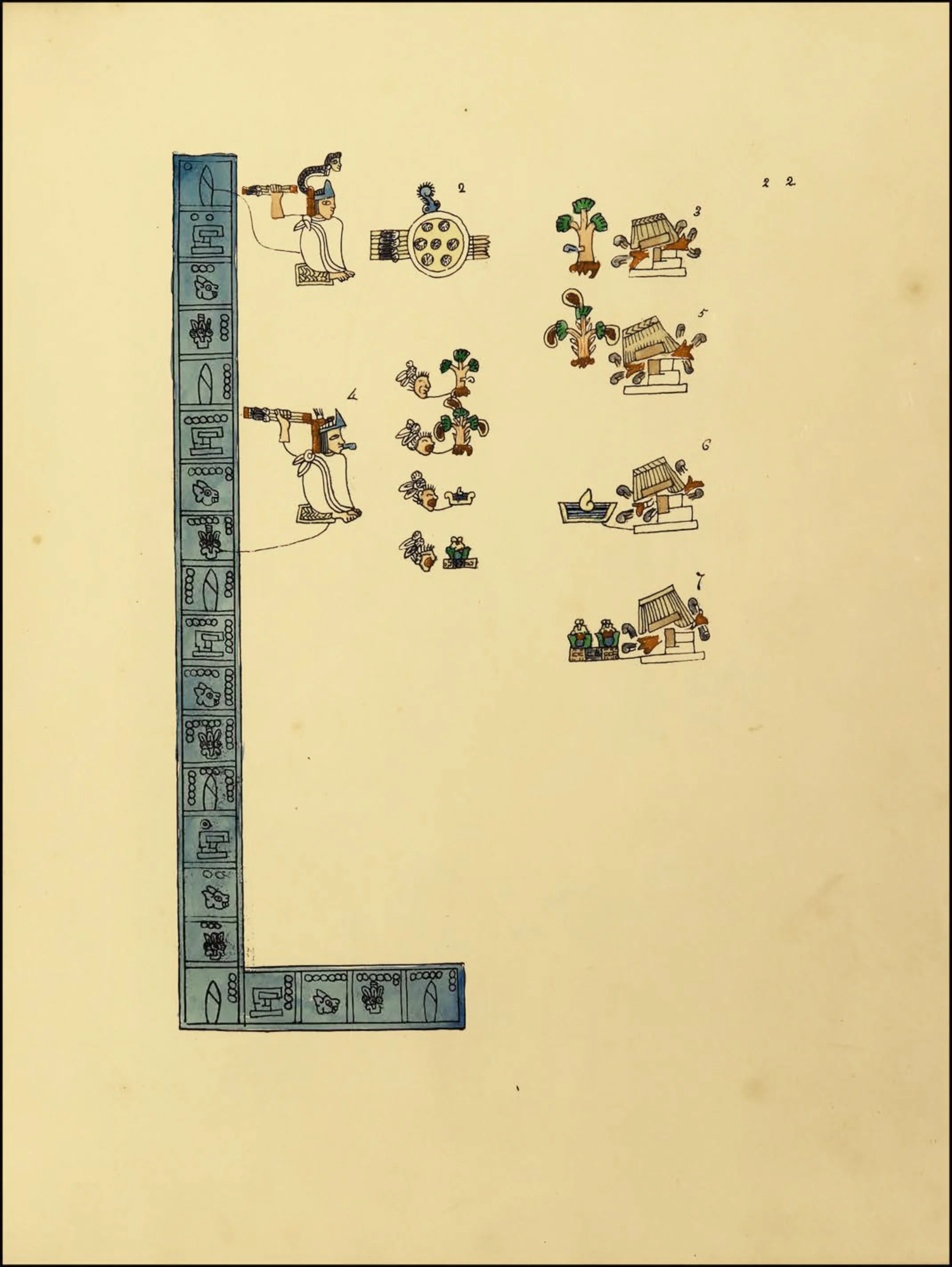
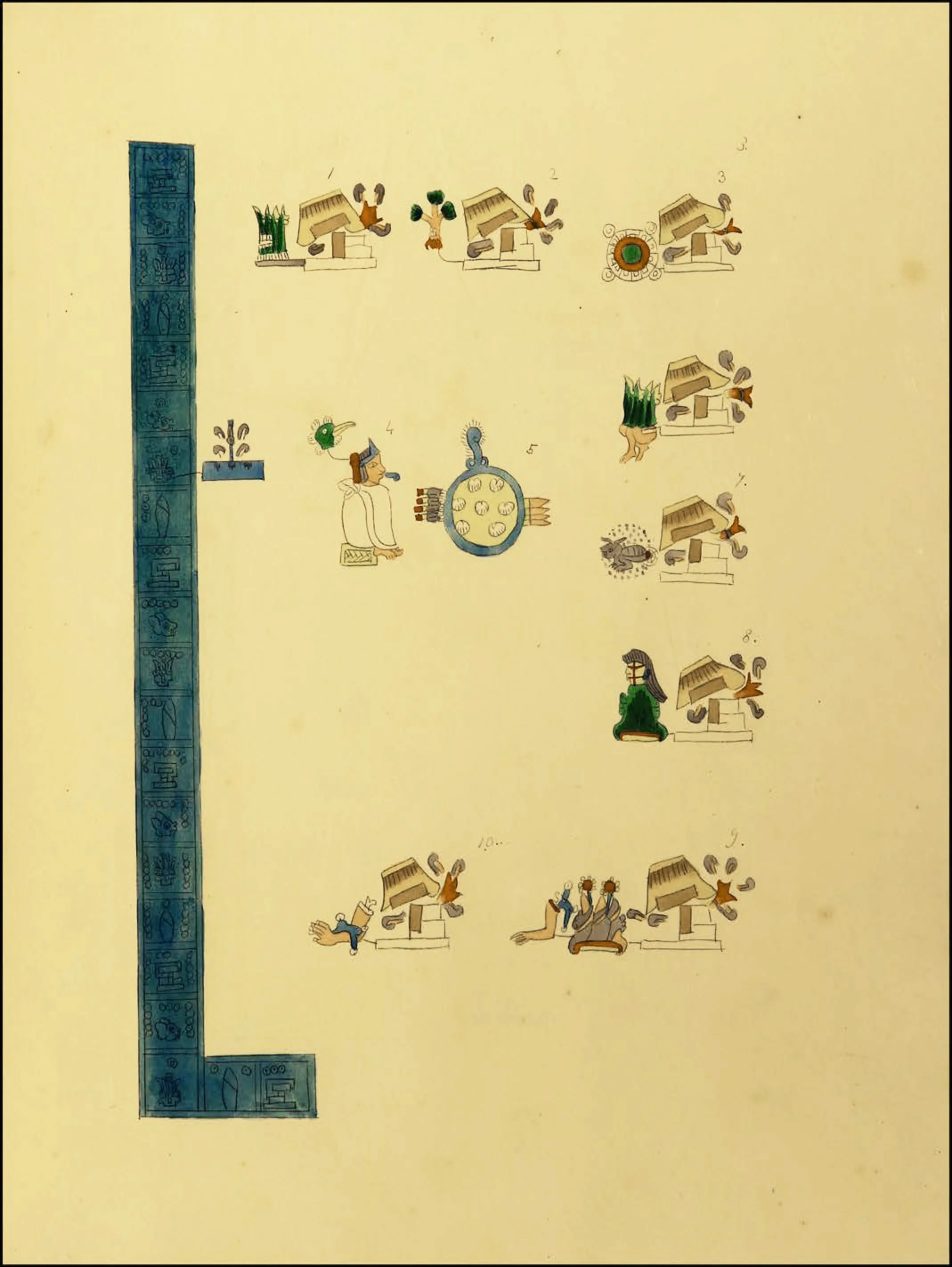
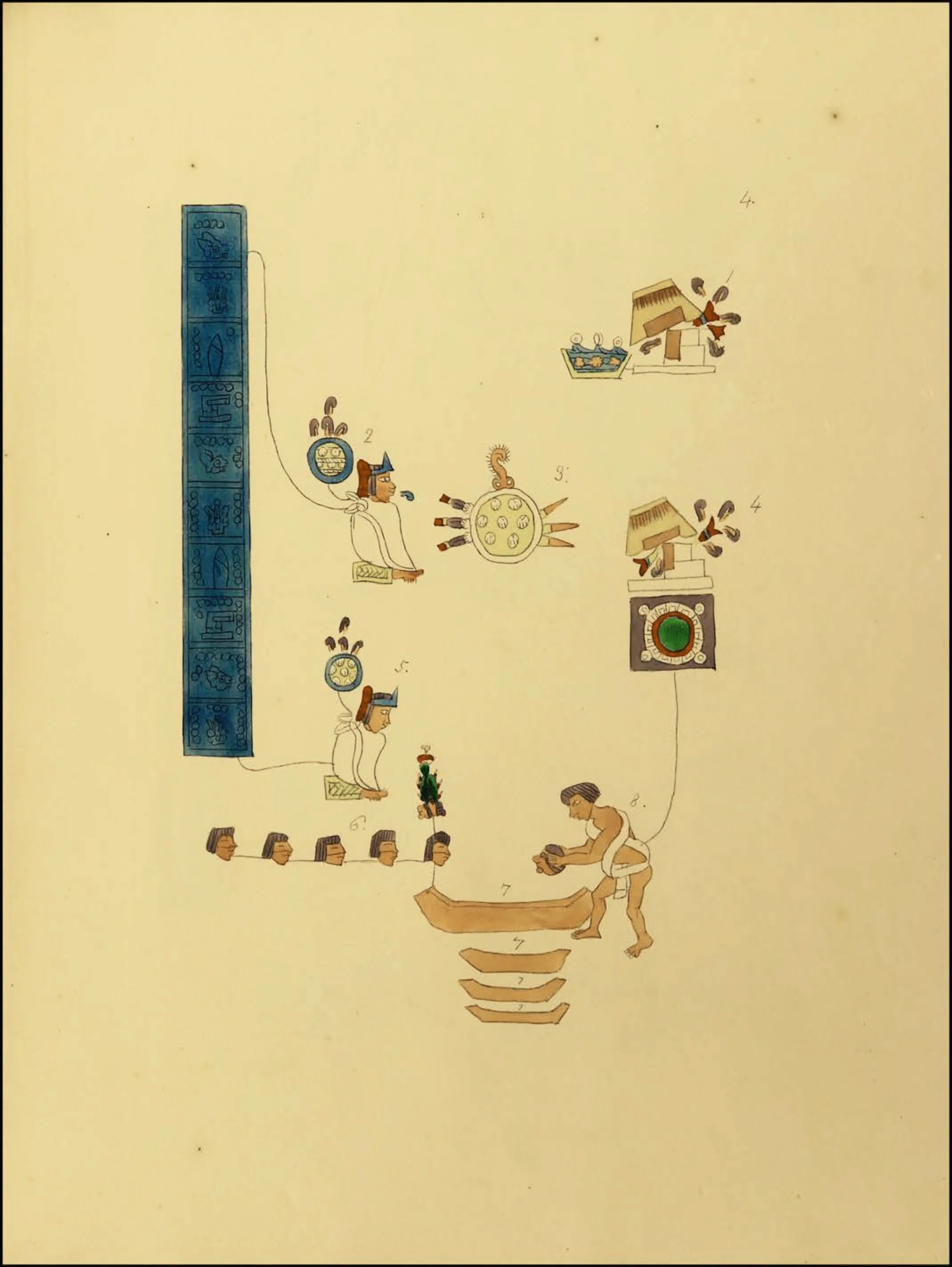
Depicts the rule and conquests of Chimalpopoca.
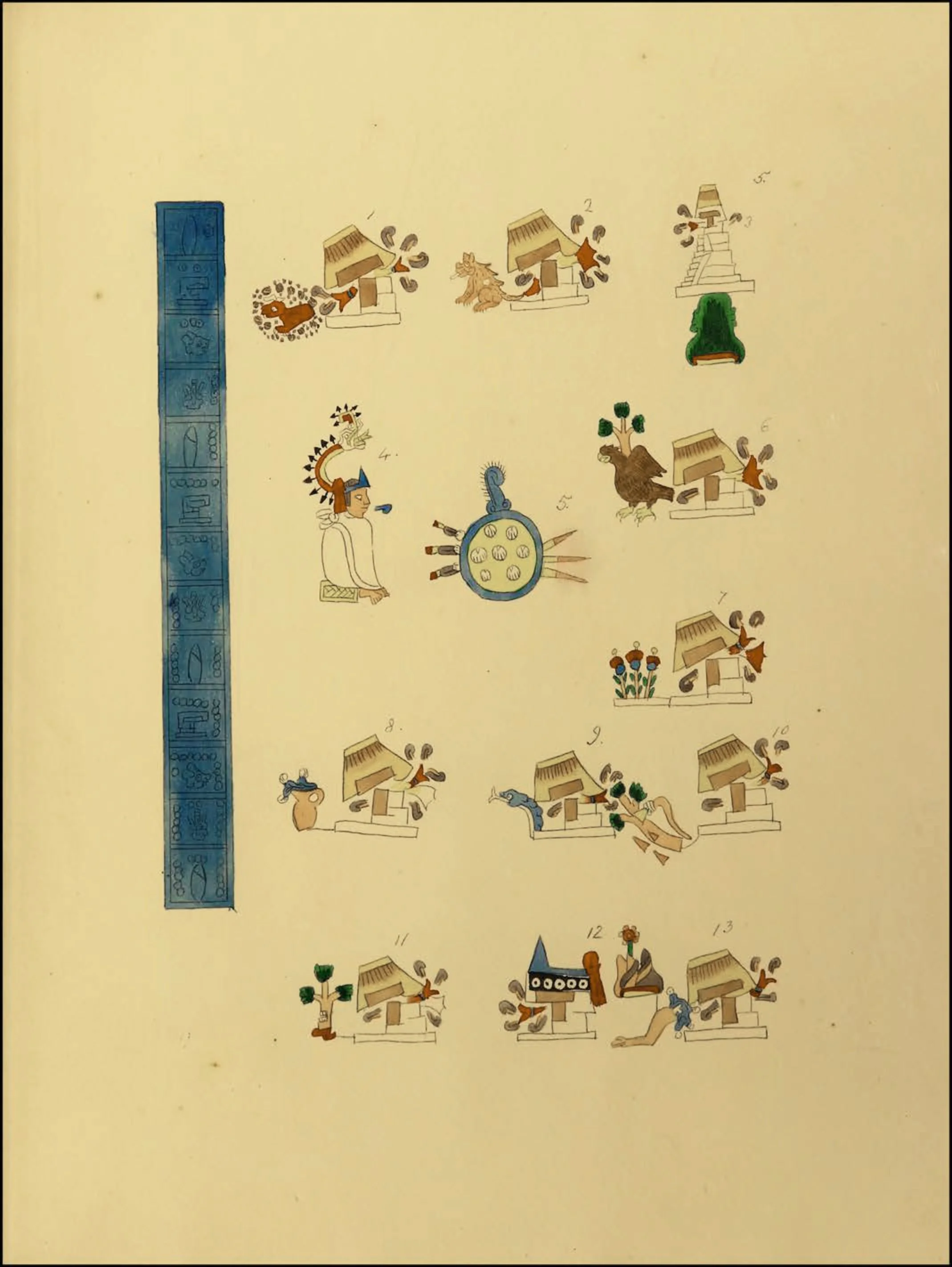
Depicts the rule and conquests of Axayacatl
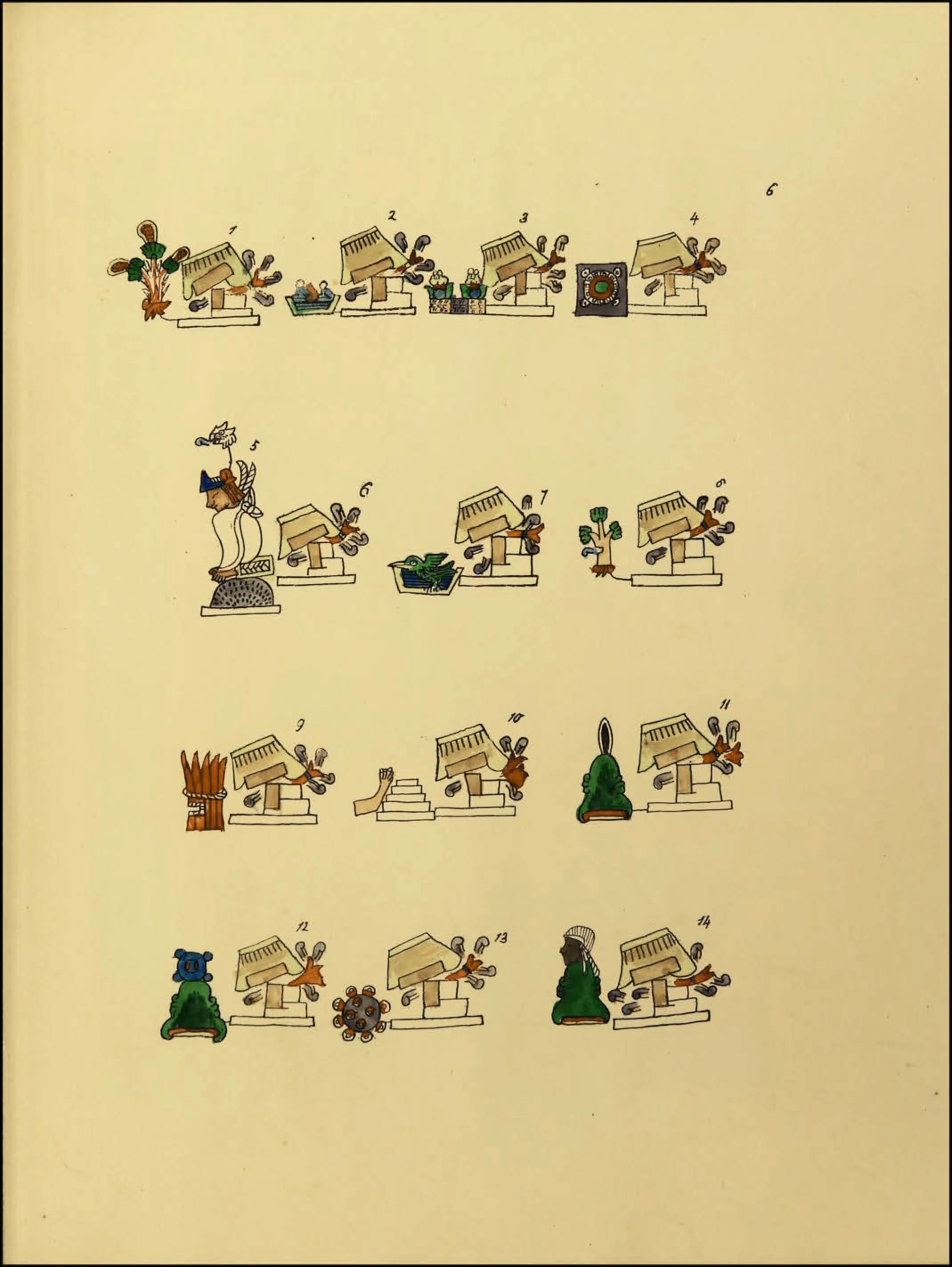
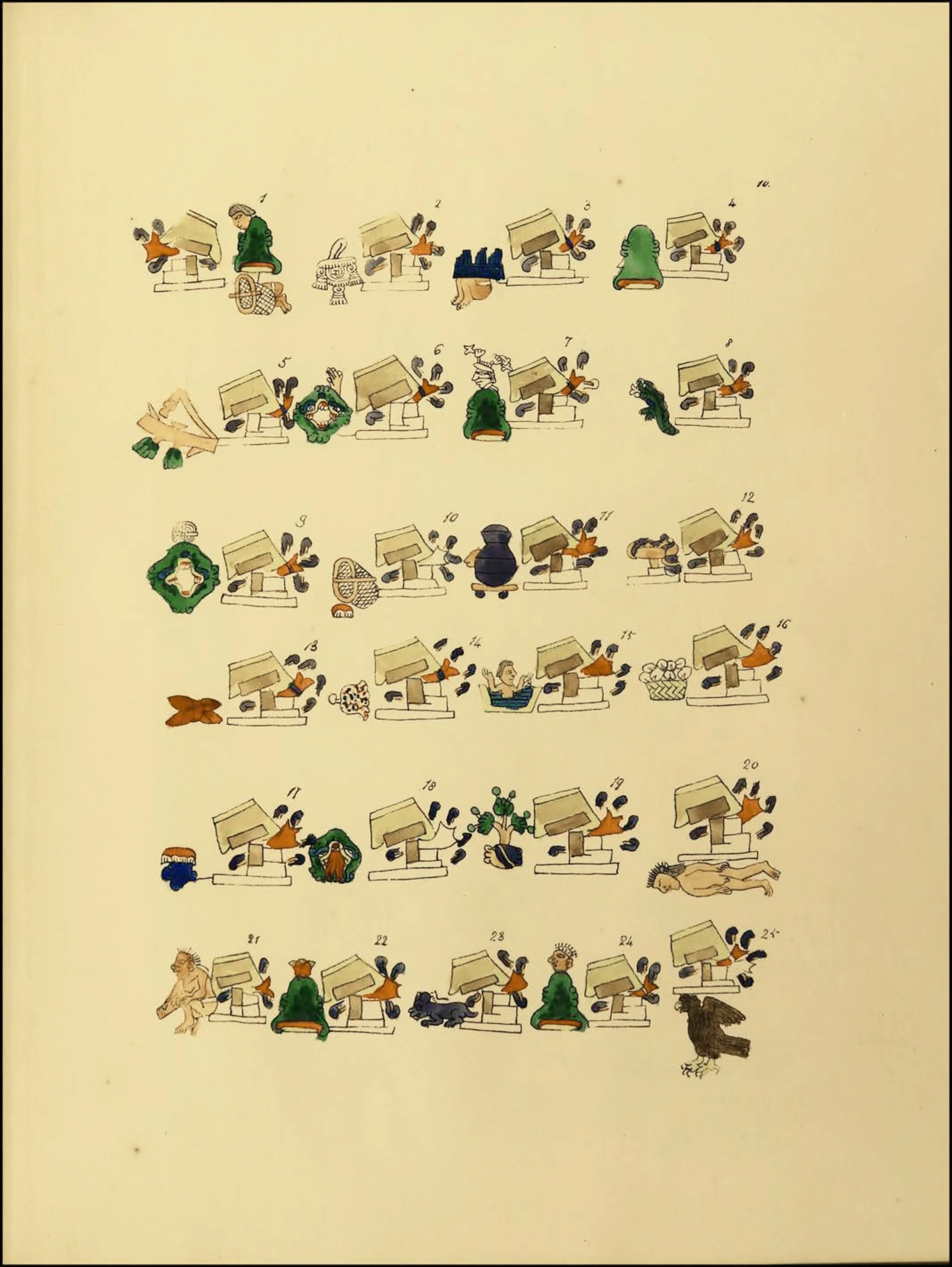
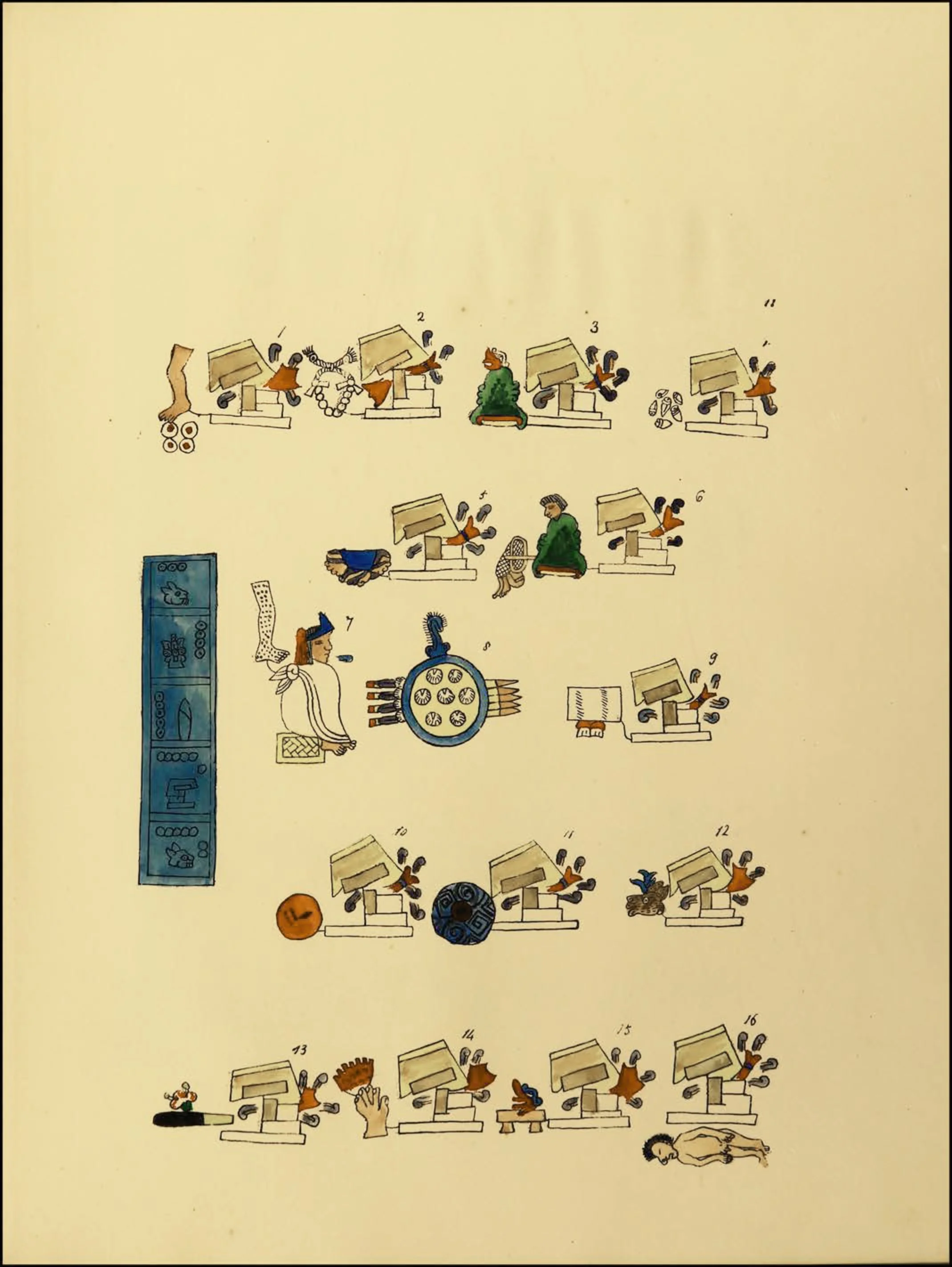
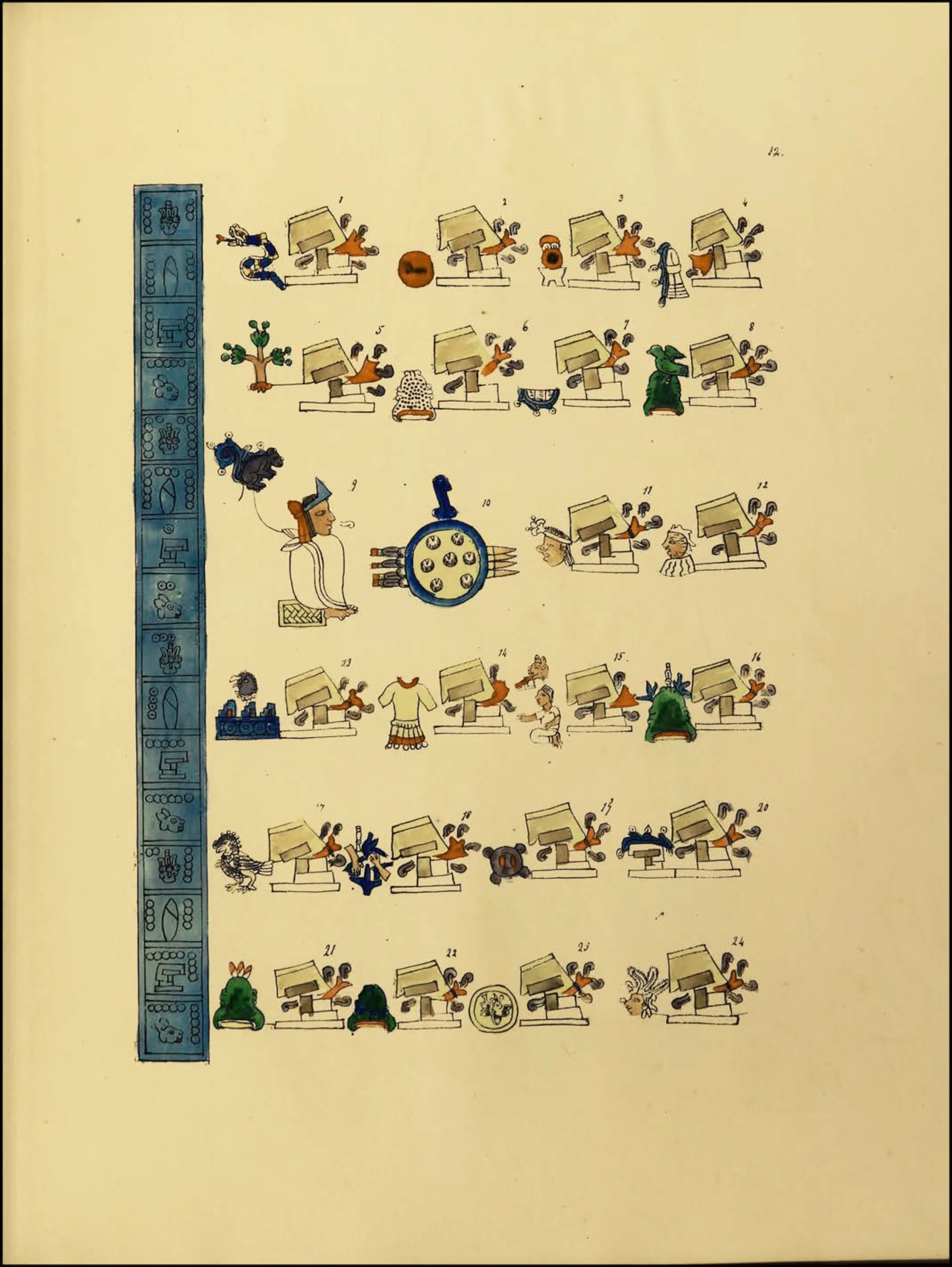
Depicts the rule and conquests of Ahuitzotl
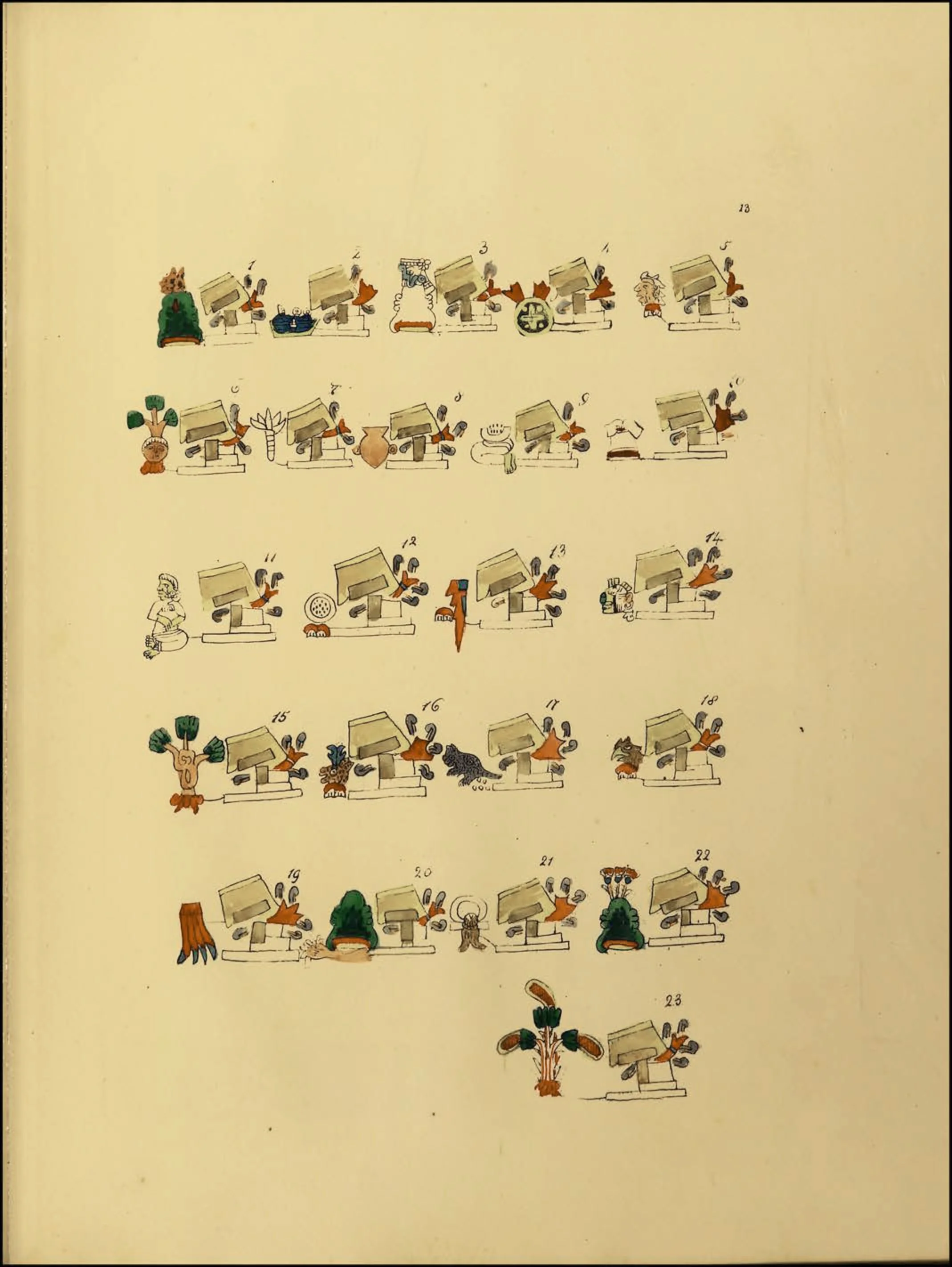
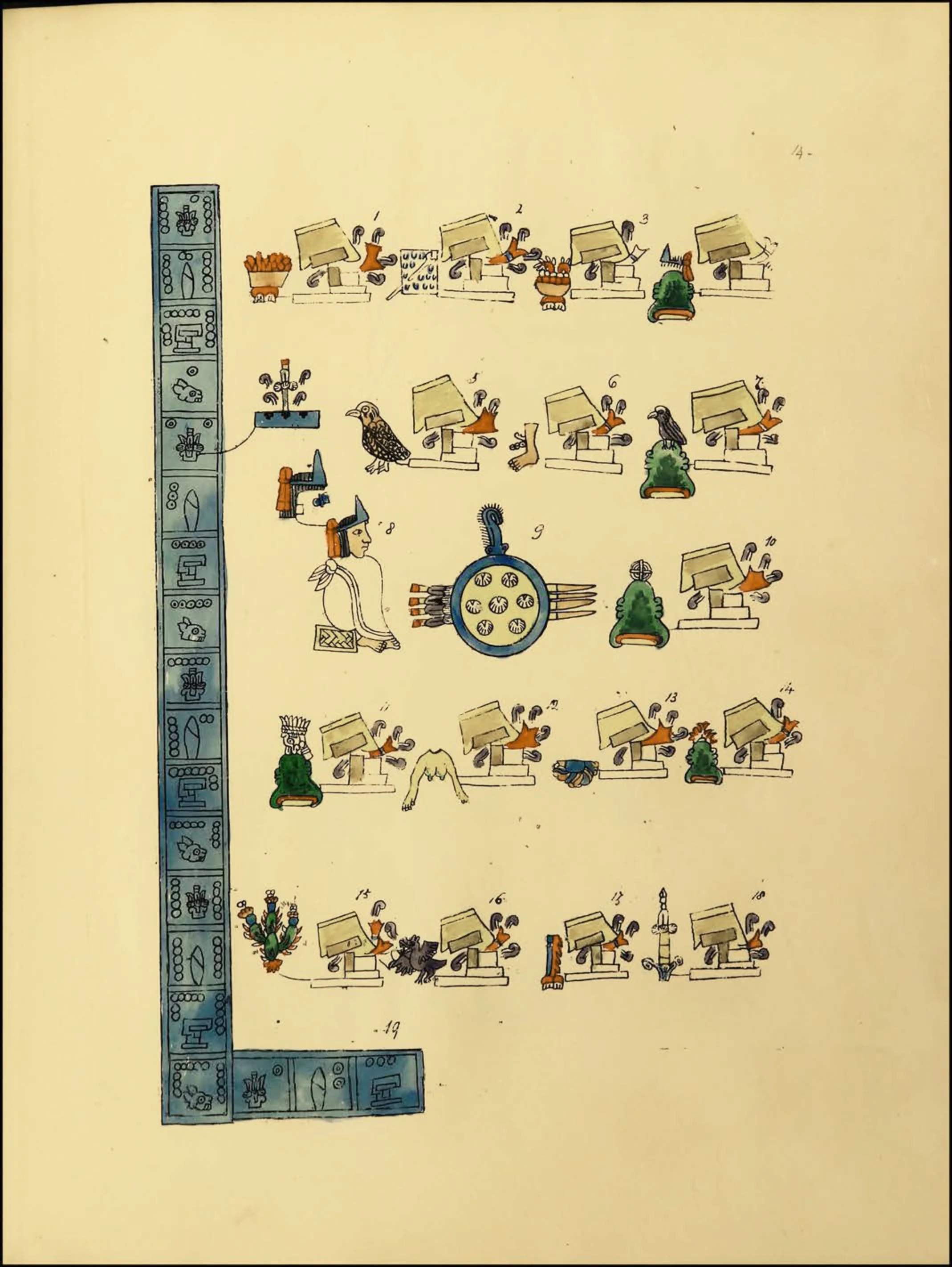
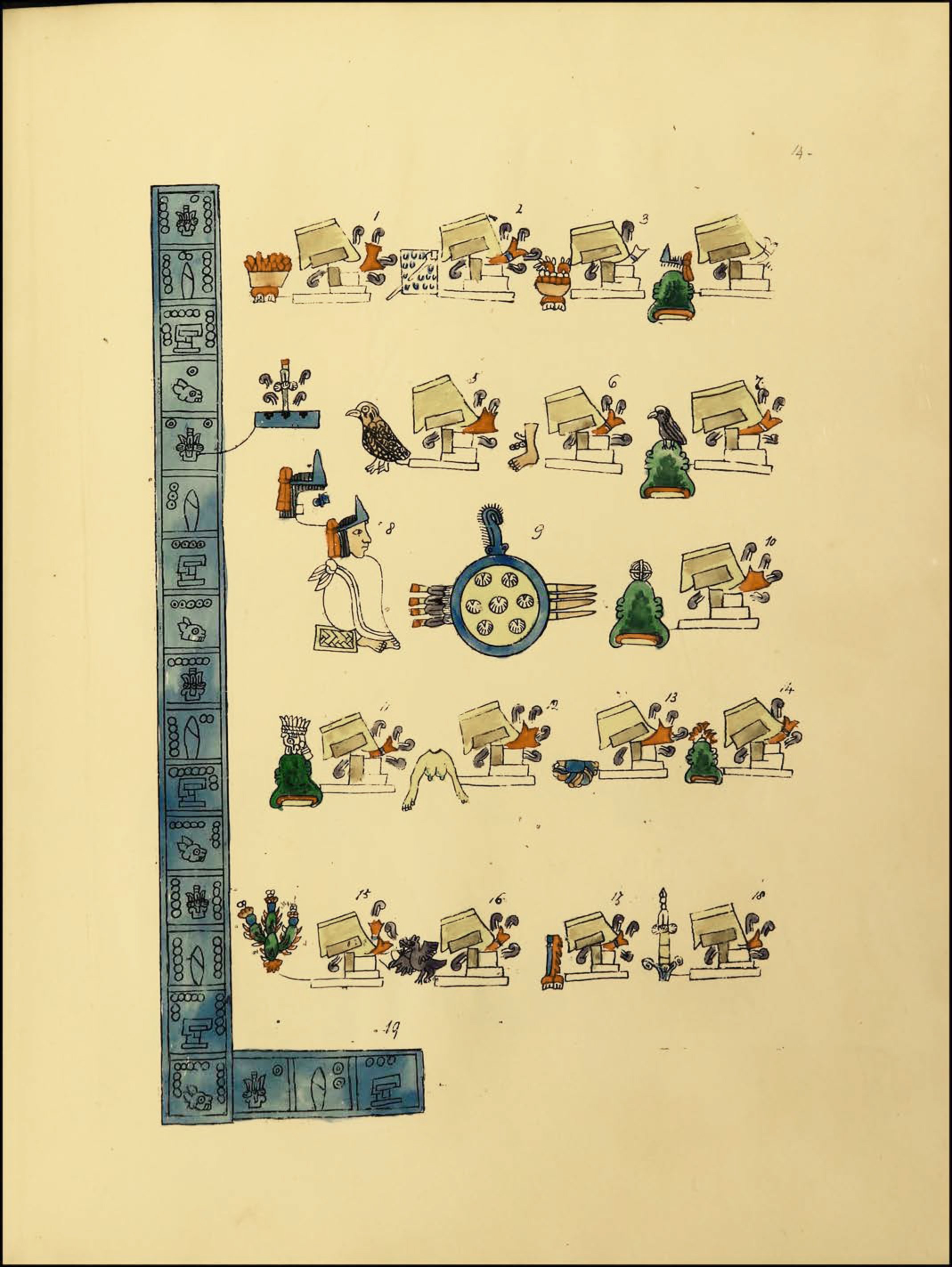
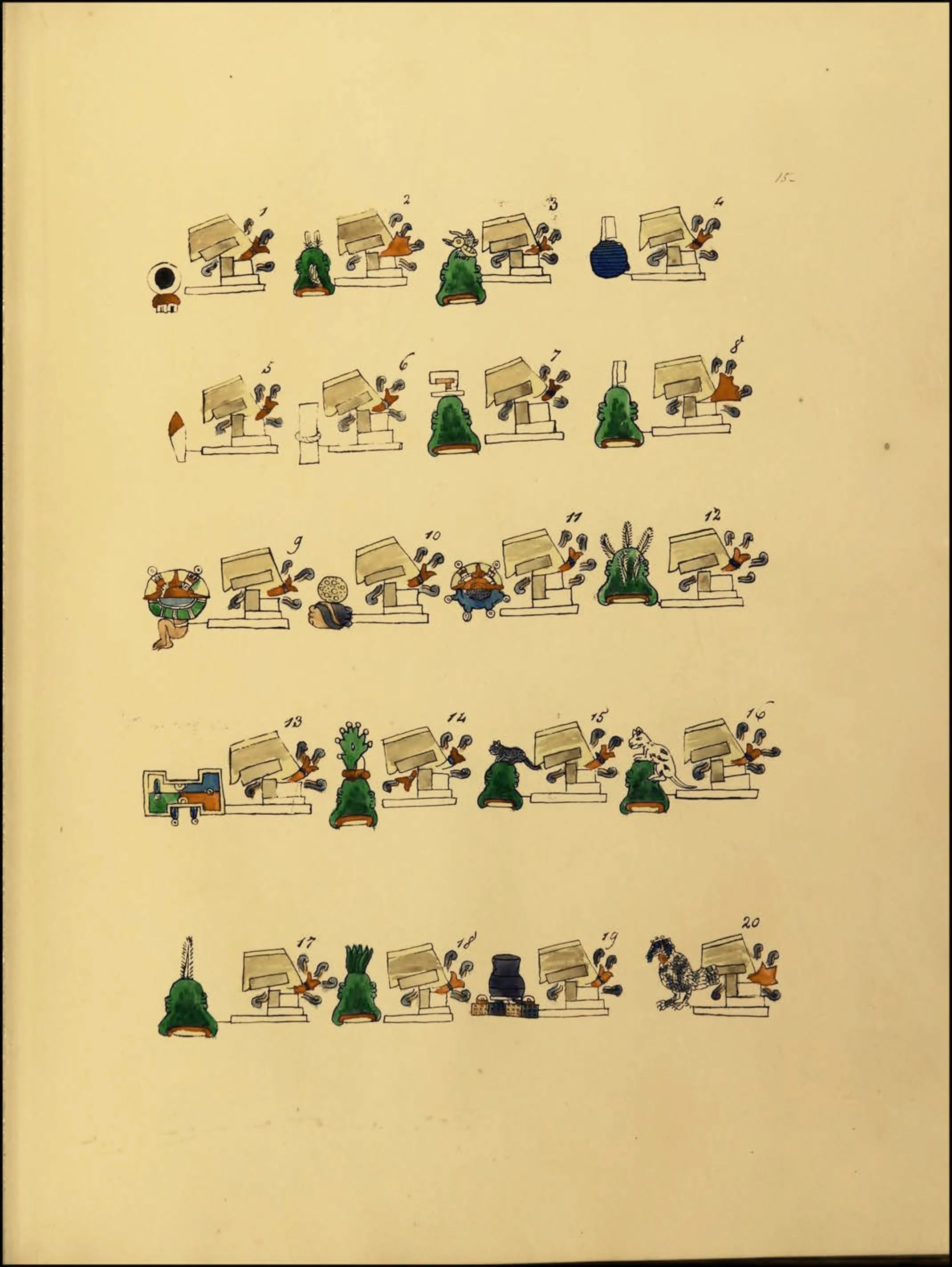
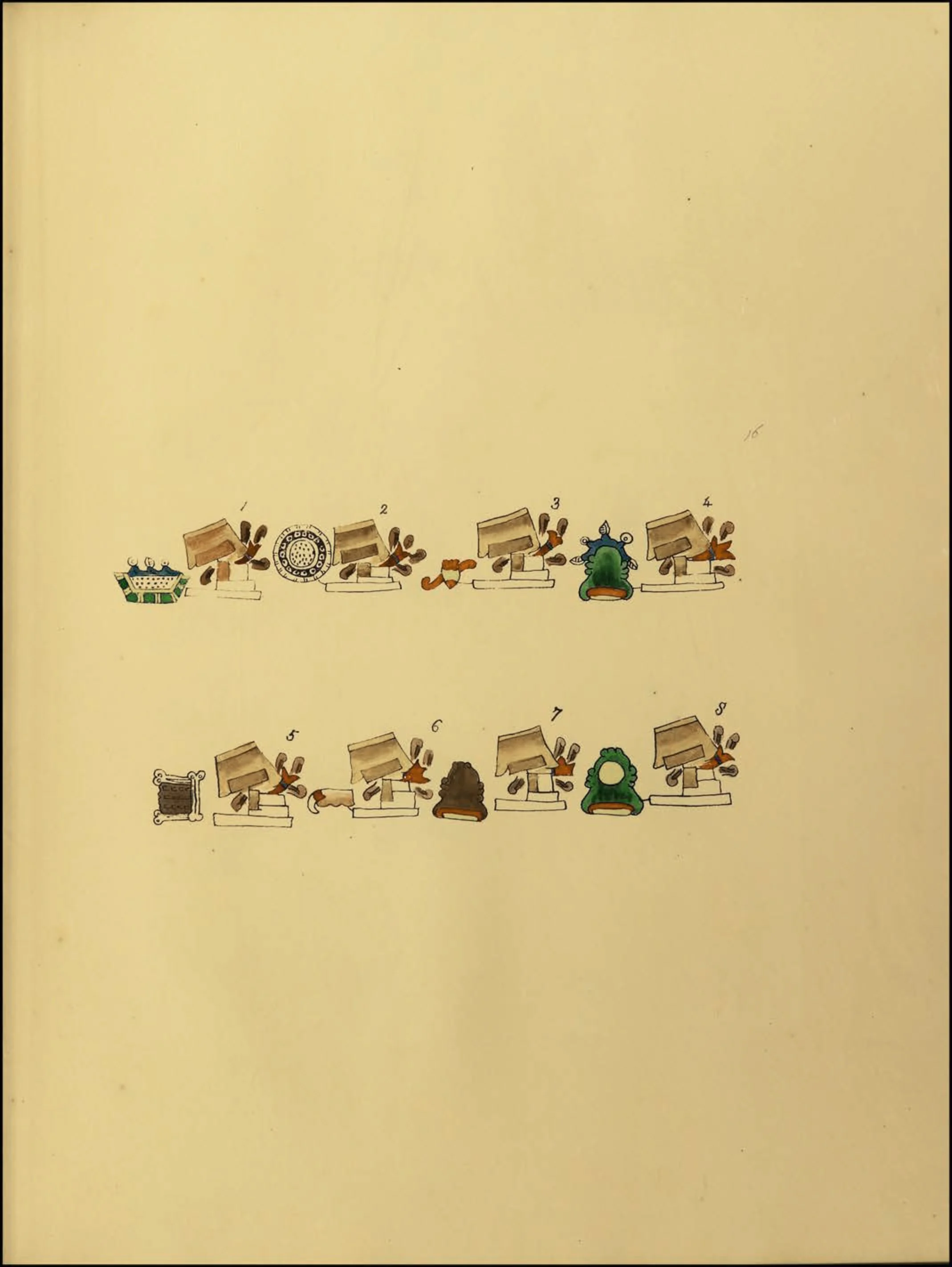
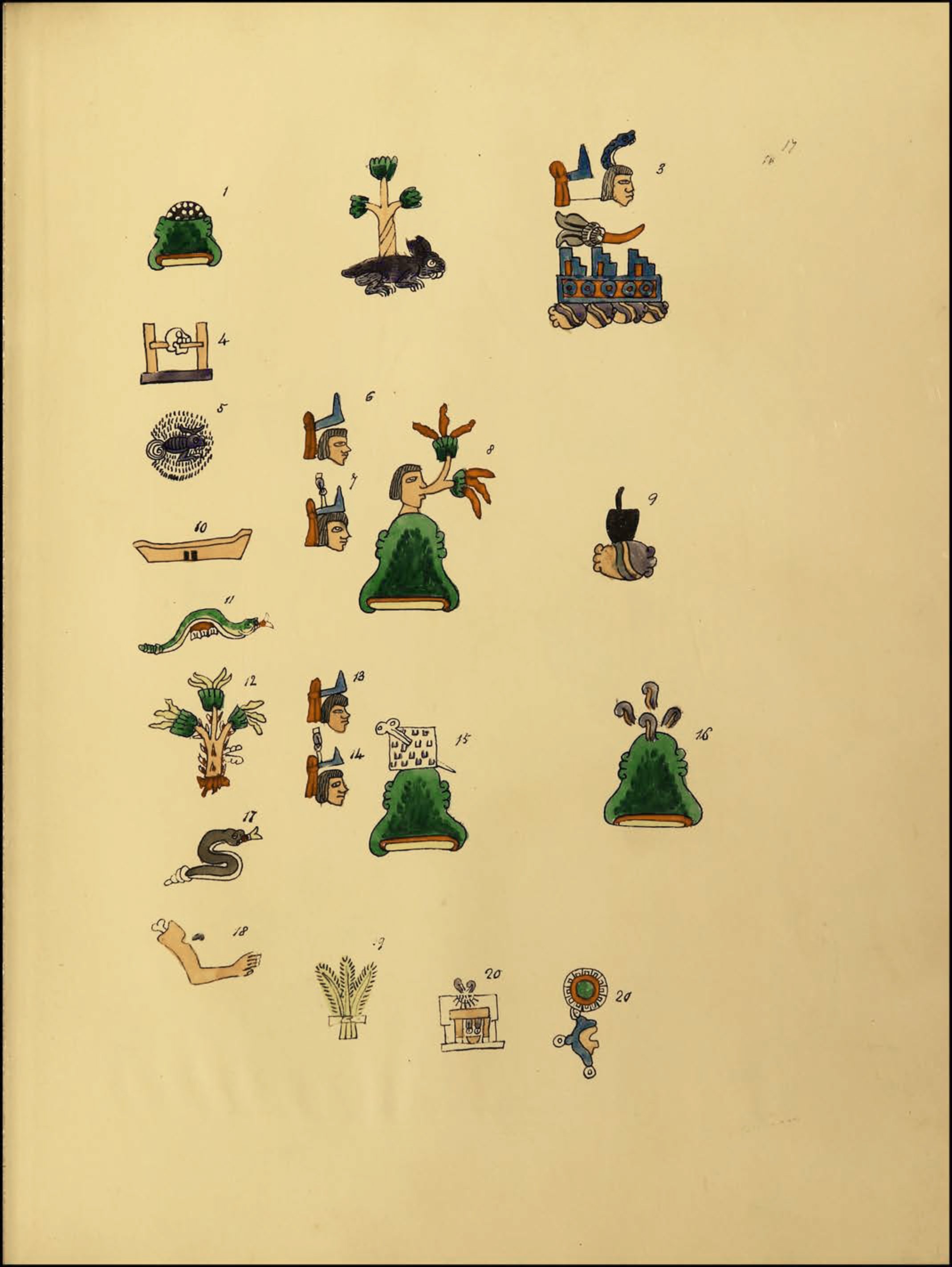
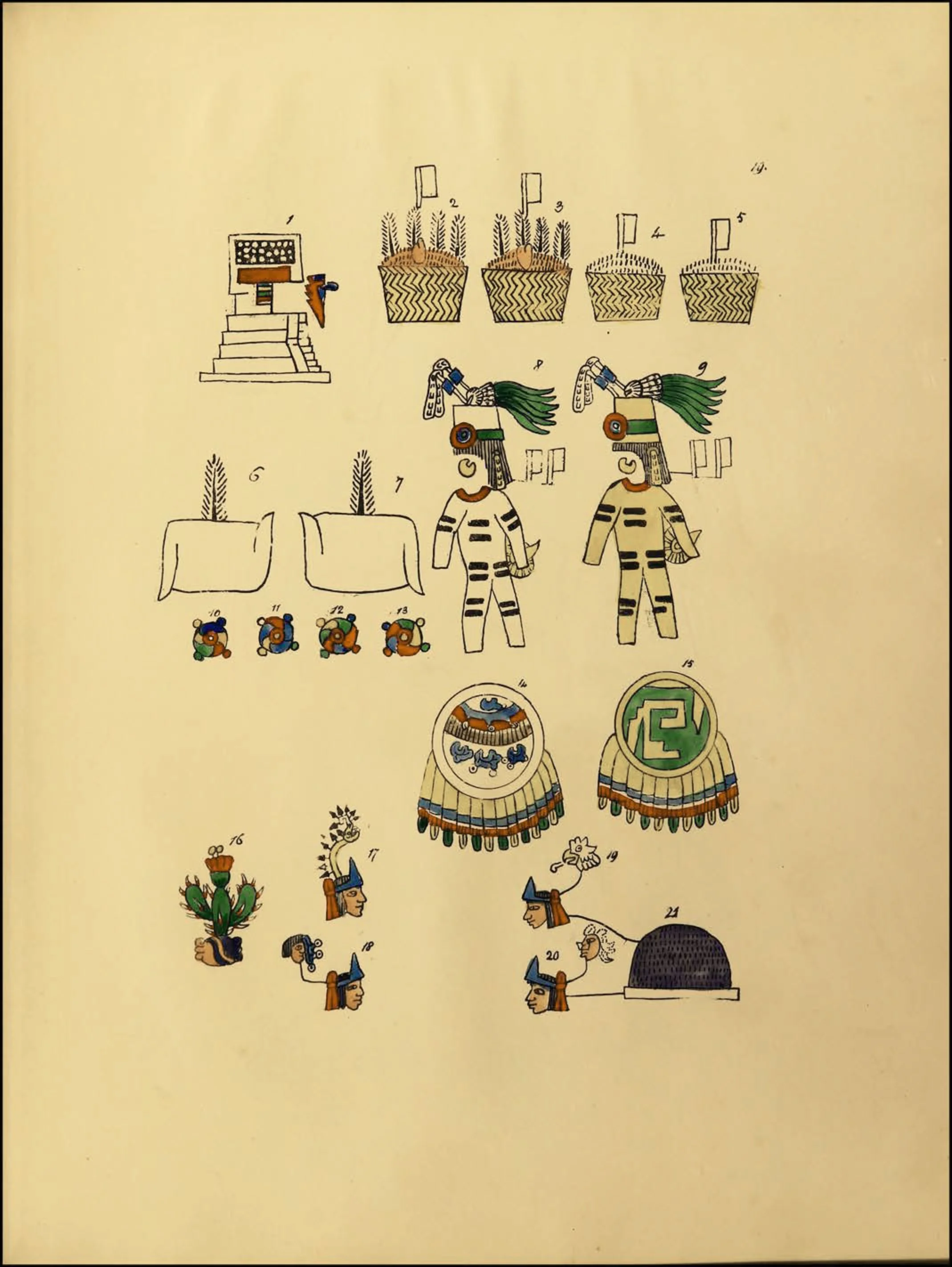
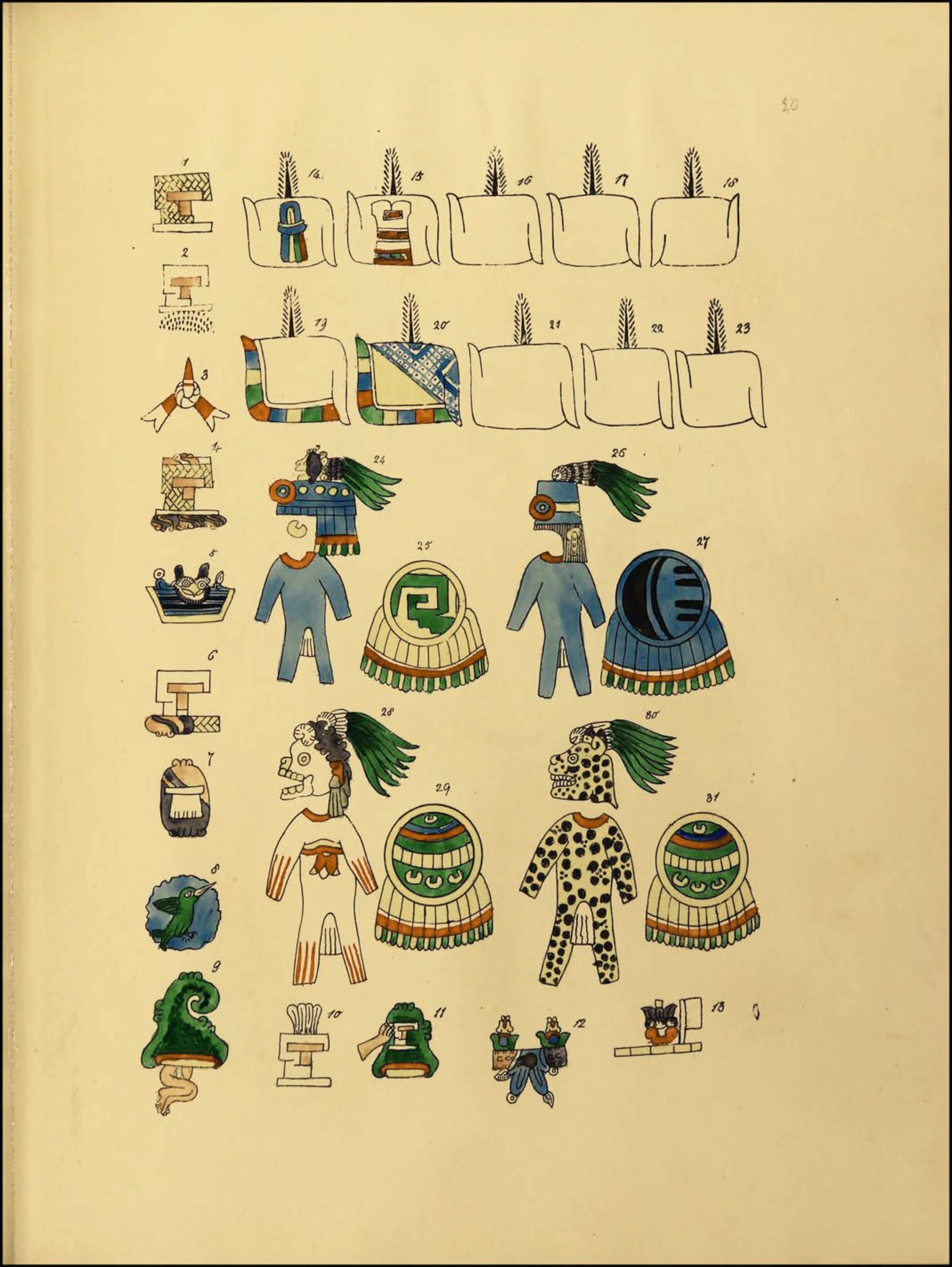
Lists the tribute towns were required to pay to the Aztec empire
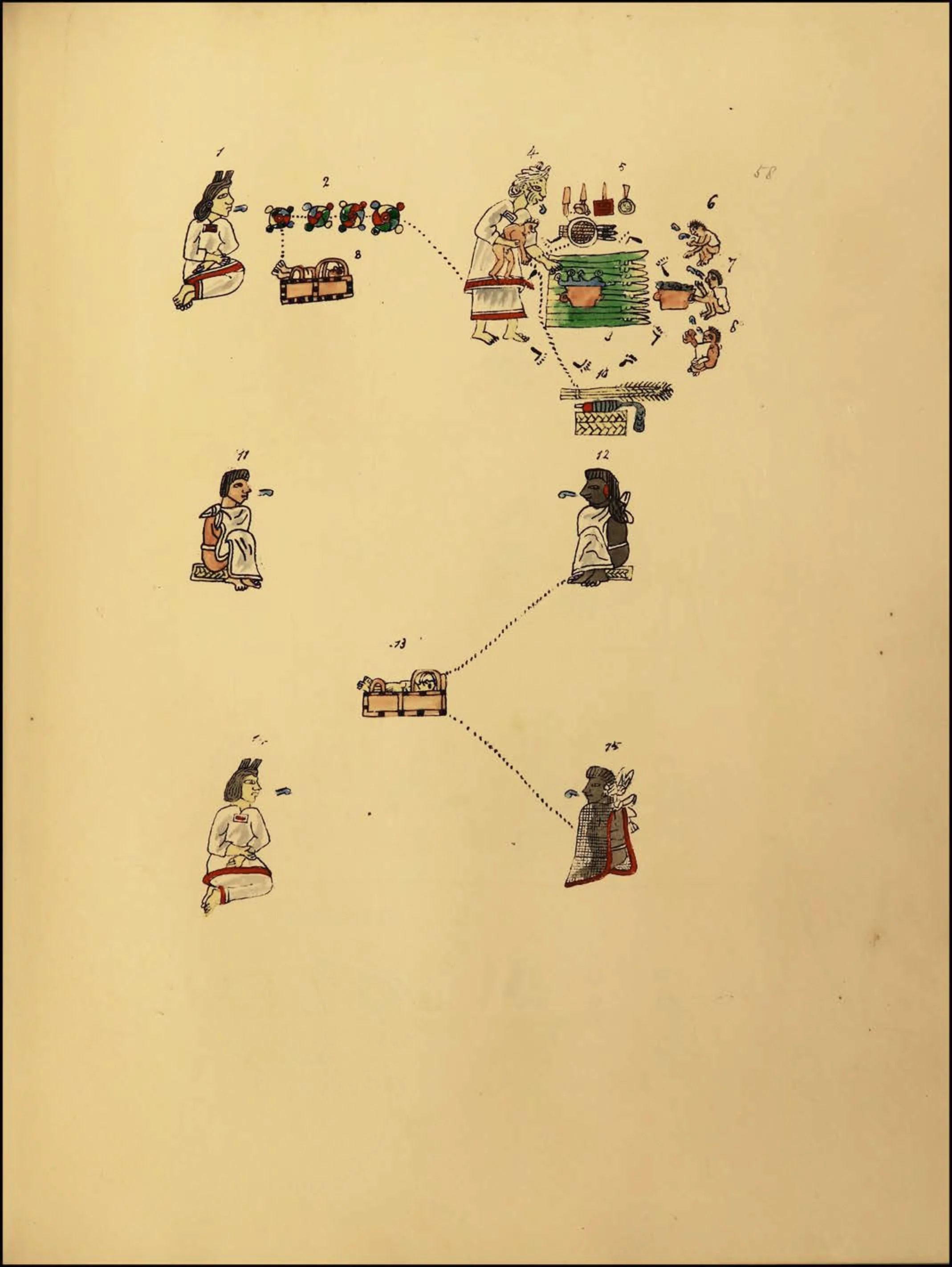
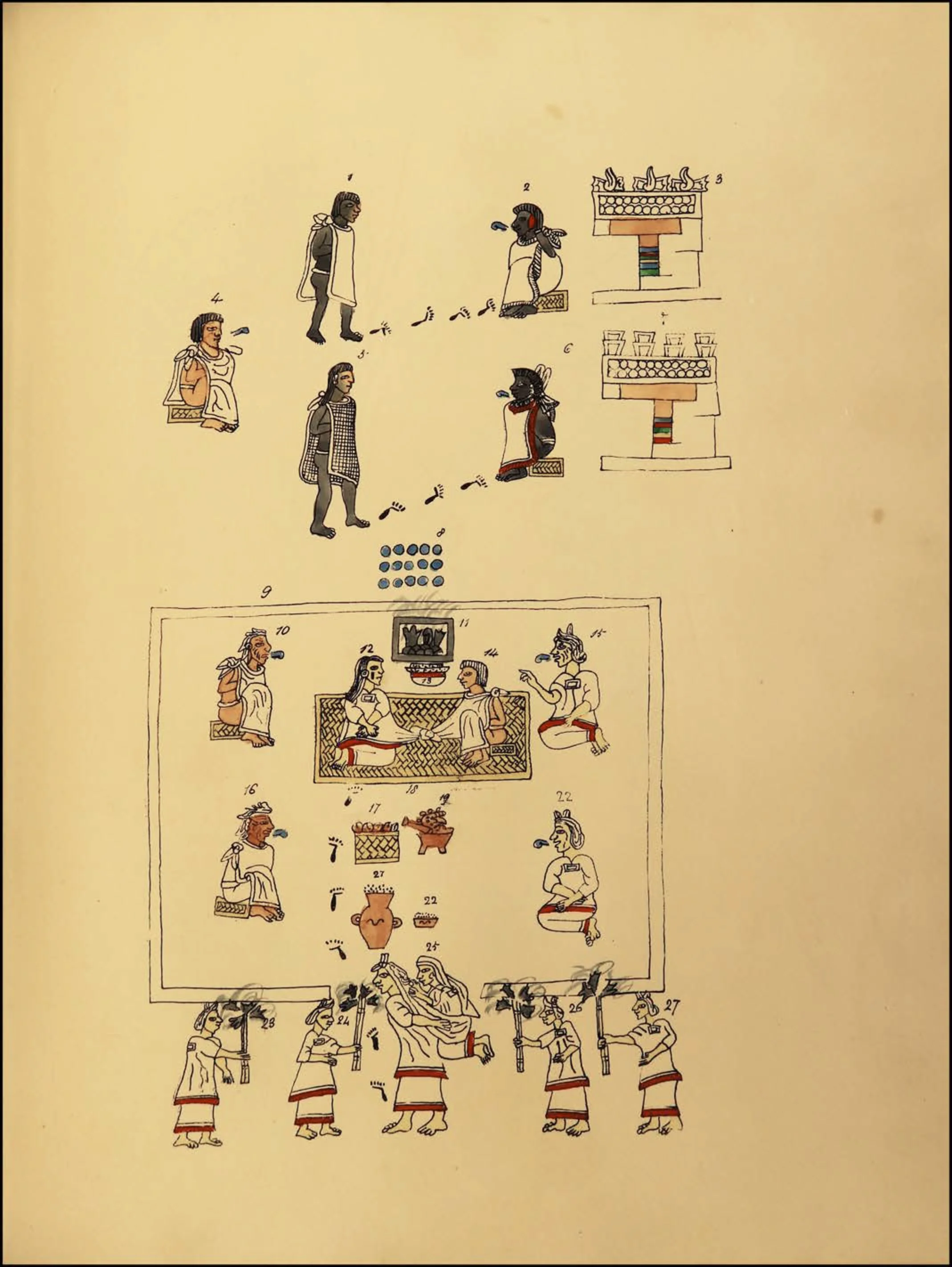

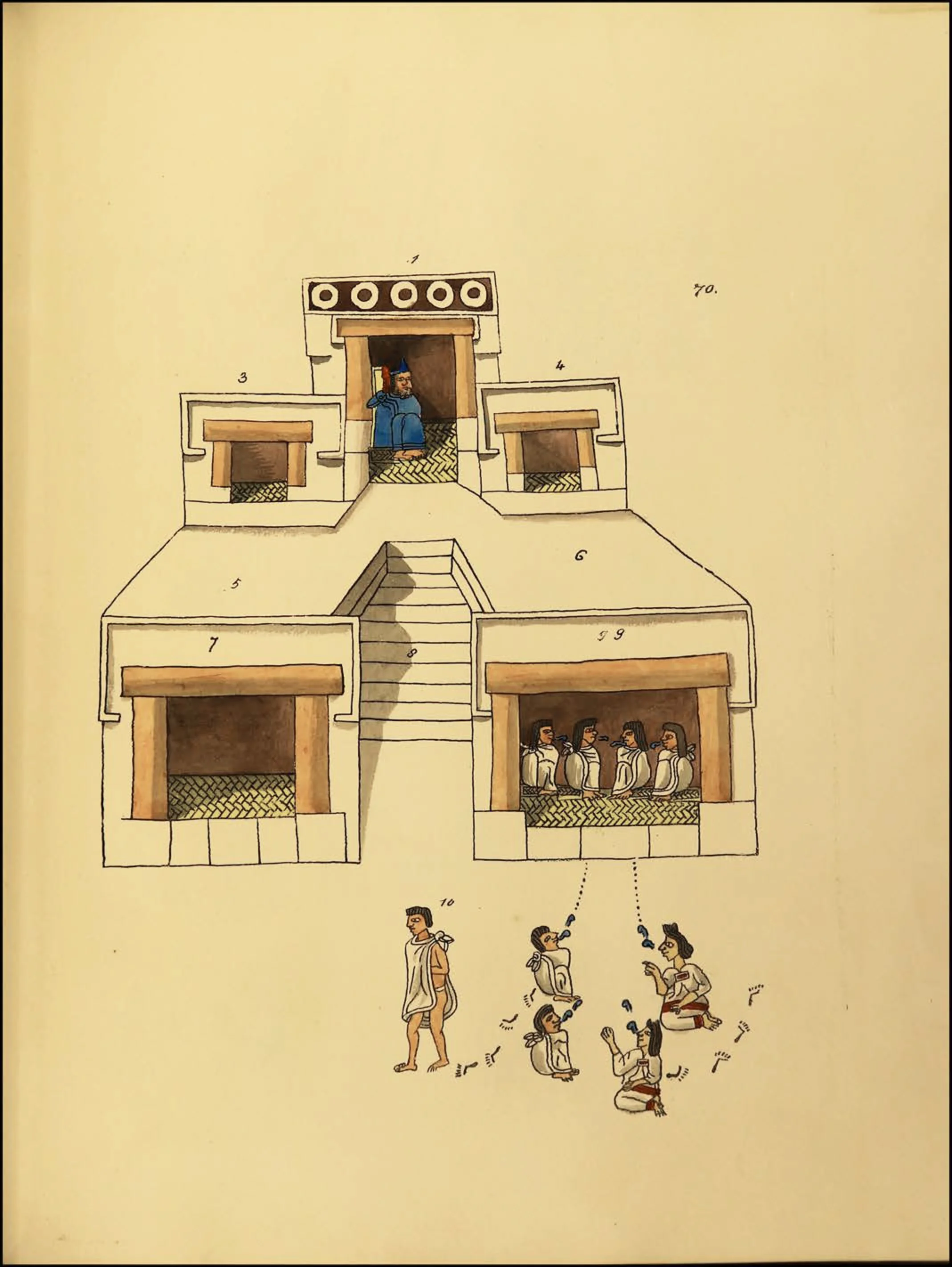
Depicts the palace of Motecuhzoma